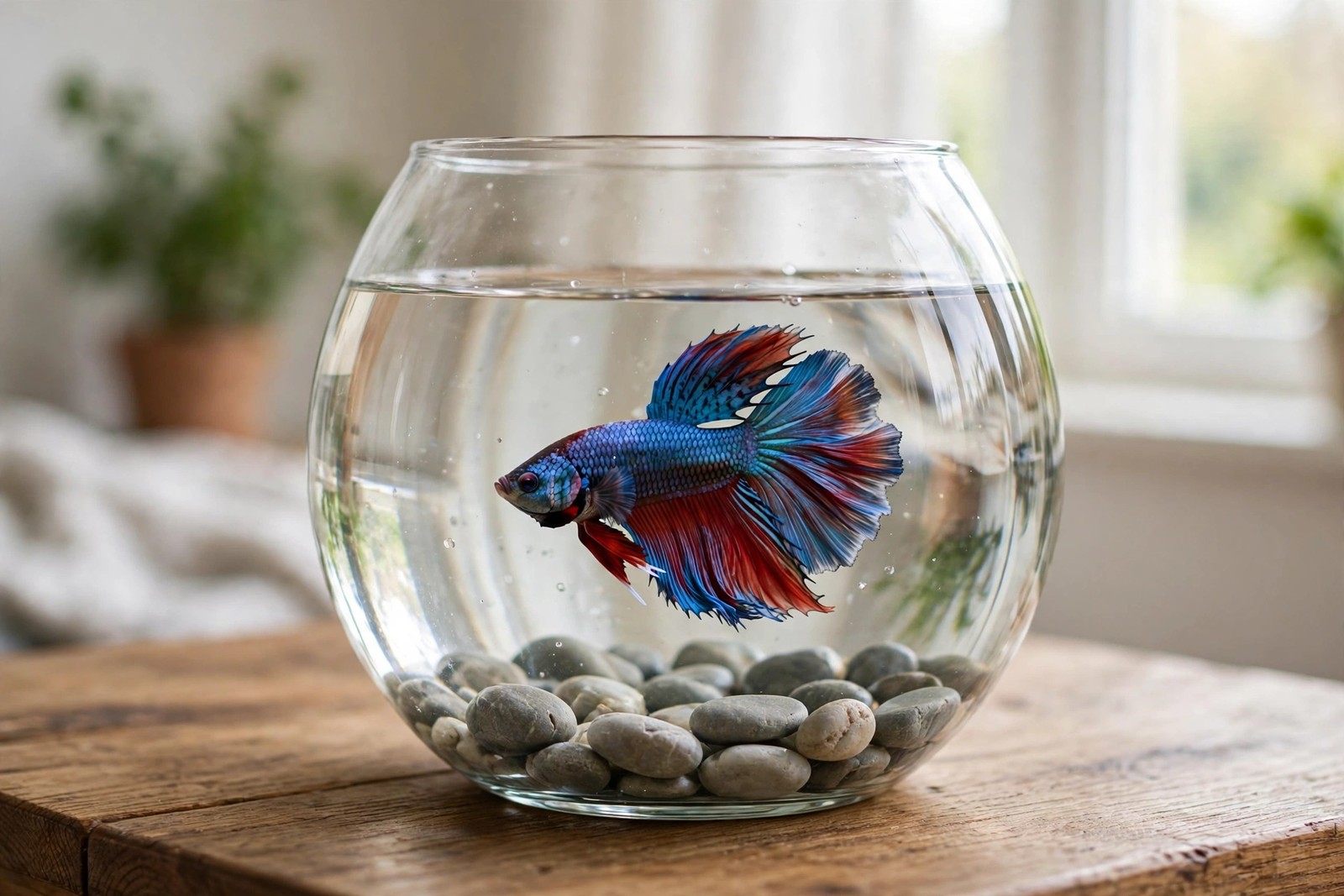
A bowl offers a betta almost none of what keeps it well. The water is unheated, so a tropical fish built for a steady 25–27°C (78–80°F) endures the room's daily swing instead; there is no filter, so waste concentrates fast in a tiny volume; and there is barely space to swim, turn or explore. That a betta may linger for months in those conditions explains the myth's persistence, but lingering is not thriving — bowl-kept fish tend toward duller colour, damaged fins and shorter lives.
What a Betta Actually Needs
A small filtered, heated tank — around 19 litres (5 gallons) is a sensible minimum — with a gentle filter flow, a lid (bettas jump), some plants or soft decor to rest on and hide in, and weekly partial water changes with dechlorinated water. In that setup a betta shows its real character: active, curious, and interactive. If you already have a betta in a bowl, upgrading the home is the single kindest change you can make, and it is not expensive second-hand — move the fish with its existing water into the new setup once the tank is cycled or use an in-fish cycle protocol with frequent testing.
What Owners Need to Know
For a betta, daily attention means watching rather than handling. A brief look each morning — is it rising for food, are its fin edges clean and whole, is it resting in odd places or gasping at the surface? — catches trouble while a water change or a temperature check can still fix it. Keep that check unhurried and at roughly the same hour, so an off day stands out against a familiar pattern.
Because a betta breathes and feeds in the same water it lives in, that water's quality decides its health more than any single meal does. In a heated, filtered tank, ammonia stays controlled between weekly partial changes; in a bowl it climbs daily, which is why bowl water can look clear while already irritating gills and fins.
Practical Steps That Help
Work through these in order, letting each one settle before you judge the result:
- Check the thermometer daily and confirm the water still sits in range
- Feed a measured amount once or twice a day, removing anything uneaten
- Change part of the water weekly with dechlorinated water at the same temperature
- Rinse the filter media in removed tank water, never under the tap
- Jot down appetite, fin changes or unusual resting spots with the date
Where several people tend the same betta, agree the feeding amount out loud first. Double meals from two kind helpers are a common, quiet cause of fouled water and an overfed fish.
Making It Part of Everyday Life
A betta routine works best tied to moments already in the day: a glance at the thermometer with breakfast, feeding at a set hour, the weekly change on the same evening. Those brief, repeated checks reveal more than a monthly overhaul, and they spare the fish the stress of large, infrequent disturbances. Keepers who move a betta out of a bowl and hold that simple pattern usually see the payoff in colour and activity within weeks, and they spot illness early because they know what a normal day looks like. With Care Teams in KinsLe, a household can hand feeding, testing and water changes to named people, each job timestamped once finished.