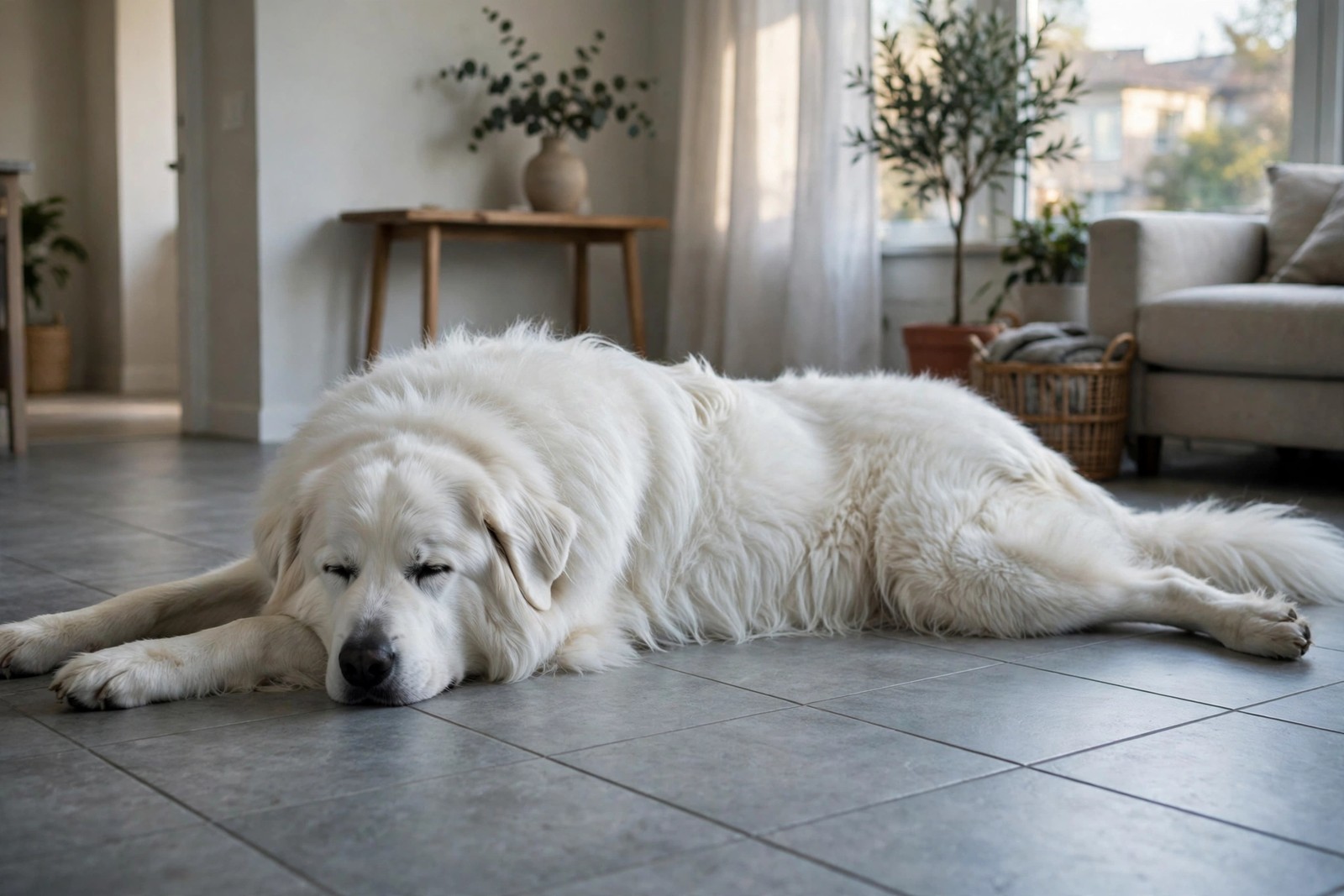
A Great Pyrenees can live in an apartment in the narrow sense that the dog will survive it, but owners should go in clear-eyed: this is among the most demanding apartment choices you can make. The breed was developed to live outdoors with flocks, guarding through the night and deciding for itself when something is a threat. An apartment asks that dog to do the opposite of its job, quietly, behind thin walls.
Night barking is the central problem
Pyrenees bark — deeply, loudly, and most readily at night, when a guardian breed expects to be on duty. Every corridor footstep, closing door, and voice on the landing is information your dog may announce. Training and management can reduce this: a sleeping spot away from the front door, background sound overnight, a genuinely tiring evening walk, and rewarding quiet responses to noises. They rarely eliminate it. Before committing, consider honestly whether your building's walls, your neighbours, and your own sleep can absorb a very large dog sounding off in the night, because rehoming a giant adult guardian later is difficult for everyone.
Size, shedding, and heat
Adults are giant dogs who need room simply to lie fully stretched, turn around, and get up without displacing furniture. Measure your actual floor space, doorways, and lift size. The thick double coat sheds constantly and heavily in season, and drooling is common — in a small flat, hair management becomes a daily task, not a weekly one. The breed also dislikes heat; a top-floor flat that bakes in summer, without a cool room or air conditioning, is genuinely unsuitable, and walks should shift to early morning and late evening in warm weather.
Exercise is moderate — independence is not
The one apartment-friendly trait is exercise level: most adults are content with around an hour to an hour and a half of steady, unhurried walking a day, and they are not hyperactive indoors. What they are is independent and strong-willed. Training works through patience and consistency rather than repetition, recall off lead is unreliable in most individuals, and a bored Pyrenees behind a standard interior door or baby gate may simply push through it. Secure the flat accordingly, and expect lead walking to require real strength and a well-fitted harness or collar that your vet or trainer helps you choose.
The permission check
Many rentals cap dog weight far below an adult Pyrenees, and some restrict guardian breeds. Confirm in writing that a dog of this size and breed is allowed before you commit, and check your insurance position too.
If your flat is spacious, ground-floor or lift-served, cool, and your neighbours are tolerant and consulted, it can work. Otherwise, admire the breed and choose differently. KinsLe's Care Pass helps committed owners by giving a sitter time-limited access to your Pyrenees' feeding amounts, walk routes, and night routine, so that settled pattern holds when you are away.