
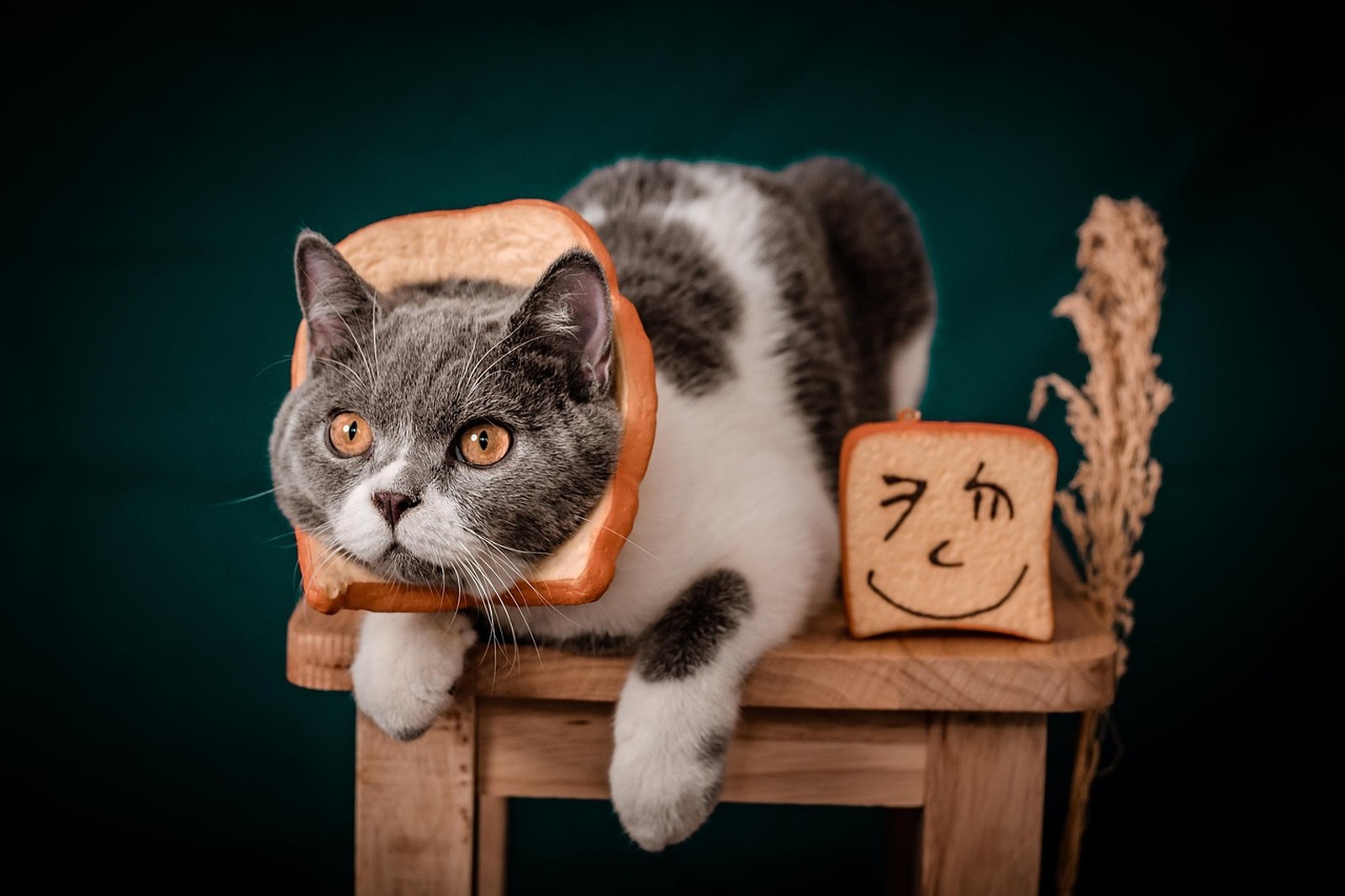
A small corner of plain, fully baked bread is harmless for most cats in the way a crumb of anything plain is harmless: it passes through, offers starch and little else, and should never be upgraded into a regular treat. The bread question becomes serious only when it turns into the dough question, and owners should know the difference clearly.
Baked Bread: Empty but Not Alarming
Cats are obligate carnivores with no requirement for grains, so bread contributes calories without the protein, taurine, and fats a cat actually runs on. White, wholemeal, and plain seeded loaves in crumb-sized tastes are broadly similar in risk, which is to say low. Larger or repeated amounts can cause loose stool or gassiness simply because a carnivore's gut is not built for starch loads, and bread offered often quietly displaces the food that does the nutritional work.
Plenty of breads are not plain, though. Garlic bread, onion-topped loaves, cheese breads, and sweet buns with raisins, chocolate, or sugar-free sweeteners move from harmless to genuinely unsuitable, because several of those ingredients are harmful to cats in their own right. Flavoured crusts and spreads, butter and garlic butter especially, are what cats usually lick first, so the corner you picture is rarely the corner they take. When in doubt about a flavoured loaf, the answer is no treat at all.
Raw Dough: The Real Emergency
Raw yeast dough is dangerous in a way baked bread is not. Swallowed dough can keep expanding in the warmth of the stomach, causing painful bloating and potentially obstruction, while the fermenting yeast produces alcohol that a small body absorbs quickly. A cat who has eaten rising dough may show a swollen abdomen, retching without producing anything, restlessness, wobbliness, or unusual sleepiness, and those signs mean an immediate vet call, not a wait-and-see afternoon.
Prevent the scenario at the source. Let dough rise inside a closed oven or microwave, a lidded container, or a room the cat cannot enter, and never leave a proving bowl under a cloth on a counter a cat can reach. If you discover torn dough and a floury cat, call your vet straight away and say roughly how much is missing, because timing matters with both expansion and alcohol absorption.
Why Cats Chase Bread at All
A cat stealing bread is usually after the butter, the warmth of a fresh loaf, the yeasty smell, or the game of taking something from the counter. Offer the approved swap in the cat's bowl, a small meaty treat, and move the loaf into a bread bin or cupboard so the kitchen stops advertising. Kittens caught practising on crusts should be redirected early, before counter raids become an adult habit.
Keep the distinction written down for sitters and guests, who often know bread is fine and assume dough is similar: baked corner, harmless; raw dough, emergency. That single line prevents the only bread mistake that can seriously hurt a cat. Add that line to KinsLe Care Teams with the kitchen care duties, so whoever is feeding while you bake sees the dough warning before the bowl goes out to rise.