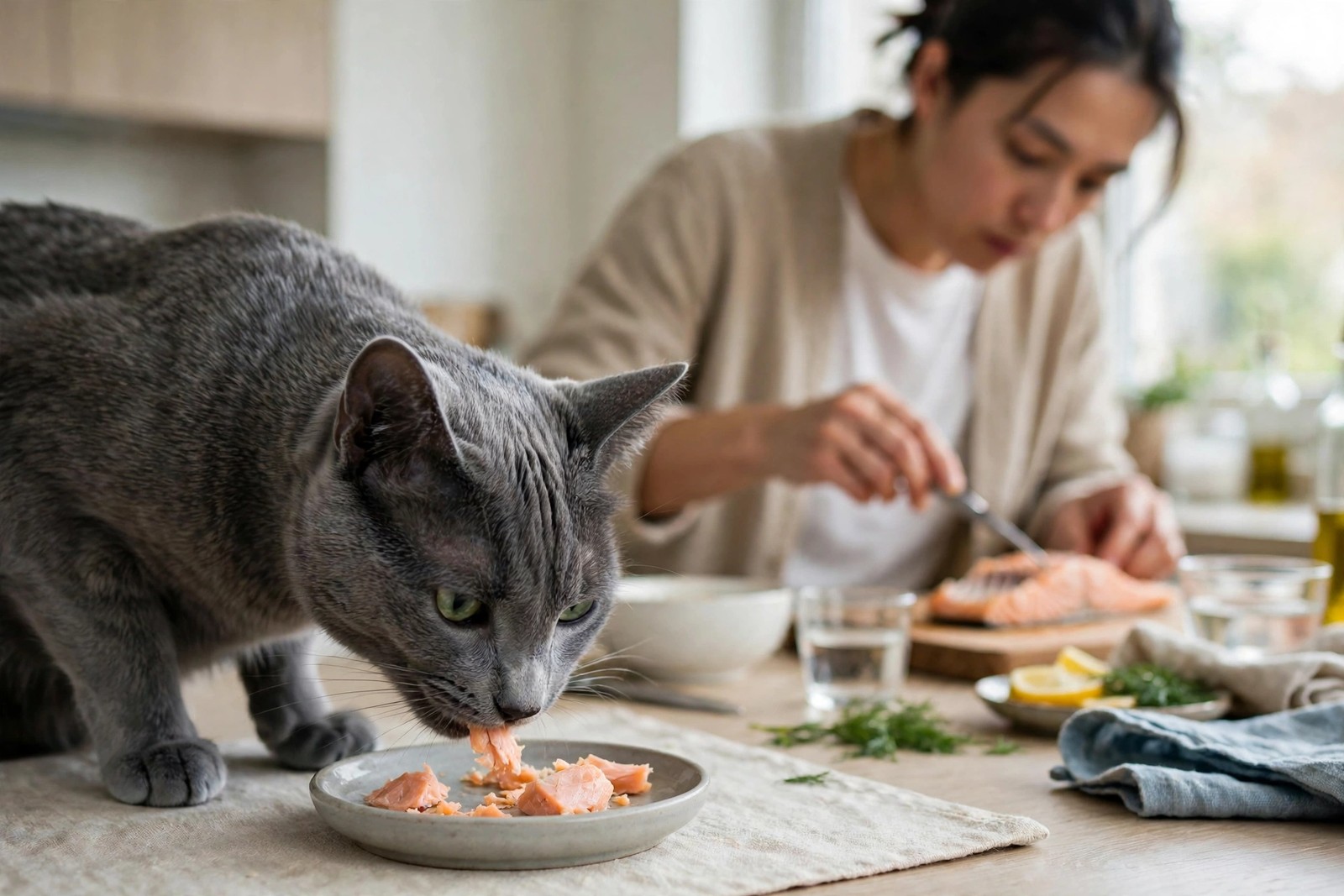
Cooked salmon suits cats as an occasional treat, and its strong aroma makes it one of the most motivating foods you can offer. The conditions carry the answer: cooked through, completely boneless, skin off, plain, and served in flakes rather than portions, because salmon done wrong, raw, brined, or bone-in, is a different and riskier food.
Why Raw Salmon Is a Firm No
Raw fish can carry parasites and bacteria, and raw fish also contains an enzyme that destroys thiamine, a B vitamin cats need; a diet built on raw fish can therefore create deficiency alongside infection risk. Cooking resolves all three issues at once. Bake, poach, steam, or grill salmon plainly until it flakes and is opaque throughout, with no marinade, teriyaki glaze, garlic, butter sauce, or seasoning blends, and let it cool before serving.
Smoked salmon is not a loophole. It is effectively cured rather than cooked through, and it is heavily salted, so it belongs with the brined tinned fish in the no column. Tinned salmon packed in water is closer to acceptable than brine-packed, but fresh plain cooked salmon remains the cleanest choice, and the skin, which concentrates fat and any seasoning, should come off either way.
Bones, Portions, and Frequency
Salmon bones are fine, soft, and easy to miss, and they are the most practical hazard in an otherwise safe treat. Run every flake between your fingers before it reaches the bowl, because eyes alone miss the hair-thin bones that can lodge in a mouth or throat. A cat who gags, drools, or paws at the mouth after eating fish should be seen by a vet promptly rather than watched hopefully.
A few flakes, roughly a tablespoon of flaked fish, once a week or so is the right scale. Salmon is rich, so more can loosen stools, and fish-heavy diets fed daily can unbalance a cat's nutrition and encourage an increasingly picky fish-only preference that makes complete food a hard sell. Cats showing itchy skin, ear trouble, or digestive upset after fish may have a fish sensitivity, which is common enough to take seriously; stop the salmon and raise the pattern with your vet.
Using Salmon Where It Helps Most
Save salmon for jobs that need your cat's full cooperation: carrier training, accepting a new home, recovery of appetite after a minor illness your vet knows about, or the final reward in a grooming session. Its scent carries across a room, so a sealed container of flakes can lure a hiding cat more kindly than reaching hands can. Warm the flakes very slightly to release that aroma, never to serving-hot.
Refrigerate cooked salmon and use it within a couple of days, freezing small treat portions if you cooked a whole fillet for the family and set the cat's plain piece aside before seasoning. Write the preparation rules where treat decisions get made, not from memory. Put those rules, cooked, boneless, skin off, plain, in KinsLe Care Teams with the feeding duties, so a helper preparing the cat's flakes checks for bones as carefully as you do.