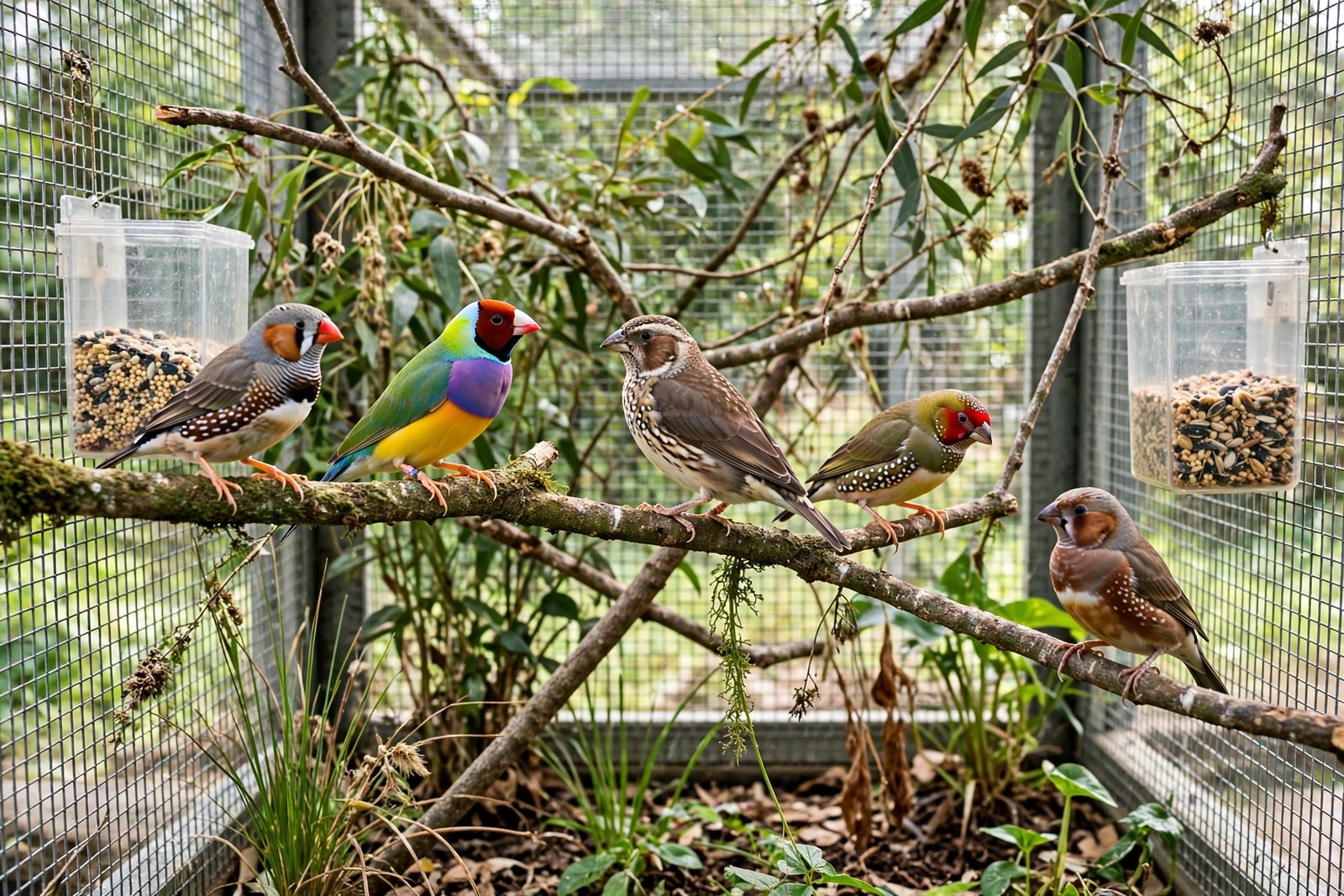
Yes, many finch species can share a large flight cage or aviary, provided you mix calm species with calm species, give them real horizontal space, and plan introductions properly. Mixed flights are one of the pleasures of finch keeping, a planted aviary of colour and song, but they succeed on temperament and square footage, not on hope.
Passive Birds and Pushy Birds
Finch keepers broadly divide species by pushiness. On the peaceful side sit society finches, famously tolerant and often the peacemakers of a flight, along with Gouldian finches, owl finches, and star finches, which generally keep to themselves. Zebra finches are hardy and popular but livelier and more assertive than their size suggests, and pairs can claim corners. At the pushy end, larger or more territorial species, and birds in breeding condition, may chase, pluck, or guard food against smaller companions. Size matters as much as temperament: a big species can injure a tiny waxbill without malice, simply by competing at a dish. Keep hooked-beak birds such as budgies out of a finch flight altogether, because a curious bite can maim a finch's foot. When in doubt, choose fewer species of similar size and known mildness, and let a settled group stay settled.
Space and Stations Prevent Most Fights
Nearly every mixed-flight problem traces back to crowding or a single contested resource. Finches fly horizontally, so length matters more than height: choose the longest flight cage or aviary you can, well beyond the minimum for the number of birds, because escape distance is what turns a chase into a non-event. Provide at least two feeding stations and two water points at opposite ends, multiple perches at varied heights, and some visual cover in the form of safe plants or branches so a shy bird can break a line of sight. Feed and water at stations a dominant bird cannot defend simultaneously. Overcrowding also raises disease pressure and stress, so if you cannot add space, do not add birds, however peaceful the new species is said to be.
Sex, Nests, and Breeding Behaviour
A mixed flight without nests is usually a calmer flight. Add nest boxes, baskets, or abundant nesting material and behaviour changes: pairs form, territories appear around nests, and previously mild birds defend a corner. Mixed sexes of the same species will breed if conditions invite it, and closely related species can hybridise, which responsible keepers avoid by not housing interfertile species together in breeding setups. Decide before you mix whether you want breeding at all. If you do, it deserves its own planning, records, and homes for young birds. If you do not, keep groups in stable pairs or single-sex arrangements your veterinarian or an experienced keeper can help you sex, remove nests, and expect a quieter aviary for it.
Quarantine and Introductions
Every newcomer, however healthy it looks, spends its first weeks in a separate cage in a separate air space, with its own food and equipment, while you watch appetite, droppings, breathing, and feathers, and arrange a veterinary check. Finches can carry parasites and infections that flare under the stress of a move, and one unquarantined bird can undo an entire flight. Introduce survivors by placing the quarantine cage beside the flight for some days of looking without touching, then release the newcomer into the main space in the morning, ideally after rearranging perches and stations so no resident owns the geography, and watch the first hours closely. Keep a spare cage set up permanently; a bird being chased off food, plucked on the head, or trapped in a corner comes out the same day, not after a trial week.
A Flight Everyone Can Manage
Write down who is in the flight, which stations exist, and what bullying looks like, because several people may feed these birds and only shared information keeps a quiet problem from being missed. KinsLe's Family Sharing puts that record on one profile the whole household can open, so the species mix, quarantine dates, and feeding plan travel with the birds rather than living in one keeper's head.