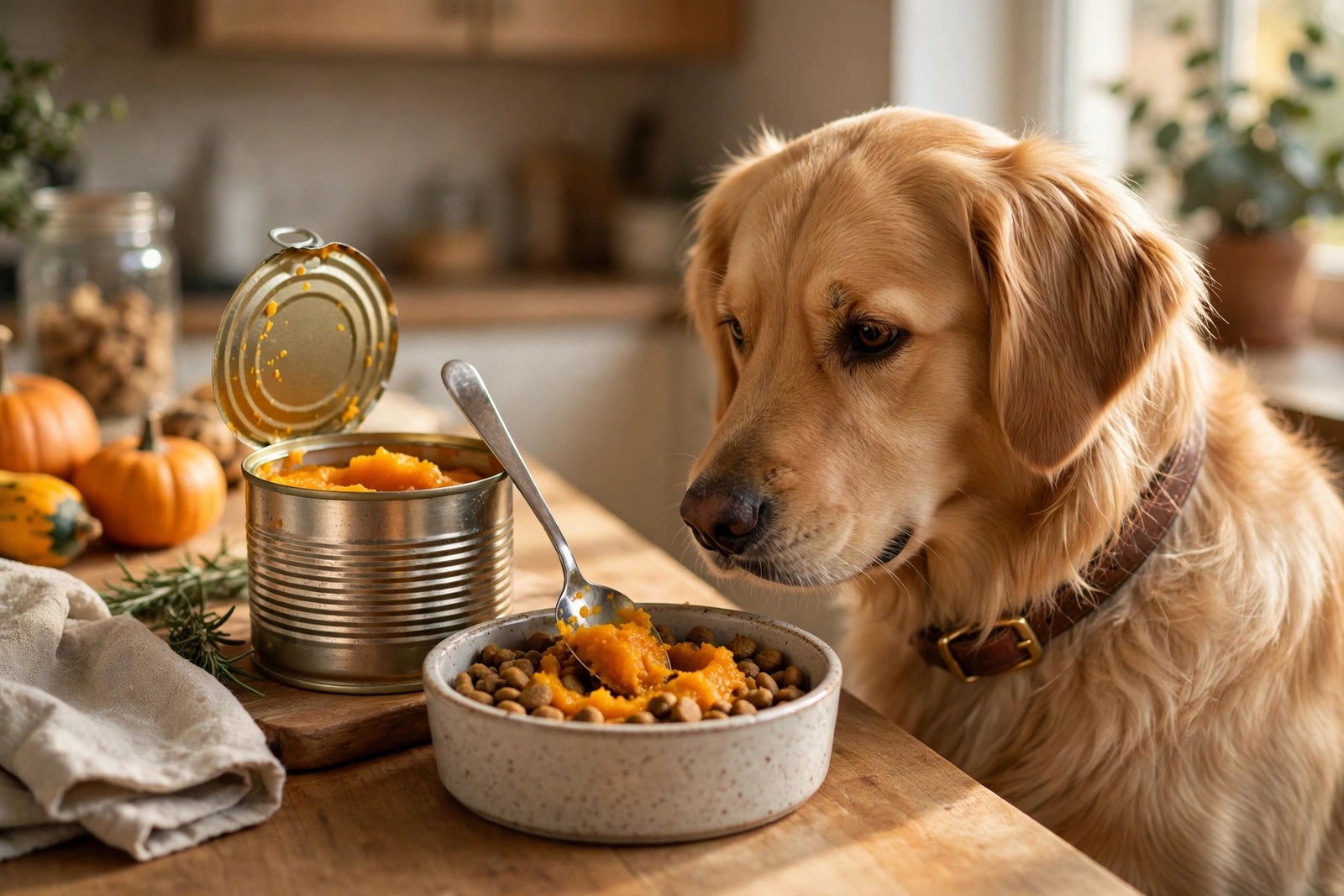
Yes, plain canned pumpkin is one of the more practical foods a dog owner can keep in the cupboard. It is cooked, soft, mildly flavoured and rich in the kind of fibre that absorbs water in the gut, and dogs generally accept it stirred through a meal without argument. Its reputation rests on the plain product, though, and the tin sitting next to it on the shelf — pumpkin pie filling — is a different food entirely that a dog should not be given.
Reading the Tin Before Anything Else
A dog-safe tin lists pumpkin as its ingredient, full stop. Pumpkin pie filling lists pumpkin too, but then adds sugar or syrup, salt and a spice blend built for dessert, and some sweetened products aimed at humans can include ingredients a dog must never have. The two tins often share colours, pictures and shelf space, which is exactly how the wrong one gets bought in a hurry. Turn the tin around and read the ingredient list every time you shop, even for a familiar product, because recipes change. If the list runs beyond pumpkin, put it back.
What the Fibre Does, and What It Does Not
Canned pumpkin's soluble fibre soaks up water as it moves through the gut. In a dog with a mildly loose stool, that absorbed water can leave the stool firmer; in a dog passing hard, dry stools, the water the fibre holds can soften things. That two-way usefulness is real but modest, and it has limits worth respecting: pumpkin is a dietary extra, not a treatment. A dog with diarrhoea that continues beyond a day, contains blood, or arrives with vomiting, lethargy or appetite loss needs a vet, not a bigger spoonful of pumpkin. Likewise, a dog that strains repeatedly without producing stool needs prompt veterinary attention, because a blockage and simple constipation can look similar at home.
Portions, Introductions and Side Effects
Start small and scale by dog: a teaspoon stirred into food for a small dog, a tablespoon for a medium dog and a tablespoon for a large dog to begin with, rising to two tablespoons for a large dog only if the smaller amount proves too little, once a day at first. Too much fibre too fast produces the loose stool you were trying to avoid, plus wind, so increase slowly if you increase at all. Expect the stool to take on an orange tint; that is the pumpkin passing through and is harmless. Once a tin is open, transfer the remainder to a covered container in the fridge and use it within a few days, or freeze spoonful-sized portions in a tray so a single tin, which holds far more than a few servings, does not go to waste.
Keeping Doses Consistent Across Helpers
Pumpkin is often served during a wobbly-stomach week, which is precisely when consistency matters and precisely when a household is most likely to improvise. One person adds a spoonful at breakfast, another adds one at dinner out of sympathy, and the fibre experiment becomes impossible to judge. Agree the amount and the meal it belongs to, and write it down where everyone feeding the dog can see it. KinsLe's Care Teams turns that agreement into an assigned duty with a timestamped completion, so the record shows exactly how much pumpkin the dog had and when, which is also the record your vet will want if the stomach does not settle.