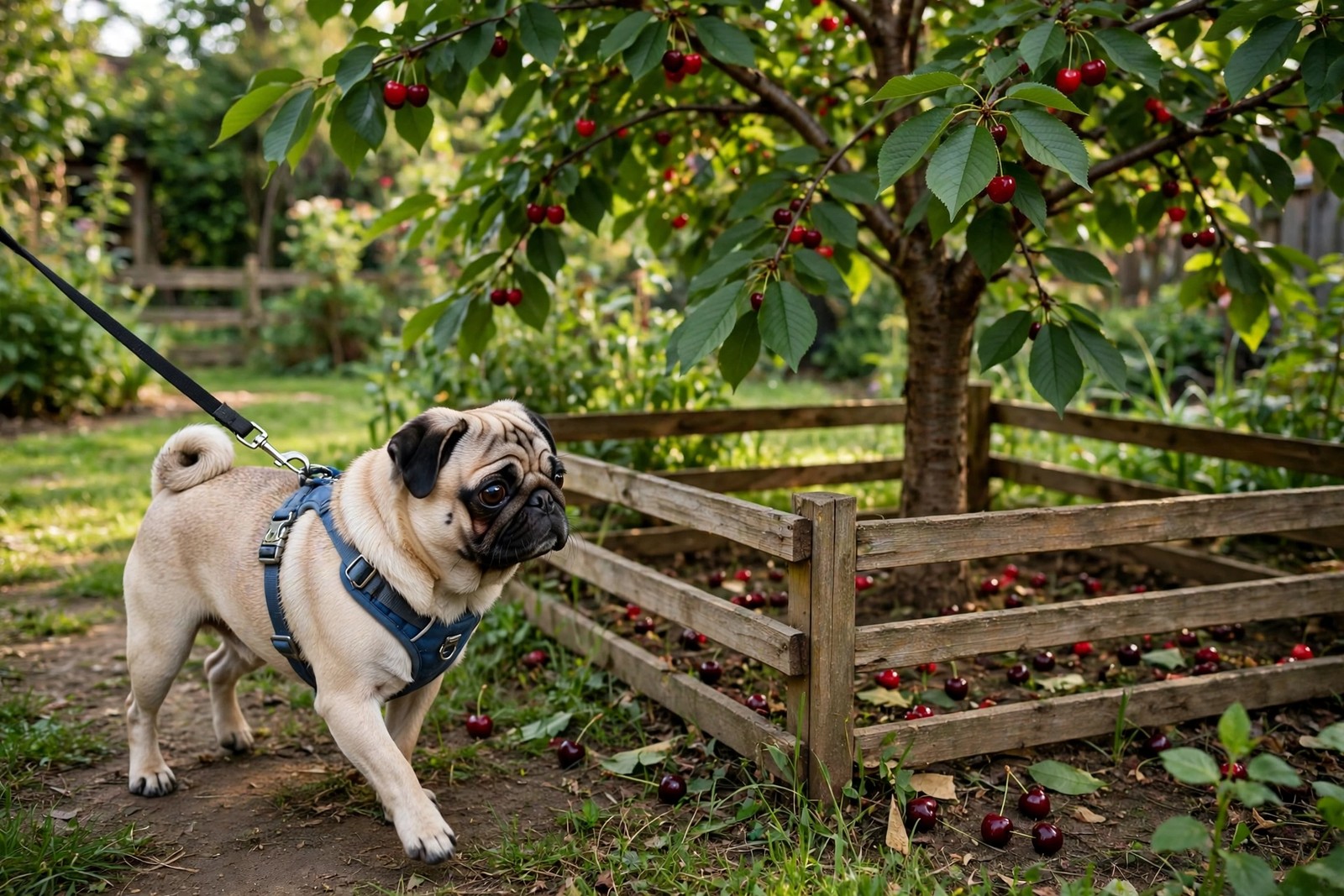
Dogs should not eat cherries. This is a no with a small nuance inside it: the ripe flesh, fully pitted, is not the main danger, but the fruit as a dog actually encounters it, whole, with pit, stem, and sometimes leaves attached, is a genuinely risky package for very little reward.
The Pit Is a Mechanical Hazard First
A cherry pit is small, hard, and smooth, which makes it easy to swallow and capable of lodging in the throat of a small dog or blocking the intestine further down. One pit may pass through a large dog unnoticed, while several pits eaten from fallen fruit can obstruct a small dog's narrower gut. Signs of a blockage include repeated vomiting, loss of appetite, a painful or swollen belly, straining without producing stool, and unusual quietness, and any dog showing them after access to cherries needs a veterinarian the same day. Pits a dog crunches rather than swallows add a second problem, because a cracked pit exposes its kernel directly.
Cyanide Compounds, In Honest Proportion
Cherry pits, stems, and leaves contain compounds that can release cyanide when chewed and digested. The amounts in a single accidentally eaten cherry are small, and a healthy large dog that swallows one whole cherry will most often come to no harm, which is worth knowing before panic sets in. The risk grows with quantity and with chewing: a dog that grazes fallen cherries under a tree, crunching pits and stripping leaves, is taking in far more than the one-cherry scenario. Signs that warrant an immediate veterinary call include difficulty breathing, bright red gums, dilated pupils, weakness, or collapse. When in doubt, call and describe how many cherries, roughly, and whether pits were chewed; that detail changes the advice you will get.
Where Exposure Actually Happens
Few owners deliberately feed cherries, so prevention is environmental. Garden cherry trees drop ripe and overripe fruit exactly at dog height, and a grazing dog can eat dozens before anyone notices, so fence the tree's drop zone in season or clear fallen fruit daily. Indoors, keep the fruit bowl off low tables during cherry season, put pits straight into a closed bin rather than a plate left on a sofa arm, and brief guests, who are the most likely people to offer a dog a cherry as a cute shared moment. Processed cherry foods do not solve anything: cherry yogurt, jam, and baked goods add sugar and sometimes sweeteners, and dried cherries concentrate both sugar and any pit fragments missed in processing.
Safer Fruit for the Same Moment
If the appeal was sharing a small, sweet fruit, blueberries are the straightforward substitute: no pit, no stem problem, easy to portion, and most dogs accept them happily. A few pitted, plain pieces of watermelon flesh or a slice of banana cover the same ground. The decision to make is simply that cherries stay people-only in your house, permanently, with no pitting ritual for the dog. Writing cherries onto the never-feed list in KinsLe through Care Teams makes that rule visible to sitters, walkers, and visiting family at fruit season, which is when a well-meant handful is most likely to be offered.