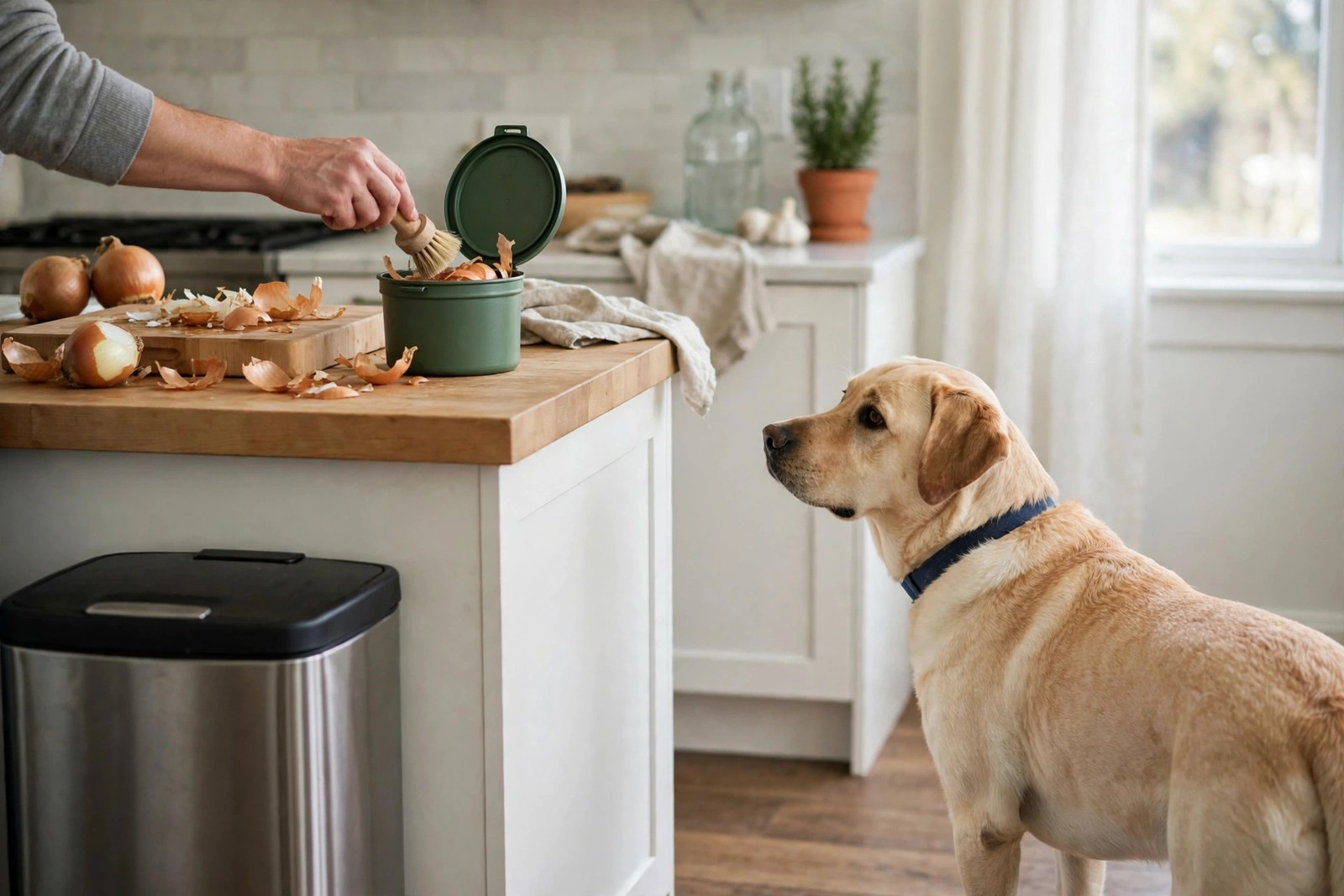
No — dogs must never eat onions in any form: raw, cooked, dried or powdered. Red, white, brown and spring onions all count, and shallots belong on the same banned list, because every one of them is an allium carrying the same harmful chemistry. Those compounds oxidatively damage a dog's red blood cells, breaking them down faster than the body can replace them, and the anaemia that follows builds over several days. Cooking does not destroy the compounds, drying concentrates them, and no portion is small enough to call safe as a deliberate feed. Onion is not a grey area in dog feeding; it is a closed door.
The Delayed Anaemia Pattern
Onion poisoning is easy to miss precisely because it is slow. A dog may show early stomach upset, vomiting or diarrhoea, or nothing obvious at all, and then become progressively tired and weak over the following days as red blood cells are lost. The later signs are unusual lethargy, pale gums, faster breathing or heartbeat, reduced appetite, and urine that looks dark or reddish. That timeline means the day a dog eats onion is the day to act, not the day the dog finally looks ill. If you know or suspect onion was eaten in a real quantity, call your veterinarian the same day, describe the form and the rough amount, and follow the monitoring plan you are given rather than inventing one. Do not try to make your dog sick at home unless a veterinarian specifically directs it.
Powder: the Hidden Route onto the Plate
Fresh onion is visible and most owners already guard it. Onion powder is the form that actually reaches dogs, because it hides inside gravy granules, stock cubes, sauce mixes, marinades, ready meals, takeaway dishes and even the savoury baby food some owners use to tempt a sick dog. A gravy made from a mix and poured over a dog's dinner can carry more onion than a slice of the fresh vegetable, in a form nobody at the table tasted. The defence is label reading as a household habit: any mix, sauce or stock destined for a dog's bowl gets its ingredient list checked for onion and onion powder first, and if onion appears, the dog's portion is served plain. Leftovers are the other quiet route, because a plate of roast dinner carries onion in the gravy, the stuffing and the roasted pieces themselves, which is why a dog's share of a family meal should be built from plain, known ingredients rather than scraped from finished plates.
Storage and the Multi-Dog Problem
Keep whole onions in a closed cupboard or a high rack rather than a low vegetable basket, because a dog can worry the papery skin off a stored onion and eat the flesh beneath, and keep onion powder with the same care as the other allium seasonings. Sweep up peelings and chopped pieces during cooking, and bin skins in a lidded caddy instead of an open compost heap a dog can raid. In a multi-dog household, an onion incident is rarely a one-dog incident: if a seasoned dish is stolen and shared, assume every dog with access may have eaten some, name them all when you call your veterinarian, and watch the whole group across the following days rather than only the dog you saw at the bowl. In KinsLe Care Teams, the onion ban belongs alongside the everyday feeding duties, so a helper checking the plan sees the warning before gravy or stock reaches a bowl.