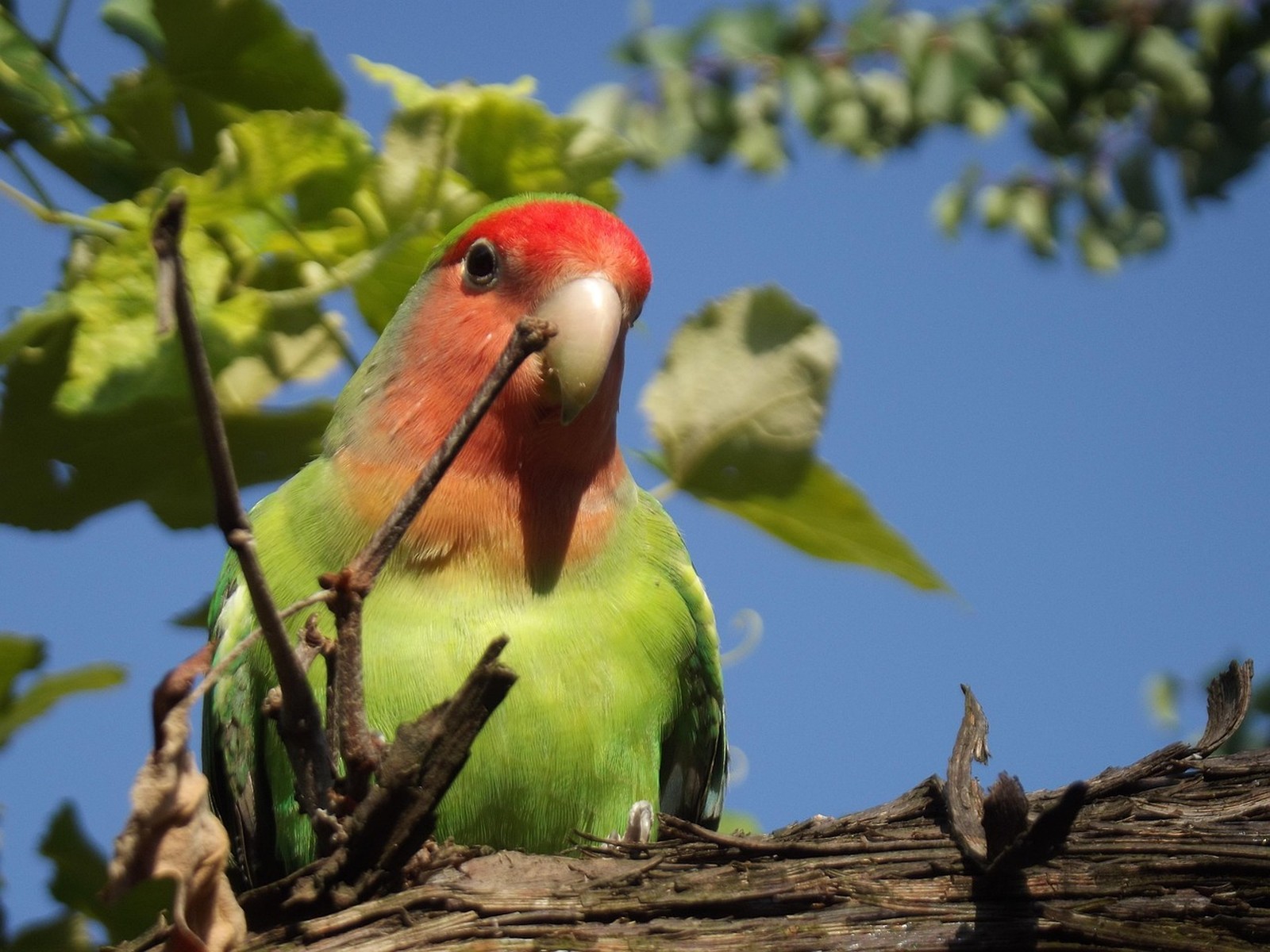
You can keep a single lovebird, and many single lovebirds are deeply bonded, happy birds. There is a real condition attached, though, and it is time, not cage size or toys. A lovebird without a partner needs you, for hours, every day. If that sentence already feels difficult, the answer for your household is a pair, and choosing a pair is not a lesser outcome; it is the honest one.
What a single lovebird actually needs
In the wild, lovebirds live in flocks and pair closely, staying in near-constant contact with their chosen companion. A single pet bird transfers that whole social need onto its people. In practice that means several hours of direct interaction daily: talking, training, shared play, and simply being out on or near you while you read or work, plus supervised out-of-cage flying time in a bird-safe room. A bird who gets twenty minutes before work and an hour in the evening is not getting company; it is getting visits.
Weekends do not balance out empty weekdays, and holidays, new jobs, and new babies all have to be thought through before the bird arrives, because a single lovebird experiences your absence as the loss of its entire flock.
Signs the arrangement is failing
Loneliness in lovebirds has a recognisable shape. Persistent loud contact calling when you leave the room, feather plucking or over-preening, aggression and hard biting that were not there before, listlessness, and a bird who clings desperately the moment the cage opens all point the same way. These are not naughtiness, and toys alone do not fix them. A bird showing them needs more company, either much more of yours, structured across the household, or a feathered companion introduced properly.
What choosing a pair changes
Two lovebirds keep each other company around the clock in a way no human schedule can. They preen, feed, and roost together, and their need for you drops to a level most households can meet with daily handling and out-of-cage time. The trade-offs are real: a bonded pair is usually less devoted to people, can be noisier together, may become territorial around the cage, and needs a cage sized for two with room to move apart. Two birds also mean double the vet costs and the possibility of eggs if you keep a male and female together, which brings its own management. Introductions matter too: a new bird should be quarantined and introduced gradually in neutral space rather than simply placed in the resident bird's cage.
Making a single-bird home work
If you choose one bird, build the day deliberately. Keep the cage where household life happens, not in a spare room. Set fixed flock hours morning and evening, rotate foraging toys so the cage itself holds interest, teach simple target and step-up games that make interaction active rather than passive, and arrange cover for holidays before you need it. Household members can share the load, but the bird needs the total, whoever provides it.
That sharing is exactly where structure helps. With KinsLe Care Teams, the morning flock time, evening play session, and cage duties can be assigned across the household and timestamped as each is completed, so a single lovebird's company is planned and visible rather than assumed and quietly missed.