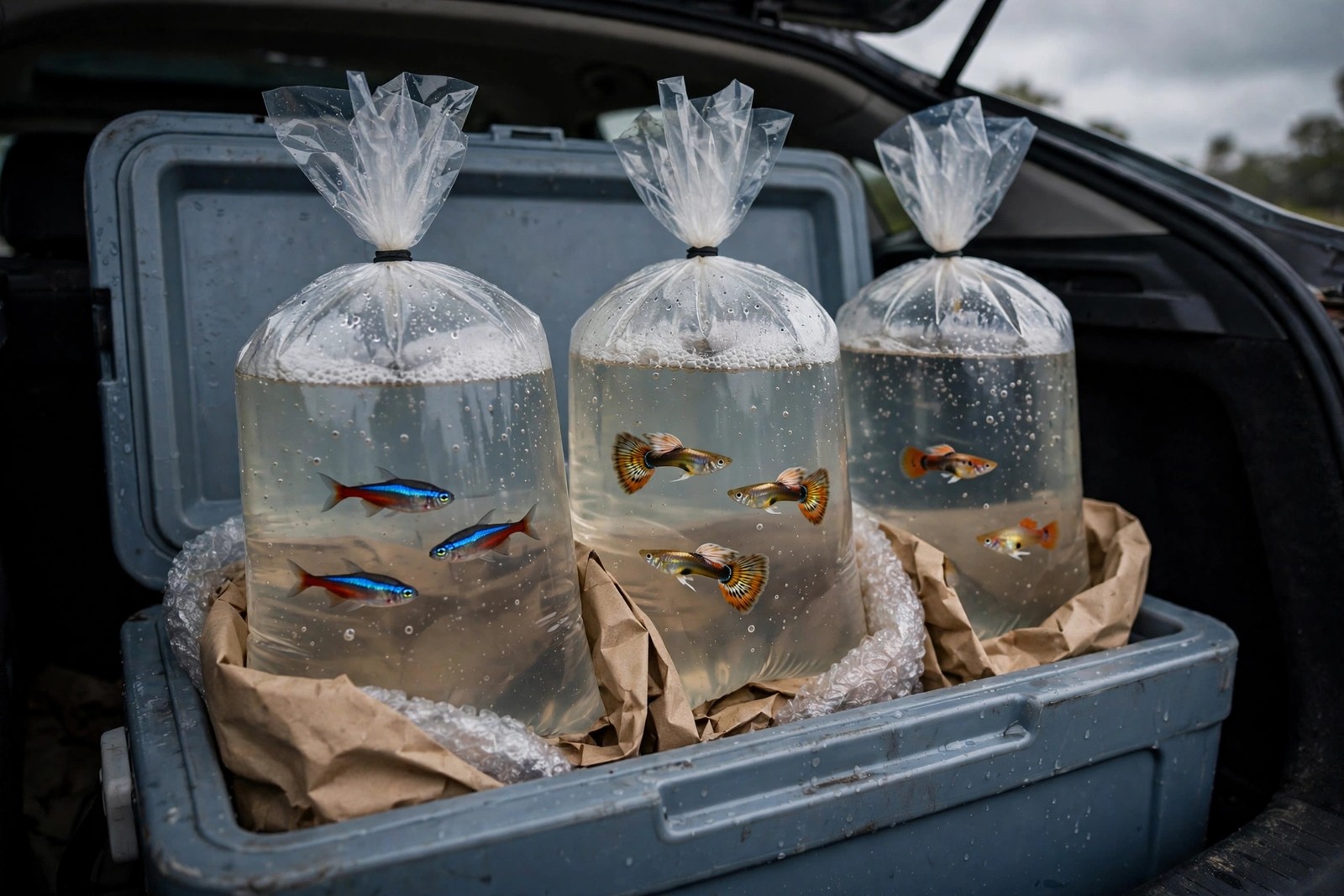
Sometimes, yes — a healthy, hardy fish moved carefully over a few hours usually travels better than owners fear. But 'can' is not 'should' for every fish and every journey. Delicate, very large, aggressive, or already ill fish, and trips stretching over a full day with an overnight stop and no tank ready at the far end, often call for a different plan.
Decide before you pack anything
Ask three questions honestly. Is a cycled tank, or at least a prepared holding setup with dechlorinated water at the right temperature, waiting at the destination? Is this fish robust enough for hours of darkness, vibration, and changing temperature? And is there a capable sitter who could simply keep the fish at home instead? For a holiday, home almost always wins. For a house move, travel may be unavoidable, and the work below is what makes it survivable.
There are no vaccinations or travel documents for pet fish — the preparation that matters is water, oxygen, and temperature, not paperwork.
Prepare the fish and the bags
Stop feeding 24 hours before departure so waste in the bag stays low, because ammonia builds fast in a small volume of water. Use strong fish bags, double-bagged, filled about one-third with clean tank water and two-thirds air — or pure oxygen from an aquatics shop for longer trips, which is worth arranging for anything beyond a few hours. Seal with as little sloshing room as practical, place one fish per bag for spiny, large, or aggressive species, and pack the bags upright in an insulated box or cooler, cushioned so they cannot roll. Darkness calms fish and slows their metabolism, so close the box and leave it closed.
Keep the box on a flat surface out of direct sun, away from air-conditioning blasts and heaters, and aim for stability rather than a perfect number — repeated swings do more harm than a degree or two of drift. Battery-powered air pumps and heat packs designed for livestock transport help on the longest drives, used as their makers direct.
At the destination, tank before fish
Set up and fill the destination tank first, get filtration and heating running, then float the sealed bags to equalise temperature for 15 to 20 minutes before opening them. Add fish to the tank and discard the bag water rather than pouring its waste into the clean setup. Feed lightly the next day, not on arrival night, and watch closely for a week: white spots, clamped fins, gasping, or refusal to eat after travel deserve prompt advice from an aquatics specialist or vet.
Plants, snails, and tank mates need the same thought — never pack fish in a bucket of loose water that will slosh, chill, and spill at the first roundabout.
If the honest answer to those opening questions is that home care is kinder, KinsLe's Care Pass makes that choice practical: it gives a trusted sitter time-limited access to your feeding amounts, water-change schedule, and equipment notes, so your fish keep their exact routine while you make the journey without them.