
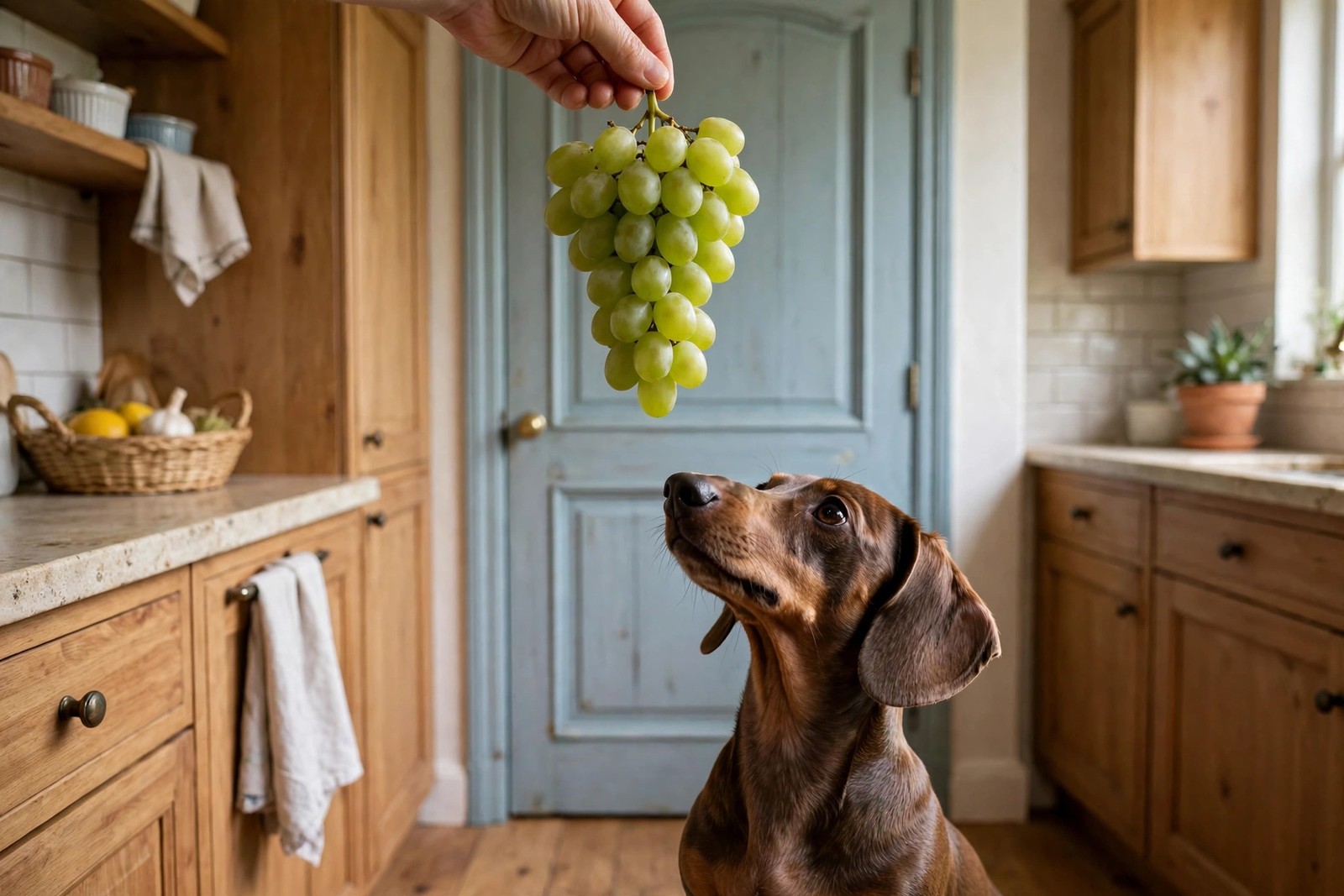
No, dogs should never eat grapes, raisins, or currants — there is no known safe amount, and even a small quantity has caused serious kidney harm in some dogs. Keep grapes and raisin-containing foods completely out of your dog's diet, store them where your dog cannot reach them, and seek veterinary help immediately if your dog eats any.
Why Grapes and Raisins Are So Risky
What makes grapes unpredictable is that sensitivity varies widely. One dog might eat a grape with no obvious immediate effect while another becomes very ill after a similar amount, and there is currently no reliable way to predict which dog will react. Because the outcome can be severe, veterinarians treat every ingestion seriously.
Raisins are concentrated grapes, so a small handful in trail mix, cereal, oatmeal cookies, fruitcake, hot cross buns, or a child's lunchbox can hold more risk than it looks. Currants and sultanas belong to the same family and should be treated the same way. Grape juice and wine are also unsafe — alcohol adds its own danger on top.
Watch after any possible ingestion for vomiting within hours, loss of appetite, lethargy, belly pain, diarrhea, increased or decreased urination, and wobbliness. Signs can be delayed, so do not use a quiet first hour as reassurance.
Hidden Places Grapes Turn Up
Most owners know not to offer a fresh grape as a treat, but accidents usually come from hidden sources:
- Trail mix and granola on coffee tables and in coat pockets
- Baked goods left to cool on counters a large dog can surf
- Lunchboxes, school bags, and picnic baskets on the floor
- Fallen grapes under kitchen tables and vines in gardens
- Garbage and compost containing discarded fruit
Teach children that grapes are a people-only snack to eat at the table, not to share or drop. If you grow grapes, fence the area or pick up fallen fruit daily during harvest, and supervise dogs in the yard.
What to Do If Your Dog Eats Grapes or Raisins
Call your veterinarian or an emergency vet immediately — do not wait for symptoms and do not induce vomiting unless you are told to. Tell them your dog's weight, what exactly was eaten (fresh grapes vs. raisins), the estimated amount, and the time. Bring packaging if it was a baked or packaged food, because the raisin content matters.
Early care gives the best chance of a good outcome, so treat the call as urgent even at night. If your regular clinic is closed, you need an emergency option fast — KinsLe's Pet Services Directory helps you find local veterinarians, groomers, sitters, and trainers, so you can locate nearby veterinary help quickly when every minute counts. Saving your vet's and nearest emergency clinic's numbers in your phone before you ever need them is a smart backup step.
Safe Fruit Alternatives — With Vet Common Sense
If you want a fruity treat, ask your veterinarian what suits your dog, as some dogs with medical conditions need restricted diets. For many healthy dogs, small pieces of apple without seeds and core, blueberries, or banana as an occasional treat are commonly offered. Keep portions tiny, wash fruit, remove pits and cores, and introduce any new food slowly.
The rule for grapes, though, has no exceptions or moderation version: none, ever.
Before any grape goes missing, the Pet Services Directory listing on KinsLe points toward neighborhood veterinary help without a frantic scramble.