
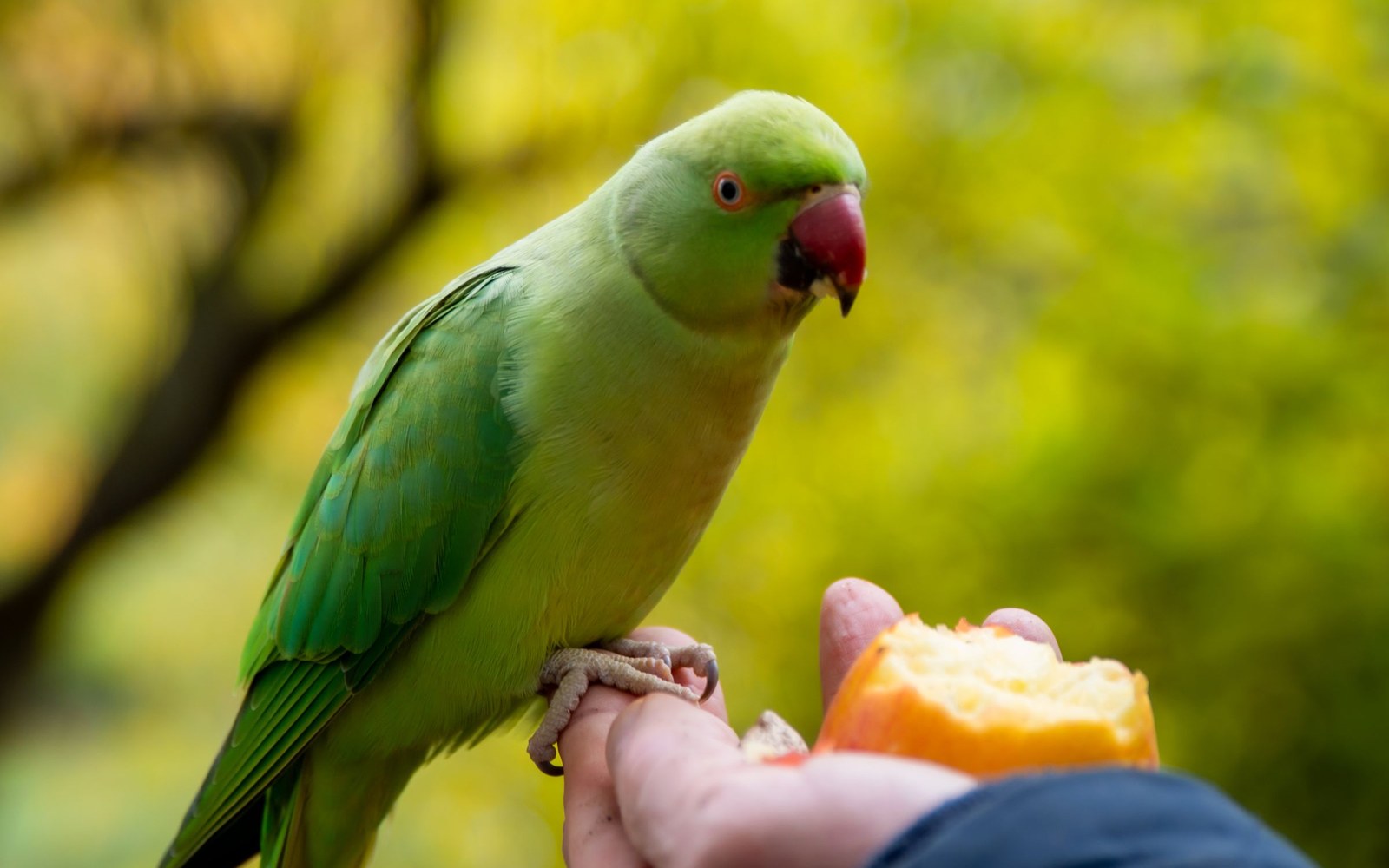
Yes — most parrots can have fruit daily in treat-sized amounts, provided it plays a supporting role, not the lead. Fruit is naturally sugary, so vegetables deserve the bigger share of the fresh-food bowl, with berries, melon, papaya, or a bite of apple offered in treat-sized portions alongside.
Why Vegetables Should Outweigh Fruit
Wild parrots eat a great deal of unripe fruit, which is far less sweet than the ripe, cultivated fruit in our shops — fruit has been bred for human taste buds, not parrot metabolism. A parrot who fills up on sweet fruit often skips the vegetables that deliver vitamin A, calcium, and fiber in better balance, and the extra sugar adds calories a cage bird does not burn off in flight. Owners also notice a practical effect: fruit-first parrots get fussy, holding out for the sweet course and ignoring everything else. Keeping vegetables as the main event and fruit as the garnish avoids both problems.
The Fruits Parrots Tend to Love
- Berries — blueberries, raspberries, and strawberries are nutrient-dense and perfectly beak-sized
- Papaya and mango — rich in vitamin A and a favorite of many larger parrots
- Melon — hydrating and gentle, good on warm days
- Kiwi and pomegranate arils — fun textures that double as foraging entertainment
- Apple and pear slices — always with the seeds removed
- Banana — fine in small pieces, but among the sweetest options, so keep it occasional
Citrus is safe for most parrots in moderation too, though many birds simply are not fans of the tartness.
How Much Is a Sensible Daily Portion
A workable rule of thumb is a fresh-food mix of roughly seventy percent vegetables to thirty percent fruit. In practical terms, that might be a tablespoon of chopped fruit for a medium parrot like a conure or African grey, scaled up for a macaw and down to a few berry halves for a budgie-sized bird. Fruit also earns its keep as a training reward and foraging treasure — a blueberry hidden in a paper cup is worth more to your parrot than one sitting in a bowl. Weigh your bird regularly and let body condition, guided by your avian vet, settle the exact amount.
Safety Checks Before You Share
Wash fruit well, and always remove pits and seeds: apple seeds and the pits of peaches, cherries, and plums contain compounds that are harmful to birds. Introduce new fruits one at a time so you can spot any digestive upset. If your parrot is overweight, elderly, or has a health condition your vet is managing, ask the vet how fruit fits the plan — for some birds, the sugary end of the menu needs tighter limits.
No More Double Desserts
Parrots are world-class beggars, and a charming bird can collect a strawberry from you, a grape from your partner, and a banana chip from your teenager — each person believing they were the only treat of the day. Sharing his profile through KinsLe's Family Sharing with the family members you choose simply puts his page in their hands too, alongside your own. Portion discipline still rests on the people serving the fruit, not on any profile. Family Sharing on KinsLe is that profile access alone, extended to your chosen family for a parrot whose begging already reaches everyone at home.