
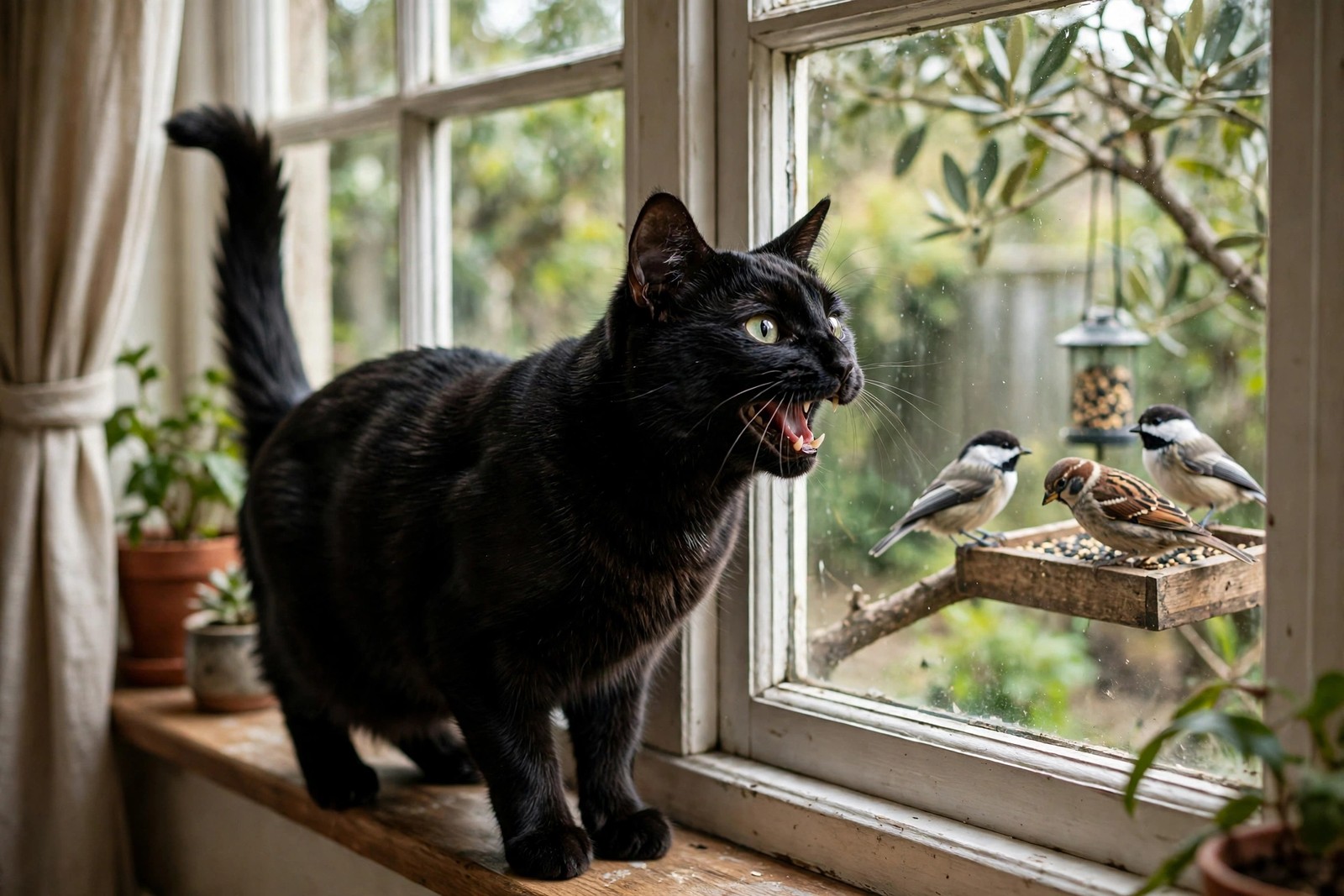
For most cats, watching birds through a window is healthy, satisfying mental stimulation — a form of entertainment they genuinely enjoy. It can frustrate a minority, though: a cat who chatters constantly, lashes her tail, pants, or redirects her excitement onto a housemate or your ankles may be getting more arousal than satisfaction from bird TV, and that is your cue to change the routine.
What normal window watching looks like
A contented watcher is loose-bodied: ears forward, pupils changing with the light, maybe a soft chatter or chirp at a bold sparrow. She shifts position, dozes off mid-program, and can walk away when something better — your arrival, dinner — appears. Chattering itself is not distress; it is a common response to spotting prey, part excitement and part practice of the killing bite. Many cats watch daily for years with nothing but pleasure to show for it.
Signs the show is frustrating her
Frustration builds when arousal has nowhere to go. Watch for:
- Redirected aggression — she suddenly swats, hisses at, or chases the other cat or dog right after intense window sessions.
- Escalating body language — tail lashing like a whip, flattened ears, growling, or fixating for very long stretches without relaxing.
- Glass-directed behavior — lunging at the window, scratching frantically at it, or yowling at outdoor cats specifically.
- Stress spillover — over-grooming, appetite changes, or tension that lingers long after she leaves the sill.
Outdoor stray cats are the most common trigger: an indoor cat who can see but never reach a feline intruder on her territory can become genuinely distressed, and sometimes starts urine-marking near the window.
How to keep bird TV fun
The simplest fix is a release valve: follow window time with interactive play she can actually catch. Ten minutes of wand toy after a big bird morning lets her complete the hunting sequence — stalk, chase, catch, eat — that the window only started. Rotate which windows are "open for viewing" if one particular view (usually the one with the neighbor's cat) causes trouble, and close blinds at peak stray-cat hours, often dawn and dusk. A perch one room back from the glass can also lower the intensity for easily wound-up cats while keeping the entertainment.
When to dig deeper
If frustration behaviors are new, frequent, or paired with marking, aggression that injures, or appetite changes, talk to your veterinarian. Pain, thyroid issues, and anxiety disorders can all lower a cat's frustration threshold, and a vet or certified behaviorist can separate a bird-TV problem from a medical one. Do not punish chattering or lunging — she is not being bad, she is overwhelmed.
Note her quirks where caregivers will see them
Every cat has a window personality, and the people who care for her should know it. On KinsLe, each pet has a unique QR ID profile where you can jot those quirks — "play session after bird watching, close the living-room blinds at dusk" — so sitters and family handle her exactly the way you do. One scan gives a caregiver her profile and your notes. Want more on reading your cat's moods? Anyone covering an evening can scan the code attached to the Verified QR ID Pet Profiles record on KinsLe and confirm this black cat is yours before following her dusk blind and wand-play notes.