
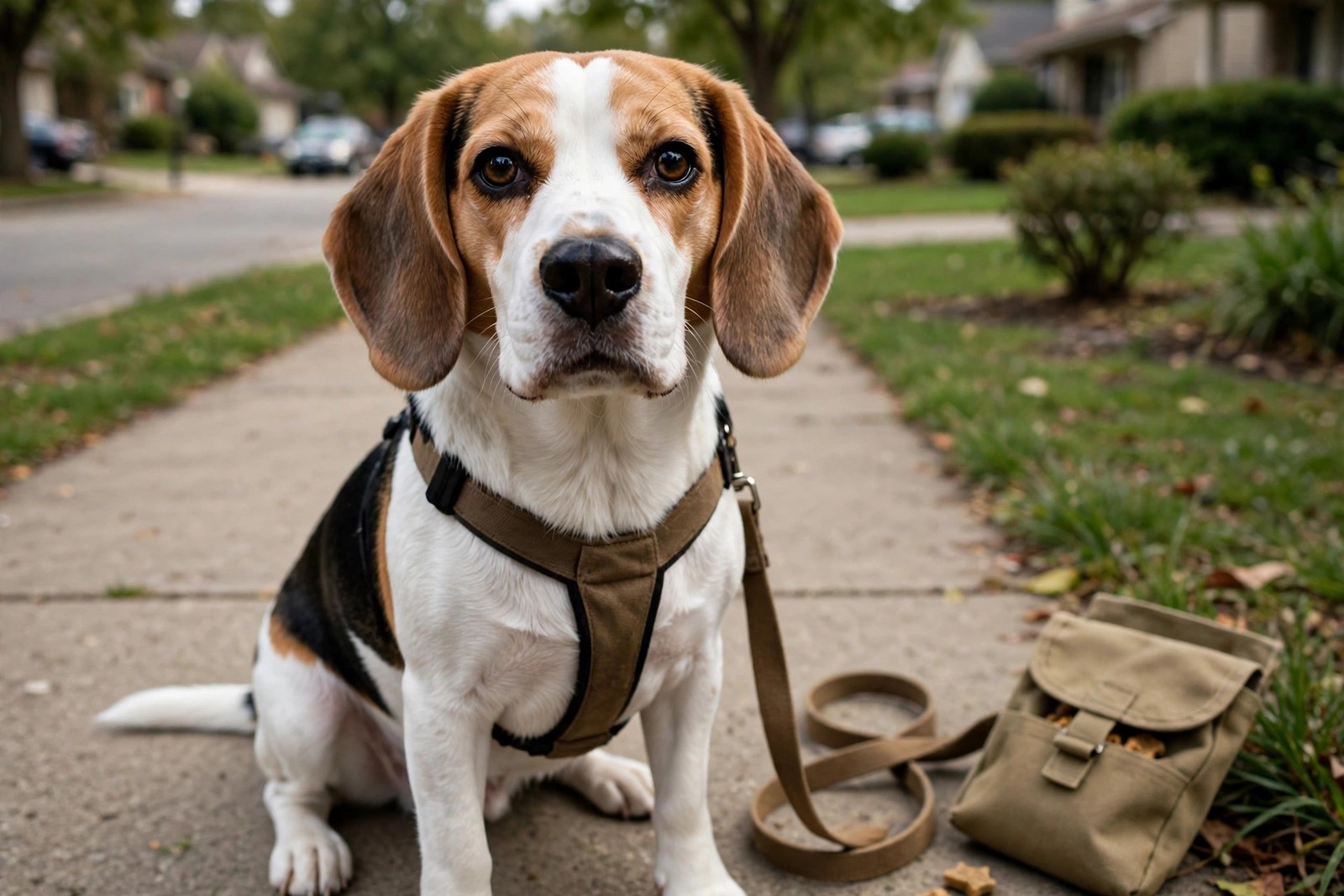
Yes — and with Beagles the honest answer needs a second word: they bay. A Beagle has a short bark for the doorbell, a sustained bay when a scent line pulls at it, and a full howl it may save for sirens, loneliness, or joining in with another dog. That layered voice was the breed's working tool for centuries, letting hunters follow a pack they could not see, so expecting a Beagle to be a quiet breed is expecting it to ignore its original job.
The Nose Starts Most of the Noise
Many Beagle outbursts begin with smell rather than sight. A rabbit trail across the yard at dawn, a neighbour's barbecue, or an unfamiliar dog that passed the fence an hour ago can all trigger baying that looks unprovoked to you because the evidence is invisible. Scent-driven barking tends to come with the nose working the ground or the air, the tail up and wagging stiffly, and a dog who is difficult to interrupt mid-call. Boredom baying sounds different: it is repetitive, happens when the dog is alone or under-exercised, and often pairs with fence-running or digging.
What a Beagle Day Needs to Stay Quieter
Beagles are busy, food-obsessed, endurance dogs in a medium body, and a short lead walk around the block rarely empties the tank. Sniff-heavy walks where the dog is allowed to work scent at its own pace tire a Beagle far better than the same distance marched briskly. Scatter feeding in grass, rolled-towel scent games, and tracking treats hidden around the garden give the nose legal work at home. A Beagle who has used its nose, eaten on schedule, and had company through the day will still announce visitors — that part is the breed — but the announcements end instead of escalating into an afternoon of baying at nothing you can identify.
Teaching Quiet to a Dog Bred to Call
Punishing the bay rarely works, because the dog is reporting, not misbehaving in its own mind. What works is a two-part exchange taught in calm moments first: let the dog bark two or three times at a mild trigger, say your thank-you cue, then present a high-value treat away from the window or fence so turning to you pays better than continuing. Once that pattern holds, add a quiet cue before the treat. Practise in five-minute bursts, end while you are winning, and keep every family member on the same sequence, because a Beagle who gets shouted at by one person and fed by another simply learns that barking makes the whole house noisy and interesting.
With scent work, real exercise, and that shared routine in place, most Beagles become neighbourhood-acceptable announcers rather than constant noisemakers, though thin walls and a noise-sensitive household are still fair reasons to choose a quieter breed. Through KinsLe Care Teams, the morning sniff walk, the evening scent game, and the feeding times can each sit with a named person and a completion stamp, so the days your Beagle bays longest can be checked against the days its favourite jobs were skipped.