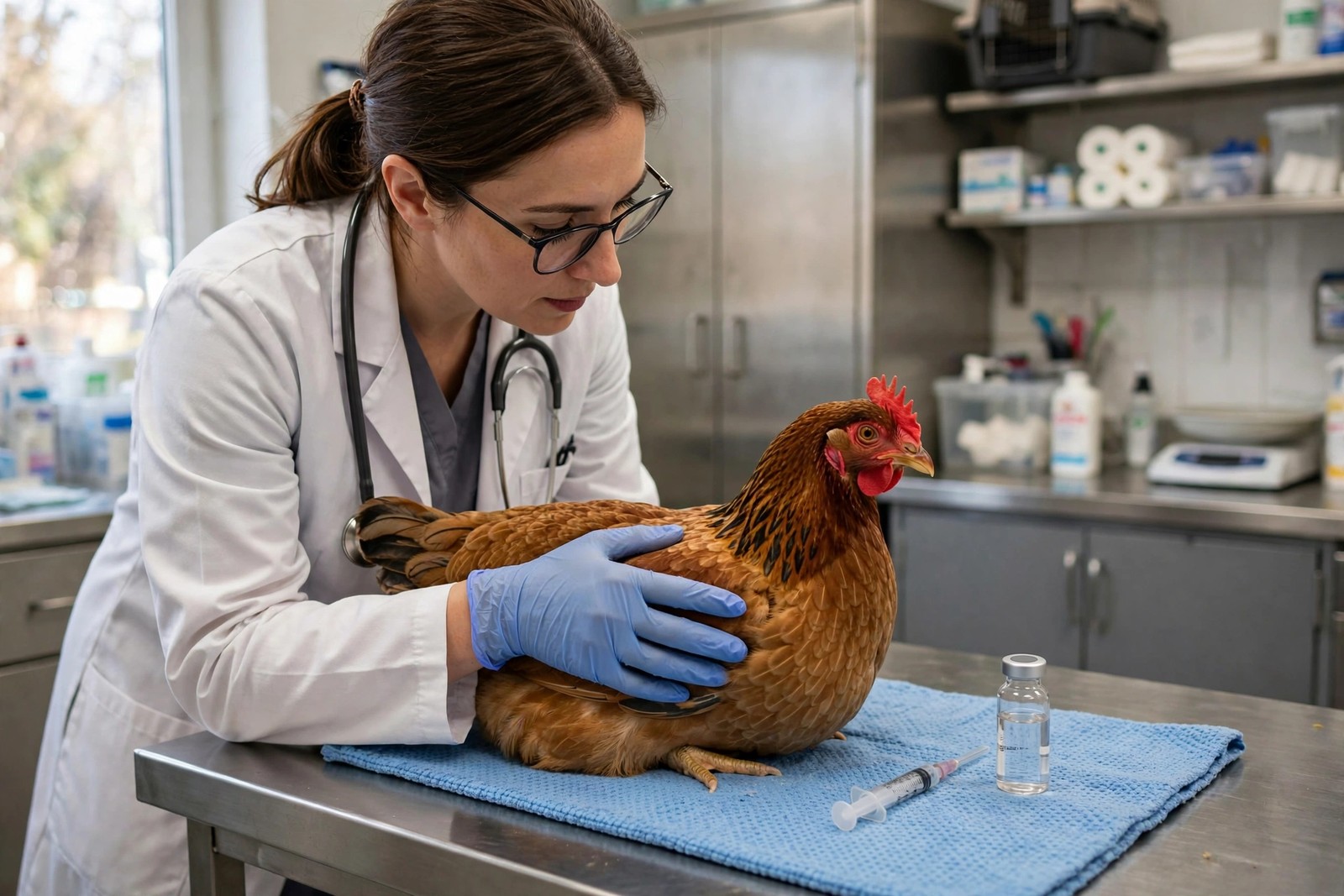
Whether a backyard flock needs vaccinating has no single answer, because it depends on where the birds came from and what disease pressure surrounds them. Marek's disease is the case most small keepers meet: hatcheries usually vaccinate chicks against it on their first day, so bought-in birds often arrive already covered, and that protection cannot usefully be added later at home. Beyond that one, programmes diverge sharply — commercial units follow a schedule covering diseases such as infectious bronchitis, Newcastle disease and Gumboro, while many backyard flocks rely on Marek's cover alone, or none at all, and lean on good management for the rest. The starting point is always the same: find out what your birds have already had, then let a vet who knows local risk judge what, if anything, is missing.
Biosecurity Is the Backyard Flock's Real Vaccine
For a small flock, the measures that prevent the most disease are management, not needles: quarantine new birds away from the flock for at least two to four weeks (most flock diseases arrive on new birds), keep wild birds out of feed and water where you can, clean water daily, control rats (they carry disease and attract predators), rest and lime ground that has held birds a long time, and buy from sources who can tell you their birds' vaccination history. Vaccines that need administering to adult backyard birds exist for specific local risks — fowl pox in mosquito-heavy regions is one example — which is why a five-minute conversation with a poultry vet when you set up beats any generic list. Note the legal layer too: some diseases (avian influenza, Newcastle disease) are notifiable in many countries — suspected cases go to the authorities, not just the vet.
Working With Your Vet
With poultry, bring the paperwork before the symptoms. Note which source supplied each bird, what that source said about Marek's cover, and the date any bird joined the flock, then add what you have seen since — appetite, laying, breathing, droppings and any deaths, with dates beside each change. A vet deciding what fits your flock can work from that record in a way a worried recollection at the surgery door never allows, and diagnosis itself stays where it belongs: with the vet who has examined the birds.
Sudden deaths, breathing difficulty with blue combs, a sharp drop in laying with soft or misshapen eggs, or neurological signs in chickens should be reported to a vet (and, for the notifiable diseases, to the authorities) the same day.
Keep that flock record going between visits, not just before them. Jot down egg numbers, feed and water intake, new arrivals and their quarantine dates, and the first day any bird looks off colour; a slow drop in laying across two weeks, or illness that follows a new arrival by days, stands out clearly on paper while memory blurs it into 'recently'. Read it back whenever the flock changes — new birds, a new run, a move, or older hens giving way to pullets — because each change resets what counts as normal for your birds, and the old notes are the baseline that shows it.
One chicken's record travels best as a single packet — that is the job Pet Passport does inside KinsLe, ready to open at the surgery when questions turn to dates or past illness.