
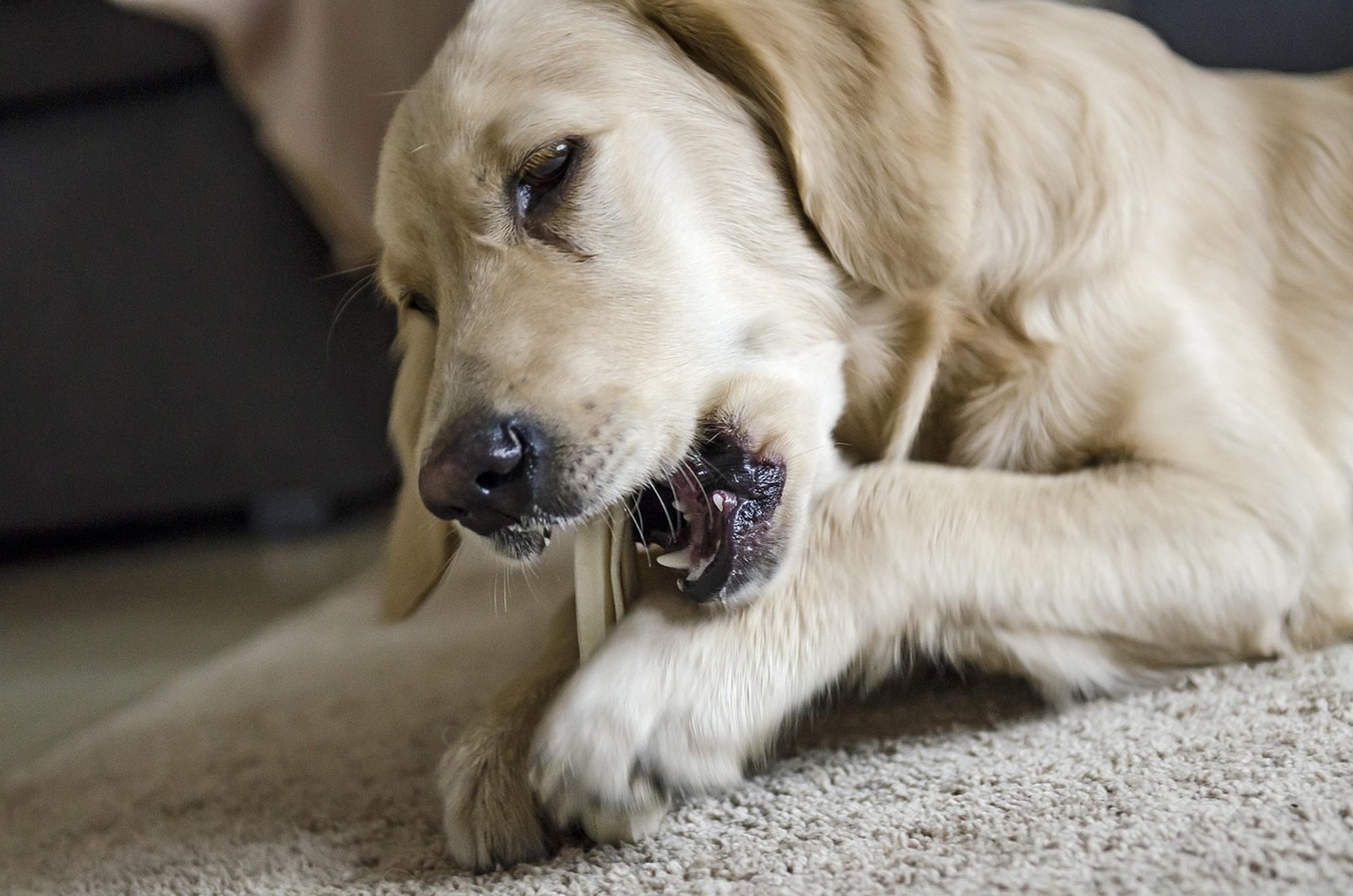
Yes — the right dental chews can help your dog's teeth, by scraping some plaque off as your dog gnaws, but they work best as backup to brushing, not as a replacement for it.
Think of a chew like a helpful scrub between proper cleans. A chew that lasts several minutes, flexes a little, and is sized for your dog will contact more tooth surface than a hard biscuit swallowed in two bites. Products that carry a veterinary dental approval seal have been tested for plaque or tartar reduction, which is a more reliable guide than bright packaging claims about fresh breath.
How Chews Actually Clean
Dogs clean teeth mechanically. As they bite and work a chew back and forth, especially over the large back molars where tartar builds fastest, the texture rubs against plaque before it mineralizes. Longer chewing time matters — that is why a rawhide-style, dental stick, or textured chew your Labrador works on for ten minutes will usually do more than a tiny treat inhaled by a Pug in seconds.
Chews do not clean under the gumline, where gum disease starts, and they cannot remove tartar that has already hardened. If you can see thick, brown buildup or red gums, a bag of chews will not reverse it, no matter how faithfully you offer them.
Choosing a Chew Your Dog Can Handle Safely
Not every chew suits every dog. Keep these checks in mind:
- Match size to your dog — too small is a choking and gulping risk, too large can strain jaws
- Press a thumbnail into it — if it does not give at all, it may be hard enough to crack a tooth
- Watch powerful chewers like Staffies and Shepherd mixes, who can break off and swallow chunks
- Count the calories — daily dental chews can quietly add up, especially for small or weight-watching dogs
- Introduce one new product at a time so an upset stomach is easy to trace
Skip cooked bones and very hard antlers or hooves if your dog is an aggressive gnawer, and always supervise. Take away small end pieces that could be swallowed whole, just as you would with any long-lasting chew.
Where Chews Fit in a Real Routine
A practical weekly pattern for many dogs looks like brushing on most days, a dental chew on the in-between days or as an after-dinner routine, and fresh water always available. Some owners use the chew as the reward immediately after a short brushing session, which helps the dog associate tooth time with something good.
Pay attention to results. After a few weeks, check the back teeth again in good light and note your dog's breath. If plaque is still building quickly, mention it at your next vet visit — breed, tooth alignment, and saliva all affect how fast tartar forms, and your vet may suggest a different product or a professional cleaning.
Staying Consistent Without Nagging Yourself
Dental care fails most often because life gets busy, not because owners do not care. Kimmy, the built-in AI assistant in KinsLe, can send reminders and nudges to restock chews, keep up the brushing routine between vet cleanings, and note when the last bag ran out. That small prompt keeps a good habit from slipping for a month at a time. Kimmy on KinsLe can take your follow-up questions about choosing a safe chew or spacing brushing days, answering from the KinsLe Answers library rather than guesswork.