
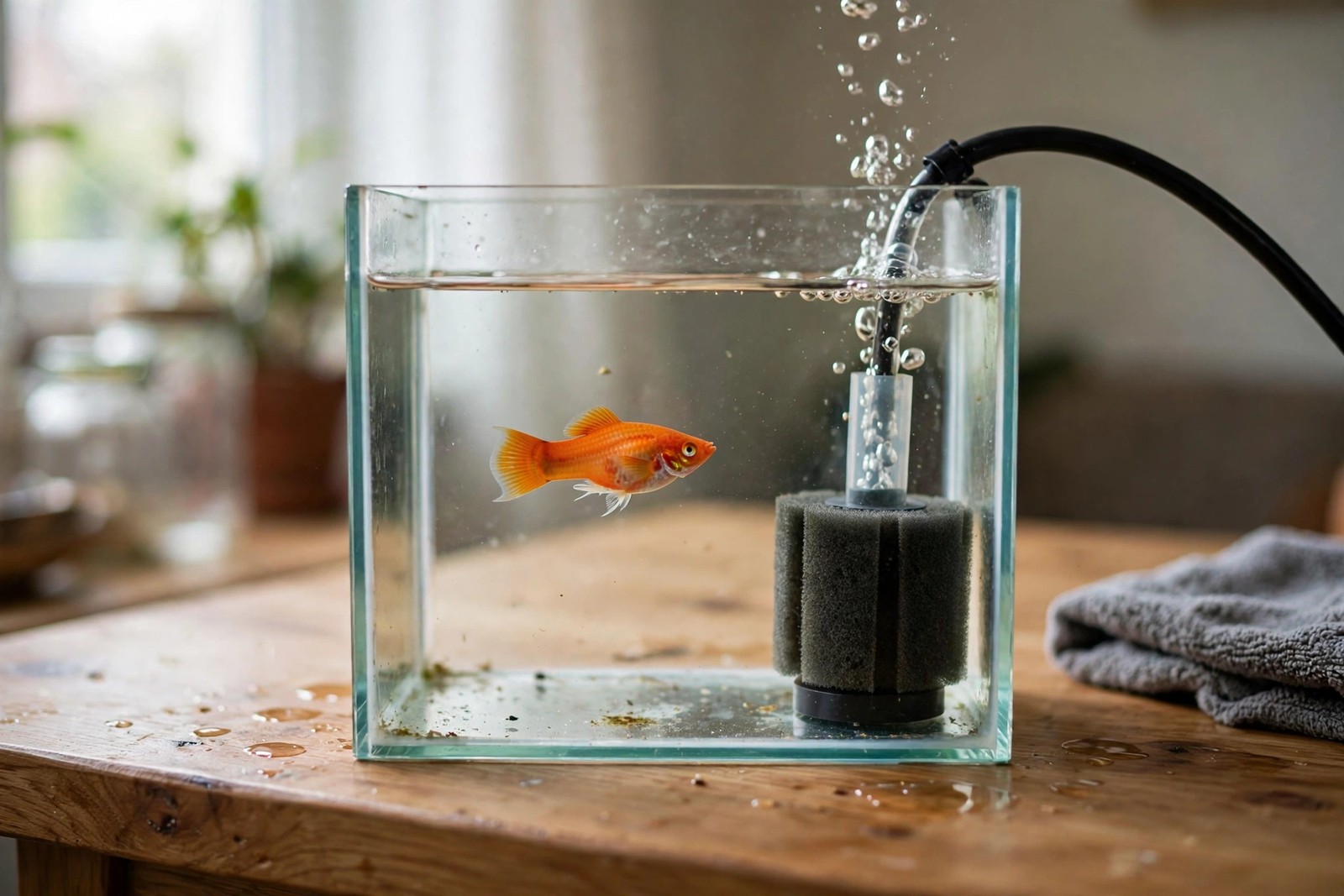
Yes — a quarantine tank is one of the smartest, cheapest investments any fish keeper can make. Fish can look perfectly healthy at the store while carrying parasites or infections that simply haven't shown yet, because stress suppresses symptoms. Shipping, new water, and a display tank full of strangers are stressful, and stress is what lets hidden problems surface. Bringing new fish straight into your display tank is like skipping the health check at the door of a school full of kids. Two to four weeks of separate observation lets you spot poor appetite, spots, clamped fins, labored breathing, or unusual behavior before they reach your established fish. Almost every experienced hobbyist has a story about the one time they skipped quarantine — and the tank they lost.
What a quarantine tank actually needs
It doesn't need to be beautiful. A simple 10-gallon tank (or whatever fits your fish), a spare sponge filter that has been seeded in your main tank, a heater, a thermometer, a lid, and a hide or two are enough. No substrate needed — a bare bottom makes it easy to see uneaten food, waste, and bottom-dwelling parasites. Run it cycled before your fish arrive: move a mature sponge filter over, or dose it the way you cycled your main tank. Keep a dedicated net, siphon, and bucket for it, or disinfect shared tools between uses.
How to run the quarantine weeks well
Float new fish to equalize temperature, then drip-acclimate or gradually mix tank water over 30–45 minutes — fast water changes are a shock. Watch the newcomers eat: a fish that ignores food for days is telling you something. Look for spots, torn or clamped fins, rubbing on decor, hovering near the surface, stringy feces, or any swelling. Keep lights low for the first day, feed small amounts of quality food, and hold a steady temperature — big swings during quarantine undo the whole point. If everything looks clean and everyone is eating eagerly after two to four weeks, they graduate to the main tank.
What quarantine saves you from
Skipping quarantine risks ich outbreaks, internal parasites, and bacterial infections that spread through shared water before you notice symptoms. Treatment in a display tank is far harder: plants, snails, shrimp, and filter bacteria can all be harmed by medications, and dosing a big tank costs more and works less precisely. A quarantine tank turns every problem into a small, contained, cheaper one.
Common objections, answered
"It's only one small fish." One fish is all it takes — parasites multiply fast in warm water. "I don't have room." A 5 or 10-gallon setup fits in a closet or on a desk, and you can break it down between uses. "The store quarantines theirs." Some do, most don't, and even good stores can't guarantee every supplier. "It's too much work." Watching new fish eat and settle in a bare tank is the least work in fishkeeping — far less than treating a full community tank.
How KinsLe helps
KinsLe's Pet Passport is the records packet for each pet — vaccines, medications, allergies, and documents — and it's a natural home for quarantine notes: arrival dates, store of origin, feeding observations, and anything unusual you spotted week by week. When you eventually consult a vet or your fish store, those dated notes turn a vague story into a useful history. Use the Pet Passport record on KinsLe to log a newcomer's arrival day, appetite through the first week, and any mark or clamped fin noticed during observation.