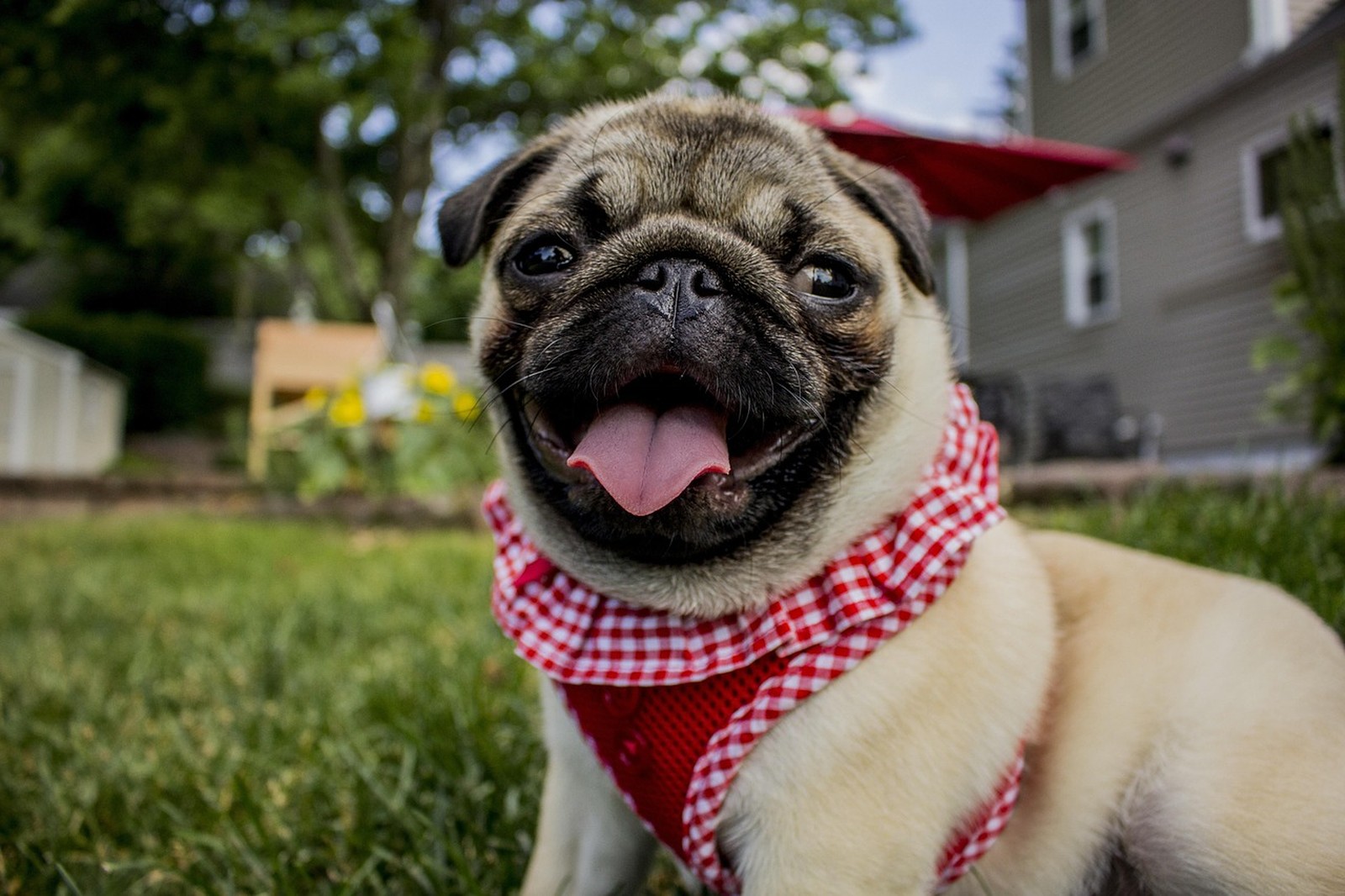
Pugs and cats are one of the more natural dog-and-cat pairings. Pugs were bred purely as companions, and it shows in the traits that matter here: they are sociable with animals as well as people, they have low prey drive compared with hunting or herding breeds, and their preferred indoor pace — a short potter, a snack, a long nap in company — matches a cat's day far better than a working dog's does. Pairs commonly end up sharing beds and sofas. The work of introductions, run over several weeks, is less about preventing disaster and more about managing three Pug particulars: vulnerable eyes, a flat face that handles heat and excitement poorly, and an all-consuming interest in the cat's dinner.
Protecting Pug Eyes Around a Cat
A Pug's large, prominent eyes sit forward in shallow sockets, and a cat's swat — the standard feline warning — lands exactly at eye level. That does not make the pairing unsafe, but it does shape how you run it. Never let the Pug corner the cat or push its face into the cat's space; give the cat high shelves and a gate it can slip through so it can leave instead of swatting. Keep early meetings on a leash with the Pug at a distance where it can be interested without crowding, and reward it for turning back to you. If a swat does connect with an eye, or the eye looks cloudy, squinting or watery afterwards, treat it as a same-day vet visit rather than something to monitor at home.
Short, Cool Sessions for a Flat-Faced Dog
Excitement makes Pugs pant, and a flat-faced dog pants inefficiently: a Pug who gets worked up in a warm room can overheat while doing nothing more strenuous than being thrilled about a cat. Run introduction sessions in a cool room, keep them to a few minutes, and end while the Pug is still breathing comfortably — snorting, roaring breaths and a wide, stressed grin mean the session should already be over. Schedule meetings after a gentle walk rather than after play, offer water, and never hold introductions in a hot car, conservatory or sun-trap room. The same flat face makes Pugs noisy sleepers and snorers, which some cats investigate and others find alarming at first; let the cat get used to the soundtrack through the safe-room door during the scent-swap stage.
Food: The Pug's Real Agenda
Ask a Pug and the cat's chief interest is that the cat is fed, in a bowl, at floor level, often with leftovers. Food theft is a frequent flashpoint in Pug-and-cat homes, ahead of chasing:
- Feed the pair in separate rooms from the first day, and lift the cat's bowl or feed the cat up high where the Pug cannot reach.
- Move the cat's treats and any food-dispensing toys out of Pug range too — a Pug will work surprisingly hard at a puzzle feeder.
- Keep litter trays behind a gate the cat can pass and the Pug cannot, because Pugs are notorious litter raiders.
- Resist feeding the Pug from your plate to distract it during meetings; use its own treats, and count them into its daily food, because Pugs gain weight easily and extra weight worsens their breathing.
The Likely Friendship, and Its Pace
Expect the friendship, if it comes, to look like cohabitation first: the cat stops leaving the room, the Pug stops bothering to watch it, and shared napping follows in its own time. Kittens and young cats usually accept a Pug quickly; an elderly cat deserves a slower plan and a permanently dog-free room to retire to. Keep greetings supervised until several weeks of dull normality have passed, and re-run a short staged introduction if you move house or either animal has a long absence. Families who assign the daily supervised session, the separate feeding and the water-and-rest checks to one named person per day keep the routine gentle and consistent, and KinsLe Care Teams helps by letting you schedule exactly those duties for both pets, with each completed task marked complete with a timestamp.