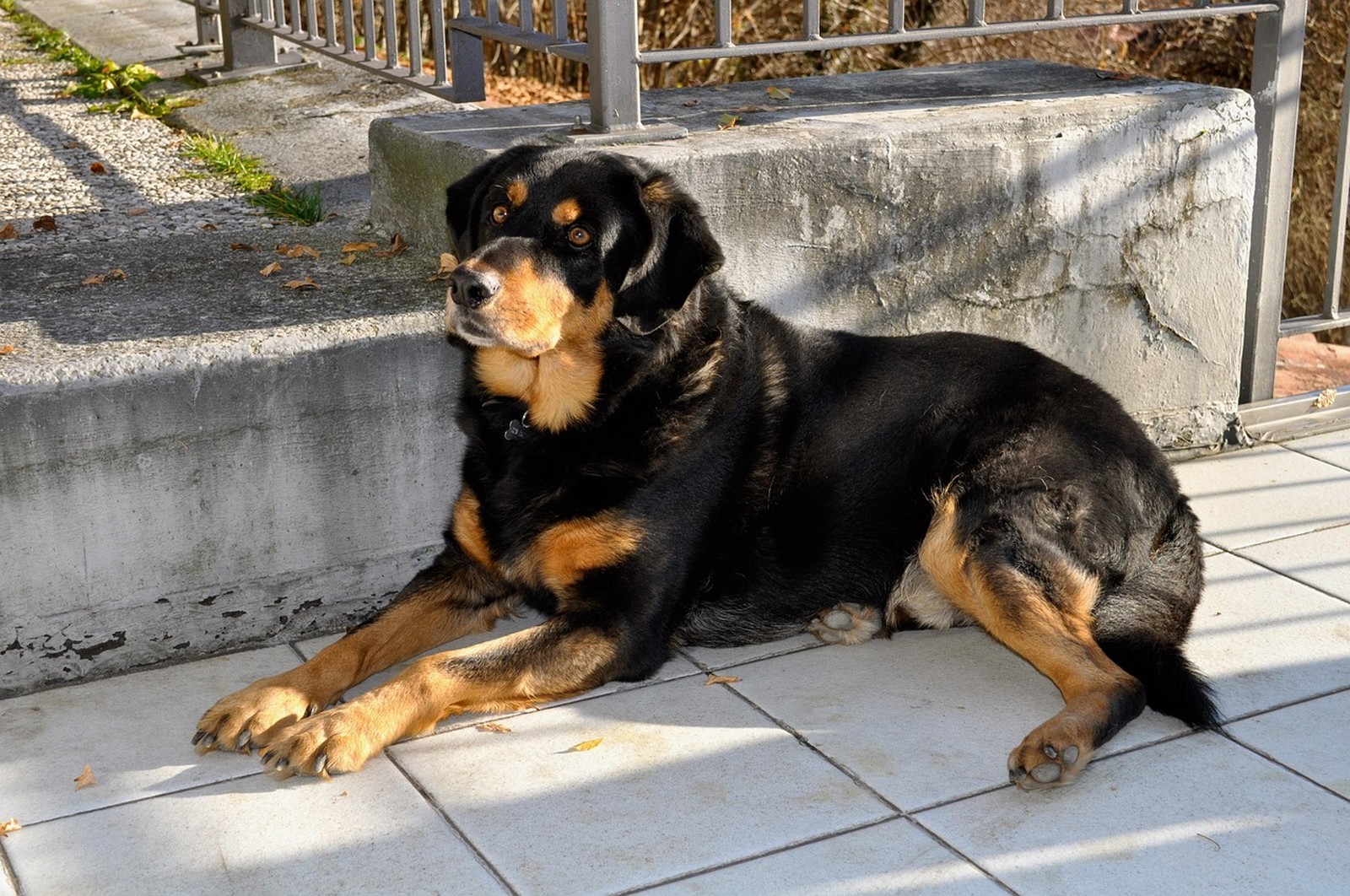
No — the Rottweiler's barking style is best described as economical. Descended from the drover dogs that moved cattle and guarded their handlers' money on the road, the breed learned to watch first and speak when speaking counted. A settled Rottweiler typically ignores the ordinary traffic of a street, keeps its assessment to itself, and reserves its voice for a stranger approaching the property, an unusual disturbance, or something it has genuinely judged to be wrong. When it does bark, the sound is deep, slow-paced, and powerful — a warning designed to be taken seriously, and usually delivered in short, deliberate bursts.
Watchdog Barking Versus Nuisance Barking
The distinction matters with this breed, because the behaviours look different once you know them. Watchdog barking is triggered, brief, and followed by watching: the dog barks at the gate, looks to you, and stands down when you take over. Nuisance barking is repetitive and self-rewarding — hour after hour at a fence, at dogs passing on the other side, at anything moving in the street — and it builds in dogs who spend long stretches alone in a yard with the fence as their only occupation. The first is the breed working as intended and should be acknowledged, not punished. The second is a management problem in the dog's day, and punishing the bark itself does nothing about the boredom underneath it.
Socialization Sets the Threshold
A Rottweiler's barking threshold is largely set by what it learned to call normal while young. Puppies who meet many people, children, vehicles, and other dogs in calm, controlled settings grow into adults who file almost everything under ordinary and stay quiet. An under-socialized Rottweiler keeps a wide definition of suspicious, and with a dog of this size and voice, a low threshold is a serious household problem, not a quirk. If you are buying a puppy, judge the breeder by the questions they ask you and the temperaments they can describe — the seller's own dogs should be steady, quiet greeters, because that is the raw material your puppy starts with.
The Door Routine for a Big, Serious Dog
Teach the greeting sequence early, while you can still guide the dog easily: a knock means the dog goes behind a gate or onto a mat, stays there while you deal with the door, and is released to greet calm guests only on your word. Practise with family members playing visitor until the routine is boring. A Rottweiler who knows its job at the door has no need to improvise one, and improvisation — rushing, barking, crowding the doorway — is what frightens visitors and creates the breed's problems in miniature. The same quiet cue you teach for the garden fence applies here: alert acknowledged, dog called away, reward for the recall.
Exercise, Work, and the Quiet Evening
Rottweilers are a working breed with a serious engine, and an under-used one is restless. Daily exercise that includes training — tracking games, obedience practice, carrying and retrieving work — suits the breed better than a passive walk alone, and a dog mentally worked in the day is a dog lying quietly in the evening. Persistent barking in a previously settled adult, barking at night, or barking paired with appetite or behaviour change deserves a vet check before a training plan, since pain and illness shorten any dog's temper. This breed hides discomfort stoically, so the barking may be the first visible sign.
A Rottweiler stays measured when its work, exercise, and door discipline are run the same way by everyone in the house. KinsLe's Care Teams lets you assign the morning training walk, the fence-quiet practice, and the evening settle routine to different family members as tracked duties, so your dog's calibration — voice included — never depends on one person's day going to plan.