
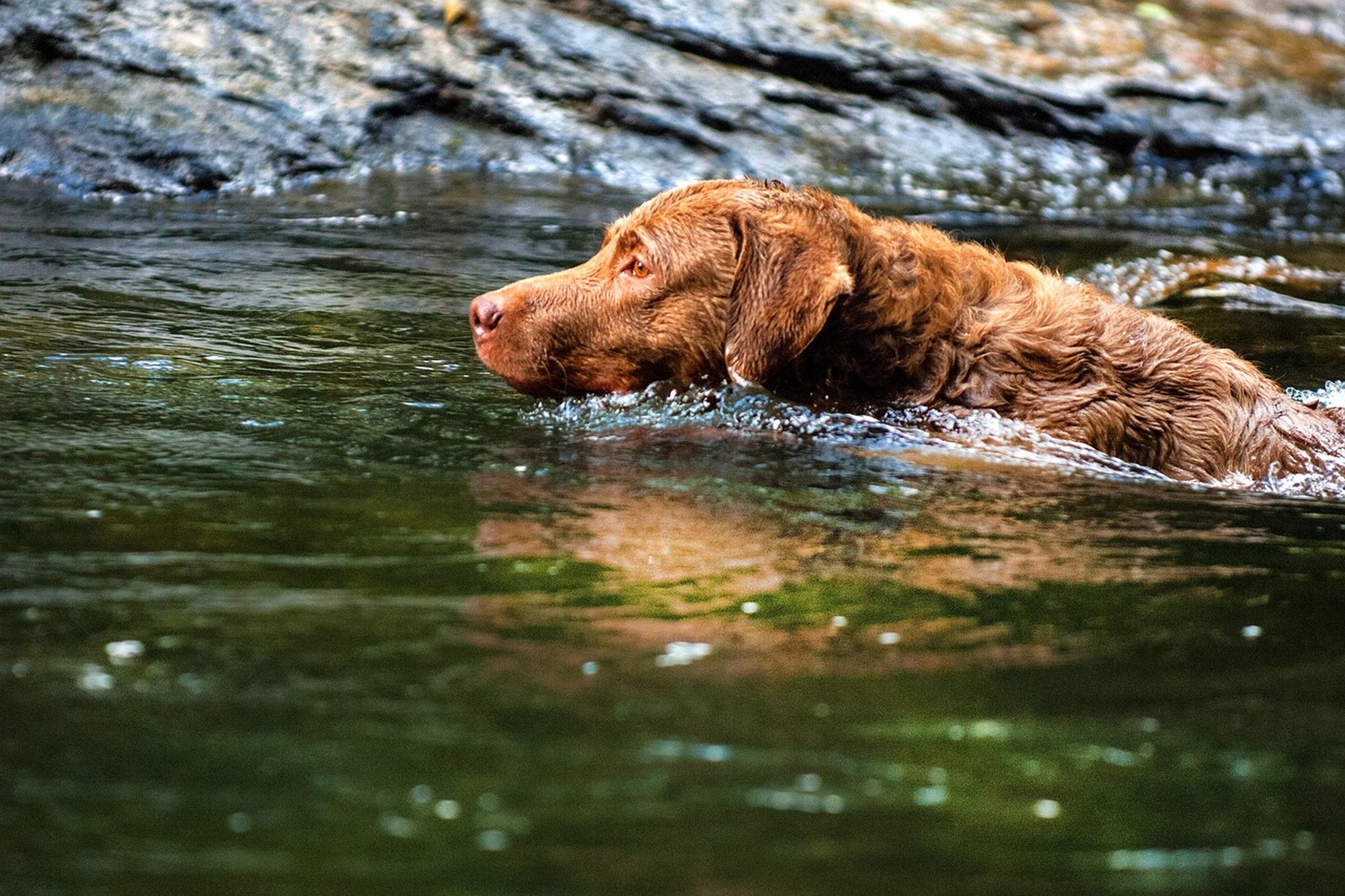
Short answer: yes — this is a strong dog with his own agenda
A Chesapeake Bay Retriever does need a securely fenced yard, and flimsy fencing is a genuine mismatch for the breed. The Chessie was developed on the Chesapeake Bay to retrieve waterfowl from cold, rough water, sometimes making very long swims and repeated retrieves in punishing conditions. The result is a powerful, tireless dog with an almost legendary stubborn streak and a deep, specific attraction to water and birds. A barrier that merely signals a boundary will not hold a Chessie who has decided there is something worth reaching on the other side.
Owners describe the breed as loving and loyal but notably independent-minded — more likely than a Labrador to make his own decisions. That independence, paired with serious physical capability, is what the fence has to answer.
What motivates a Chessie escape
Water tops the list. A pond, creek, lake, or even a neighbor's pool on the other side of the fence is a standing invitation to a dog bred to launch himself into water without being asked. Bird scent and sight run a close second; retriever drive in this breed is intense, and a Chessie focused on game can scramble, dig, or force a weak panel with little hesitation.
Territory and protectiveness matter too. Chessies tend to be more reserved with strangers and more guard-oriented than other retrievers, so an insecure boundary risks unplanned meetings between a protective dog and a passerby or delivery person. Add adolescent testing — young Chessies are strong, mouthy, and energetic well before they are mature — and the case for building the fence properly the first time is complete.
Building containment a Chessie respects
Height and strength both count here. Choose a tall, solidly constructed fence with firm posts and panels that can take a large dog's weight without flexing, and check gates for heavy latches a clever, paw-capable dog cannot work. Walk the line for the usual quiet failures: soil washed out at the base, a sagging corner, boards loosened at shoulder height where a big dog leans.
Think about what sits on both sides of the fence. Inside, keep climbable stacks and structures away from the perimeter. Outside, be honest about water: if your property borders a pond or drainage, that stretch deserves the strongest construction you have, because it faces the strongest motivation. Invisible fencing alone is a weak answer for a Chessie — a dog selected to crash through icy water after birds will not reliably be stopped by a momentary correction mid-charge, and it does nothing to keep other animals out.
The rest of the safety picture
A Chessie needs real work — retrieving, swimming where it is safe and permitted, and training that engages a serious mind — because a fenced yard alone will not spend this breed's energy, and unspent energy goes into the fence. Supervise yard time, keep recall training sharp, and manage introductions at the gate rather than letting the dog greet the world over or through the barrier.
Finally, plan for the failure case, since gates get left open even in careful houses, and a Chessie who gets out can cover serious ground and head for water. As that backup, KinsLe's Lost Pet Alert System sends a free alert to nearby Circle of Love members, so people are watching the shoreline and the streets while a finder messages you directly.