
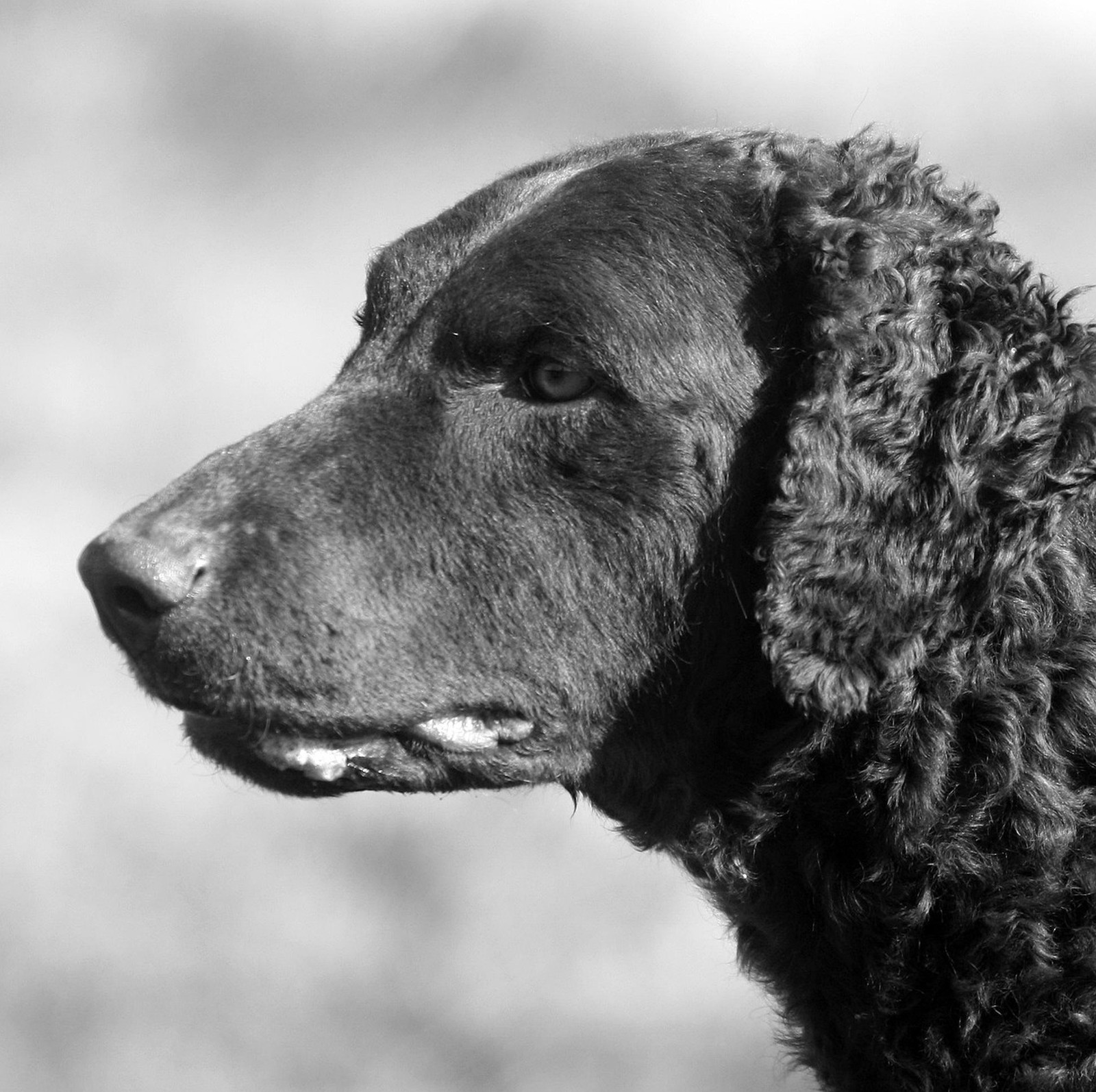
The retriever whose coat wants to be left alone
A Curly-Coated Retriever needs neither regular haircuts nor regular brushing in the usual sense, and owners arriving from other breeds have to unlearn their instincts. The coat is a mass of small, tight, crisp curls lying close to the body, with smooth short hair on the face, the front of the legs, and the tail's underside. That curl pattern is the dog's weatherproofing for cold water work. Clipping into it opens the dense covering, exposes the skin, and leaves regrowth uneven, while vigorous brushing does not neaten the curls at all; it separates and fluffs them into a frizzy halo that takes days to settle back into proper curl.
What maintenance actually looks like
Routine care for a Curly is largely done with your hands. Run your fingers through the coat during an ordinary stroke session and you will find the burrs, grass seeds, and twigs the curls have collected, which can be picked out before they work down to the skin. When sections have gone dry and fluffy, dampen them lightly and massage the curls back into shape, or let a swim or a proper bath reset them. The goal is a coat that looks like a tight dark fleece, not a brushed-out cloud.
The tiny amount of trimming that is acceptable
Neatening, in this breed, means restraint. A few straggly hairs on the tail or the edges of the ears can be tidied so the outline looks intentional, and hair between the paw pads can be kept clear so the dog grips well and does not pack mud. That is the whole list. Owners sometimes ask a groomer for an all-over pet trim to reduce shedding or summer heat, and for a Curly the honest answer is that it achieves neither: the coat sheds what it sheds regardless, and the dense curl insulates in both directions. If a groomer unfamiliar with the breed suggests clipping the body, that is the moment to decline politely.
Bathing and getting the curl back afterwards
Baths should be occasional, since this is a coat that largely maintains itself and over-washing softens the crisp texture. After a bath or a swim in silty water, let the coat dry and then check the curl has re-formed evenly; working a little water through flattened patches with your fingers helps them spring back. Because the curls hide the skin so completely, use drying time deliberately: part the coat in a few places, look at the skin, and feel for lumps, ticks, or sore spots the fleece conceals. A Curly that has been in rough cover also deserves a careful check inside the ears and between the toes, where seeds lodge unnoticed.
Changes hiding under the curls
A coat that suddenly sheds in patches, loses its spring so the curls hang limp, or develops a persistent smell even after a bath should be discussed with your veterinarian rather than managed with more or less grooming. Scratching you can hear at night, head shaking, or sore areas found when you part the curls are also vet territory, precisely because the coat hides early signs so well. Note whether the change followed a clip, a new swimming spot, or a food change, since a Curly's problems are easy to misattribute to its unusual coat.
A light routine still needs an owner
Because Curly care is occasional, it is also forgettable, and the dogs most at risk are the ones whose checks quietly stop happening after busy weekends: with KinsLe, Care Teams lets you give the post-swim finger-comb and skin check for your Curly-Coated Retriever to a named person, and that helper's completion is recorded with a timestamp, turning an easy-to-skip habit into one the household can actually see was done.