
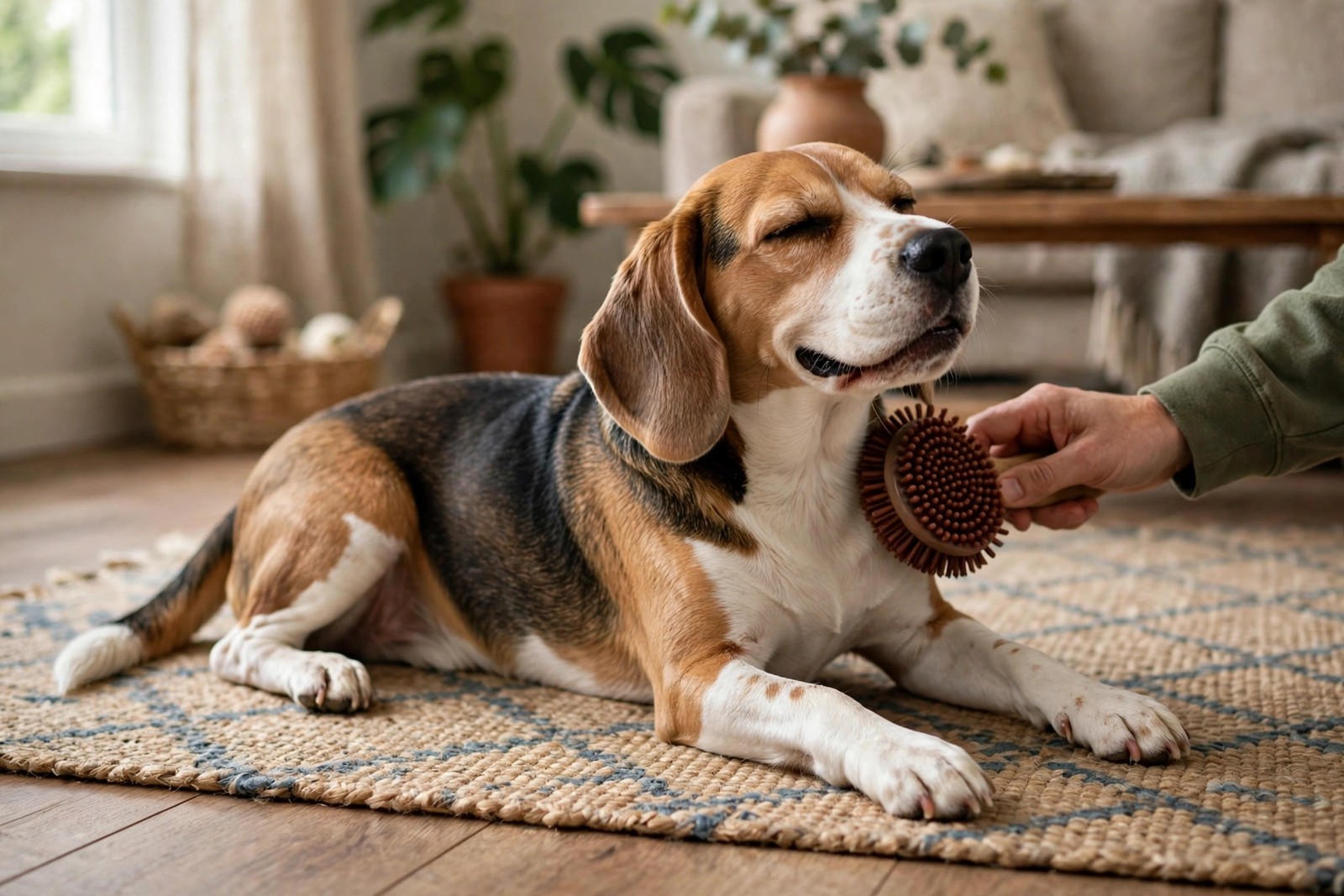
Yes — even short-haired dogs need brushing, and a quick weekly brush-out is plenty for most of them. A Beagle, Boxer, Labrador, or smooth Dachshund may never mat, but brushing still loosens dead hair, spreads the skin's natural oils for a shinier coat, reduces the fur landing on your furniture, and gives you a hands-on health check you would otherwise skip.
What a Weekly Brush Actually Does
Short coats shed constantly, a little at a time, and loose hairs that are not brushed out end up on sofas, car seats, and your black trousers. A rubber curry brush — the kind with soft nubs that fit in your palm — lifts that dead hair efficiently and most dogs experience it as a massage rather than a chore. A soft bristle brush works well for very short, fine coats and for finishing.
The oil distribution matters more than people realize. Each pass moves sebum from the skin along the hair shafts, which is what gives a healthy short coat that deep, almost polished shine. It also stimulates circulation and lets you feel your dog's true body condition — ribs, spine, and any new plumpness or leanness — under your hands every week.
Your Built-In Health Check
That weekly five minutes doubles as surveillance. Run your hands and eyes over the whole dog as you brush: look for ticks, especially after walks in grass or woods; feel for new lumps, bumps, or warts, which matter most in senior dogs; and check the skin for flakiness, redness, flea dirt, or thinning patches. Catching a small change early is far easier than discovering a big one at the annual vet visit, and you can note when you first felt something so you can describe its timeline accurately.
Short-coated dogs are not immune to skin trouble, either. Breeds like Bulldogs have sensitive skin and folds that need their own check, and many short-haired dogs are champion itchers during allergy season. Brushing will not fix allergies, but it shows you sooner that scratching has started.
How to Make It a Five-Minute Habit
Pick the same low-key moment each week — after the Sunday walk, during a TV episode — and keep the curry brush where that moment happens. Brush in the direction of hair growth with gentle pressure, spend a few extra strokes on the neck and hindquarters where shedding concentrates, and finish with treats or play. A dampened hand or a grooming mitt passed over the coat afterward picks up the last loose hairs surprisingly well.
Bathing short coats follows the same less-is-more logic: occasional baths when dirty or smelly, with brushing doing the everyday work between them. If shedding suddenly spikes outside the usual spring and fall pattern, or comes with bald patches or itching, that is a veterinarian conversation, not a more-brushing conversation.
A Tiny Habit, Kept Weekly
Weekly tasks are the easiest to forget precisely because they are small. Keep the brush-out as your own easy, automatic habit rather than a good intention, paired naturally with other small care rhythms like ear checks, and put the questions it raises to Kimmy, the built-in AI assistant on KinsLe, whose answers draw on the KinsLe Answers library. Five minutes, once a week, a healthier coat and an earlier eye on problems. For questions that brushing raises — say, whether a curry brush suits a Boxer's short coat — Kimmy within KinsLe replies from material in the KinsLe Answers library.