
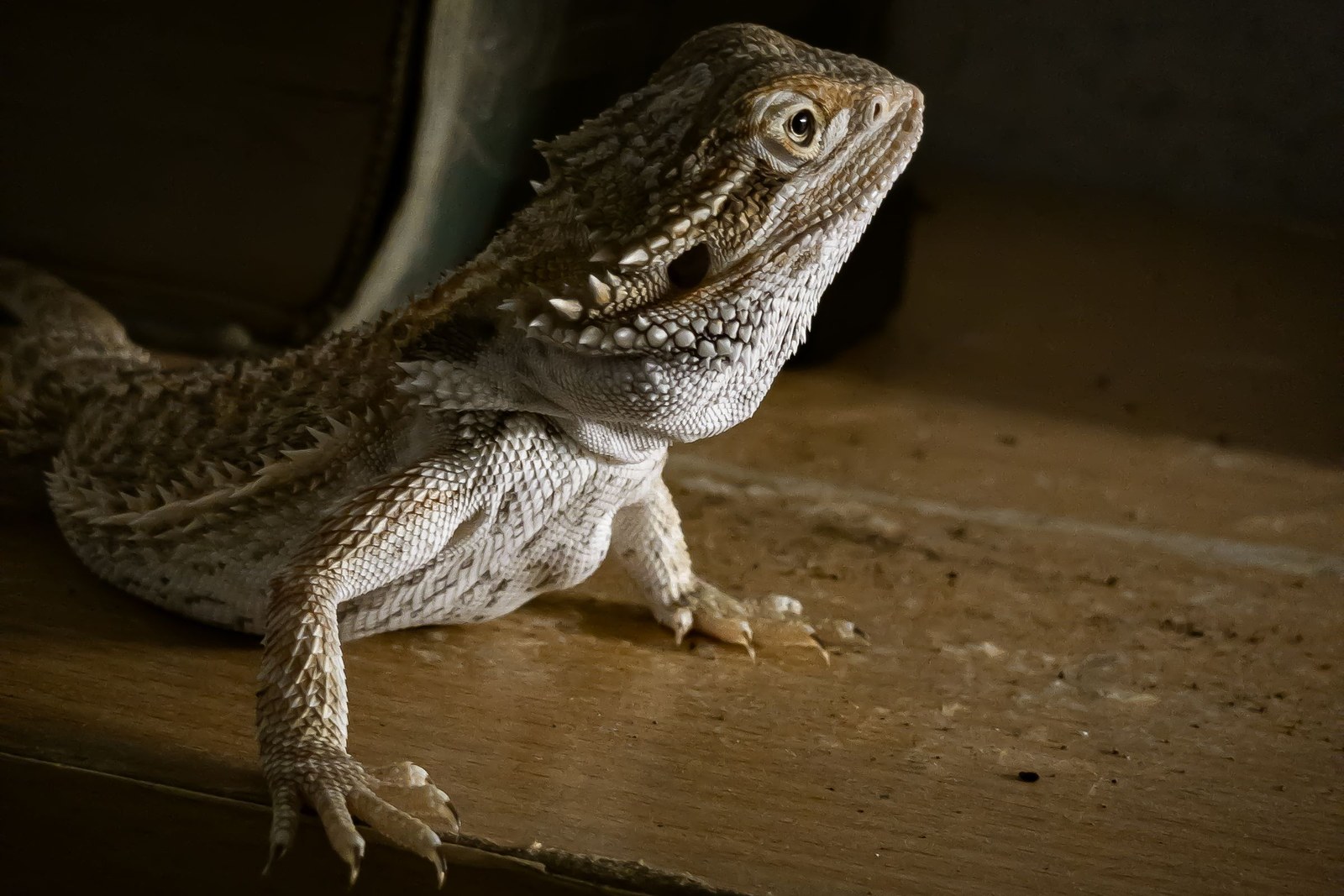
Yes, your bearded dragon really does need proper UVB lighting. UVB is what allows a dragon to make vitamin D3 and absorb calcium from its food, and without it, healthy bones cannot be maintained no matter how good the diet looks on paper. This is not an optional upgrade or a breeder preference. For an indoor bearded dragon, correct UVB is as fundamental as food and heat.
What UVB actually does
In the wild, bearded dragons bask for hours under intense Australian sun. Indoors, window glass blocks UVB almost completely, so a sunny room does not count. With a proper UVB source, your dragon's skin produces vitamin D3, which unlocks calcium absorption. Without it, calcium is pulled from the bones instead, leading over time to soft, deformed bones and a condition vets call metabolic bone disease. Young, growing dragons are especially vulnerable because they are building skeleton quickly, but adults are not immune.
Signs such as trembling limbs, a soft or rubbery jaw, lethargy, and loss of appetite deserve a prompt reptile veterinary visit. Do not try to correct suspected bone problems at home with extra supplements alone.
Choosing and placing the bulb
Long tube-style UVB fixtures are generally preferred over small compact bulbs because they spread UVB across much of the enclosure, letting your dragon move through stronger and weaker zones as it chooses. The basking spot should sit at the distance the bulb manufacturer specifies for that product, with nothing between bulb and dragon that blocks UVB. Fine mesh screens filter out a meaningful portion of UVB, so follow guidance for mounting above or below mesh for your specific fixture.
Pair UVB with the basking heat lamp at the same end, so your dragon receives heat and UVB together, mimicking sunlight. Run lights on a consistent day-night cycle with a timer, roughly a long day and a fully dark night.
The invisible expiry date
Here is the trap many keepers fall into: UVB output fades long before the bulb stops producing visible light. A tube that still glows brightly at eight months may be delivering a fraction of its original UVB. Write the install date on the fixture or in your notes the day you fit a new bulb, and replace it on the manufacturer's schedule, commonly every six to twelve months depending on type. If you want certainty, an inexpensive UV meter takes the guesswork out entirely.
Never look directly at UVB bulbs, keep them out of reach of children, and replace any cracked or flickering tube immediately.
Diet supports light, not the other way round
UVB and diet work as a team. Dust feeder insects with calcium powder as part of your feeding routine and offer appropriate greens, but understand that supplements cannot substitute for missing UVB, just as UVB cannot fix a diet with no calcium in it. Think of light as the key and nutrition as what it unlocks.
A nudge before the bulb fades
Because UVB decline is invisible, remembering the replacement date is the hardest part of the whole system. KinsLe's Kimmy, the built-in AI assistant, can send reminders and nudges when it is time to replace that UVB bulb, based on the install date you record, so the job never quietly slips by a season. Log the bulb change once and let the nudge protect your dragon's bones. Kimmy through KinsLe can field the follow-up questions that remain — tube choice, mesh placement, swap timing — responding with guidance pulled from its Answers library for reptile keepers.