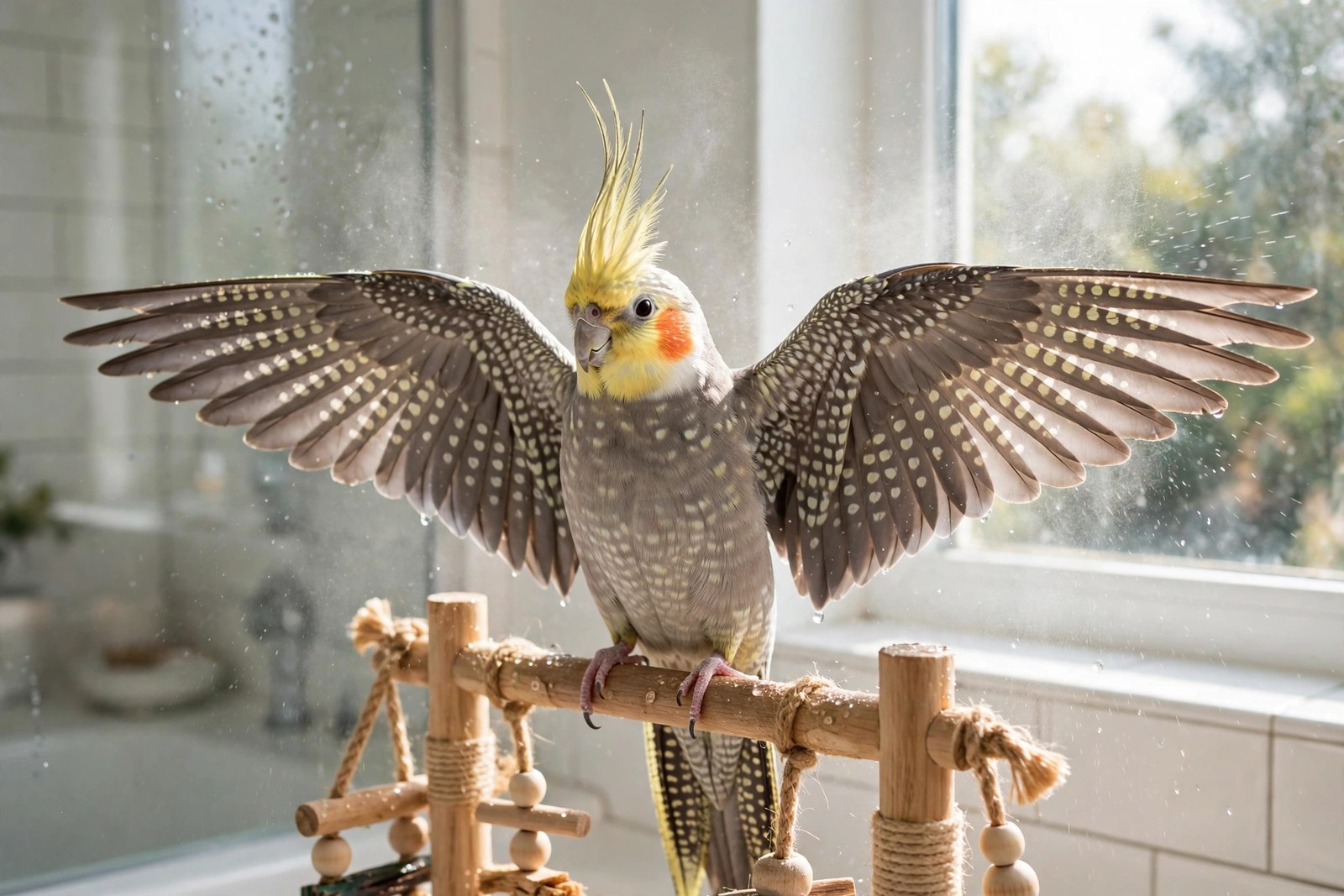
A cockatiel needs the regular opportunity to bathe, but no cockatiel needs to be bathed in the sense of being held, dunked, or scrubbed. The distinction matters with this species. Cockatiels are powder-down birds: they continually produce a fine white dust that conditions their feathers, and loose dust from it settles on cages and furniture. Most cockatiels bathe willingly and theatrically once they trust the setup, wings spread, crest up, leaning into spray. Your job is to offer water the right way and let the bird decide.
Three Ways Cockatiels Like Water
A shallow dish or wide tray of water on the cage top or floor suits birds who like to wade and splash, though many cockatiels prefer moving water to still. Gentle misting from a clean spray bottle, aimed above the bird so droplets fall like rain rather than blasting its face, is the classic favourite; a bird enjoying it fluffs, spreads its wings, and turns into the mist, while a bird backing away with slicked feathers is asking you to stop. A shower perch, with the bird in the bathroom steam or at the edge of a gentle spray rather than under the full force, works well for confident, bonded birds. Try each method on different days and keep the one your bird walks toward.
Frequency, Temperature, and Timing
One to three times a week suits many pet cockatiels, with extra chances offered during a heavy moult, when bathing softens pin-feather sheaths, or in dry, heated indoor air. Use plain, room-temperature water and nothing else: no soap, shampoo, or feather conditioner, because soaps strip the oils feathers need and a cockatiel cannot rinse itself the way a dog in a tub can. Bathe in the morning or early afternoon so the bird is fully dry before evening, and afterwards let it dry in a warm, draught-free room. A wet bird in a cool breeze can chill quickly, especially a young, elderly, or underweight one.
Rules That Keep Bathing Safe
- Never hold a cockatiel under a tap, submerge it, or keep misting a bird that is retreating, screaming, or trying to fly off.
- Use a dedicated spray bottle that has only ever held plain water, never one reused from household cleaning products.
- Empty and wash bath dishes the same day; a dish left standing becomes drinking and bathing water in dirty form.
- Keep the first sessions short and end on the bird's enthusiasm, so bathing stays a treat instead of a chore.
- Introduce a bath dish outside the cage during play time if the in-cage dish is ignored for a week or two.
A cockatiel who refuses every form of water for weeks, has matted or dirty feathers around the vent, is losing feathers outside a normal moult, or smells sour should see an avian vet, because reluctance can reflect illness or pain rather than preference. KinsLe Care Teams helps the household keep the good routine going by assigning bath and misting days to a named person, so your cockatiel gets its regular water offered the same calm way, whoever is on bird care that morning.