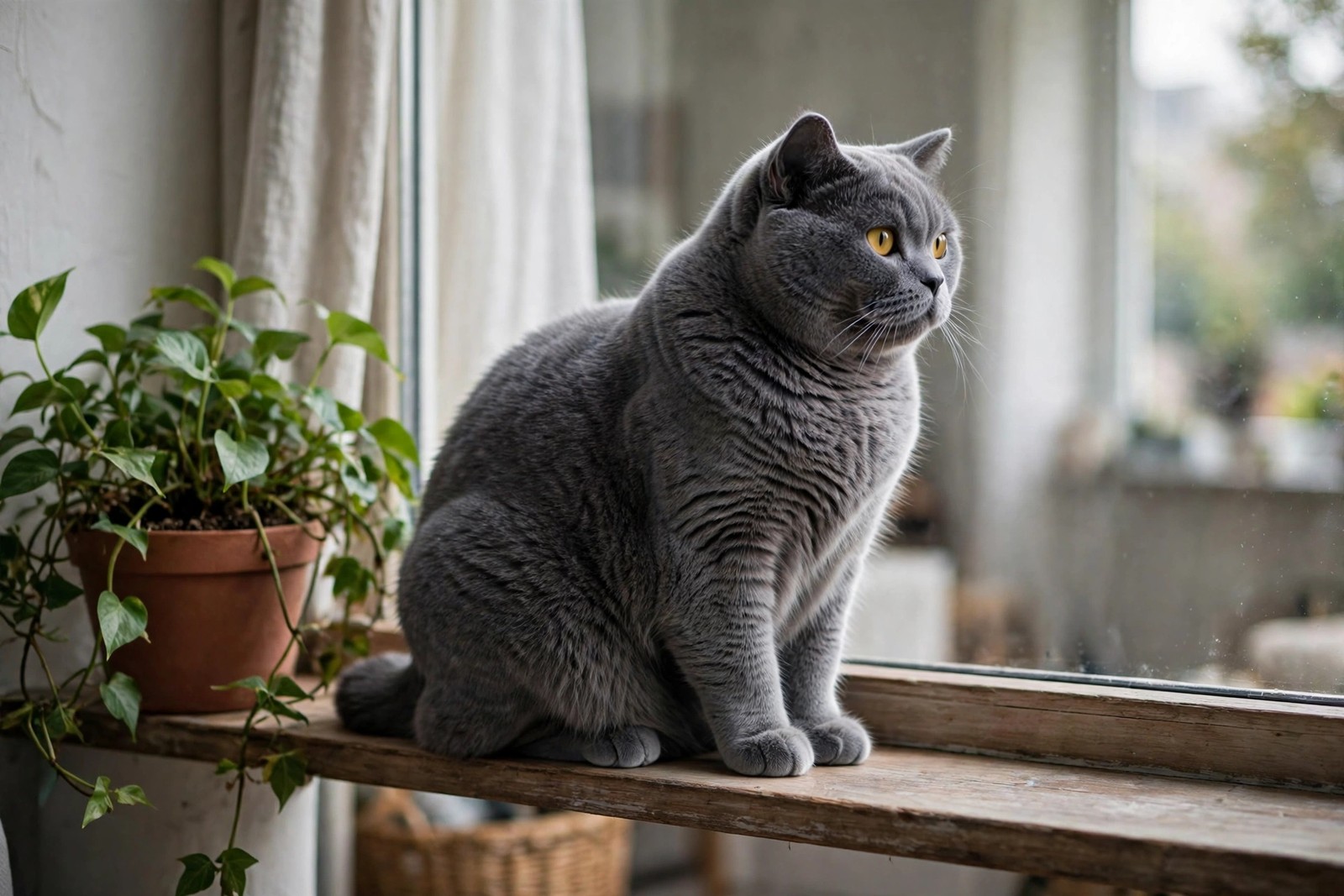
A British Shorthair adult typically weighs 9 to 18 pounds. Males sit at the heavier end — 12 to 17 pounds is common for a well-built tom — while females more often land between 9 and 14 pounds. In height they are unremarkable, around 12 to 14 inches at the shoulder, because this breed's size is about mass and breadth, not stature. Pick one up and the surprise is always the density: a British Shorthair feels like a much larger animal than the one you saw sitting on the rug.
Built Wide, Not Tall
The breed standard look is sometimes summed up as a teddy bear, and the geometry explains it. The chest is broad and deep, the legs are short to medium and heavily boned, the paws are round, and the head is large and round with full cheeks — especially pronounced in adult males. The very dense, plush double coat adds visual bulk on top of real bulk, standing away from the body rather than lying flat. Two British Shorthairs of identical weight can look quite different depending on coat and cheek development, so the scale and your hands tell you more than your eyes do.
A Slow Grower
Do not judge the adult size from the one-year-old cat. British Shorthairs are slow to mature, continuing to broaden and fill out until around three years of age, and some males keep adding cheek and chest into their fourth year. A lanky ten-month-old who looks nothing like the round cat you expected is usually just unfinished. Growth in the first year is mostly frame; the famous solidity arrives later, which is also why portion control matters early — the breed gains weight readily, and fat laid down during the long fill-out can be mistaken for breed build.
Big Versus Overweight
This distinction is the main practical issue with the breed. A healthy British Shorthair at 15 pounds is broad through the chest but still has a discernible waist from above, and you can feel ribs under a modest fat layer when you run your hands along the sides. Warning signs that size has become excess weight include:
- Ribs you cannot feel without firm pressure
- A belly that swings noticeably when the cat walks
- Reluctance to jump onto heights the cat used to reach easily
- A weight still climbing well past the third birthday
Because the coat hides gradual change, weigh the cat every month or two rather than eyeballing. Your veterinarian can confirm a target weight for your individual cat's frame at routine visits.
Living With the Size
Plan equipment for a heavy cat, not an average one. Choose a carrier rated comfortably above your cat's weight with a top-loading option, since lifting 15-plus pounds in and out at arm's length is awkward for everyone. Scratching posts and cat trees need wide, stable bases — a tall, narrow tower that suits a slender breed can tip under a British Shorthair launching off it. Litter boxes should be roomy enough for the cat to turn around in without crouching against the sides.
Tracked over those slow three years, the numbers tell the real story of this breed's size. Keeping each weigh-in and vet visit together in KinsLe's Pet Passport means you can see at a glance whether your British Shorthair is still filling out on schedule or quietly overshooting.