
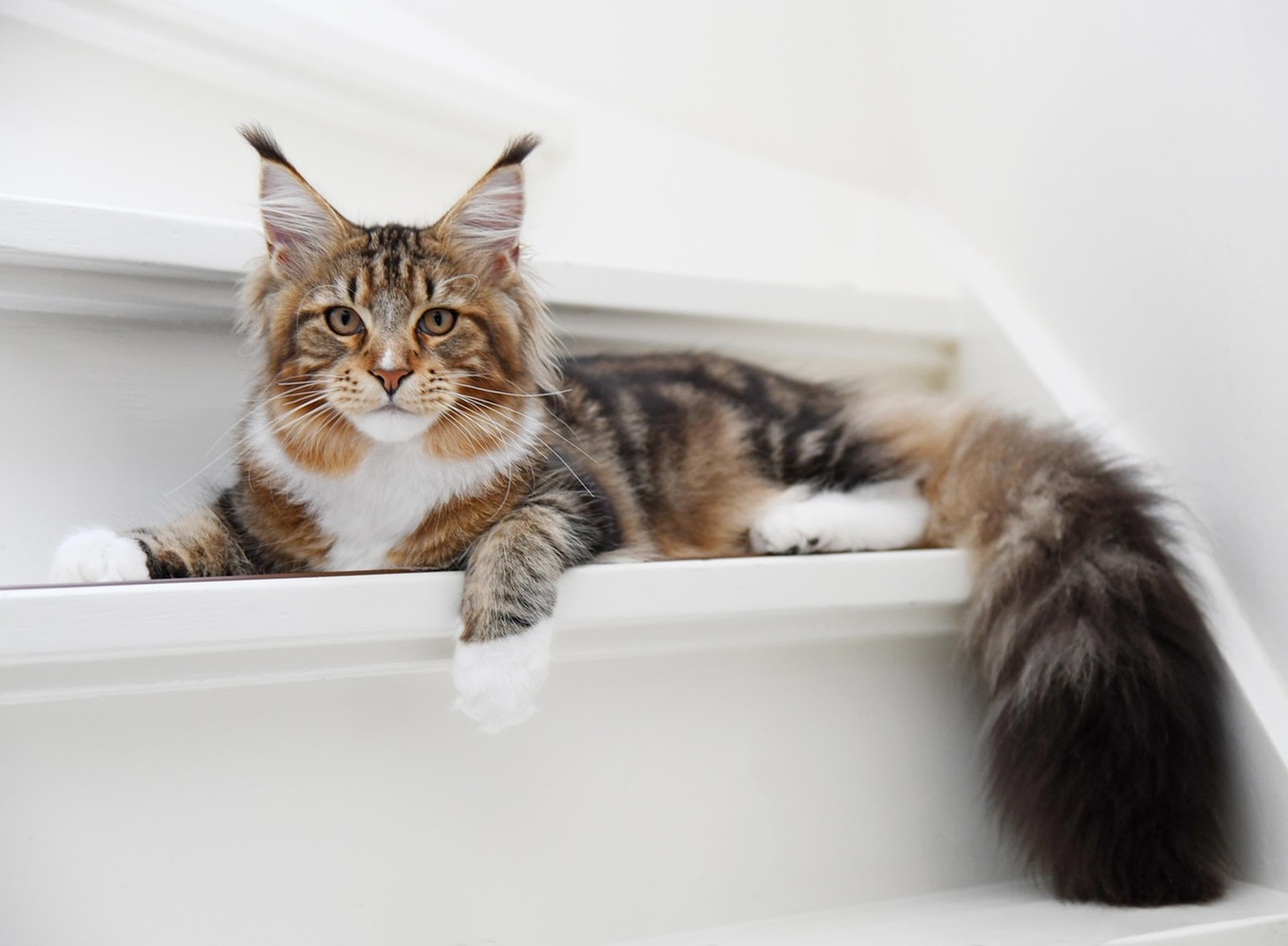
A Maine Coon is a genuinely large cat by any measure. Adult males typically weigh 13 to 18 pounds, with occasional individuals above that; females are smaller, usually 8 to 12 pounds. Length is where the breed really separates itself — a long male can stretch to around 40 inches from nose to the tip of that magnificent tail. Shoulder height runs about 10 to 16 inches. Claims of far heavier Maine Coons circulate online, but most cats presented as record-breakers are simply overweight; a lean 16-pound Maine Coon is already an armful.
The Three-to-Five-Year Growth Curve
The single most misunderstood fact about this breed's size is the timeline. Most cats are fully grown by twelve to eighteen months. A Maine Coon is not. The frame is largely in place by age two, but the chest deepens, the head broadens, and muscle keeps accumulating until somewhere between three and five years old. Practical consequences follow:
- A two-year-old who looks lanky and unfinished is normal, not underfed — resist pressure to push extra food
- Kitten and growth-stage portions need adjusting over years, not months, ideally with your vet's input at each checkup
- Neutering during the long growth period is routine; discuss timing with your veterinarian rather than delaying it for size
Weigh monthly during the first two years and every couple of months after, so you can see steady progress instead of guessing from a cat whose coat changes with the seasons.
Proportions: Rectangular, Not Round
A healthy Maine Coon is long and rectangular, with a level back, substantial bone, large tufted paws, and a tail roughly as long as the body. The shaggy, uneven coat — shorter over the shoulders, longer on the belly and britches — adds apparent size, especially in winter. Judge condition by touch: ribs palpable under a light fat layer, a visible tuck, and easy movement. A Maine Coon who waddles or cannot jump onto a low platform is carrying more than breed size, and your vet should help set a target.
Gear That Has to Match the Cat
Standard cat equipment is often sized for a 10-pound animal, and a Maine Coon outgrows it — sometimes literally mid-leap. Budget and shop accordingly:
- An extra-large carrier, ideally top-loading, rated well above your cat's adult weight
- A tall scratching post the cat can fully stretch against, with a heavy, wide base
- Cat trees and shelves rated for large cats; a platform a Maine Coon cannot curl up on will simply be ignored
- A large litter box — many owners use a size marketed for small dogs or a storage tote style box
Perches near windows should be checked for fixings that can take 18 pounds landing at speed. It is far cheaper to buy the large version once than to replace the standard version twice.
Size this substantial deserves a proper record, not guesswork at the vet's scale once a year. Keeping your Maine Coon's weights, vaccinations, and visit notes together in KinsLe's Pet Passport means anyone caring for your cat can see exactly how big they are — and how steadily they got there.