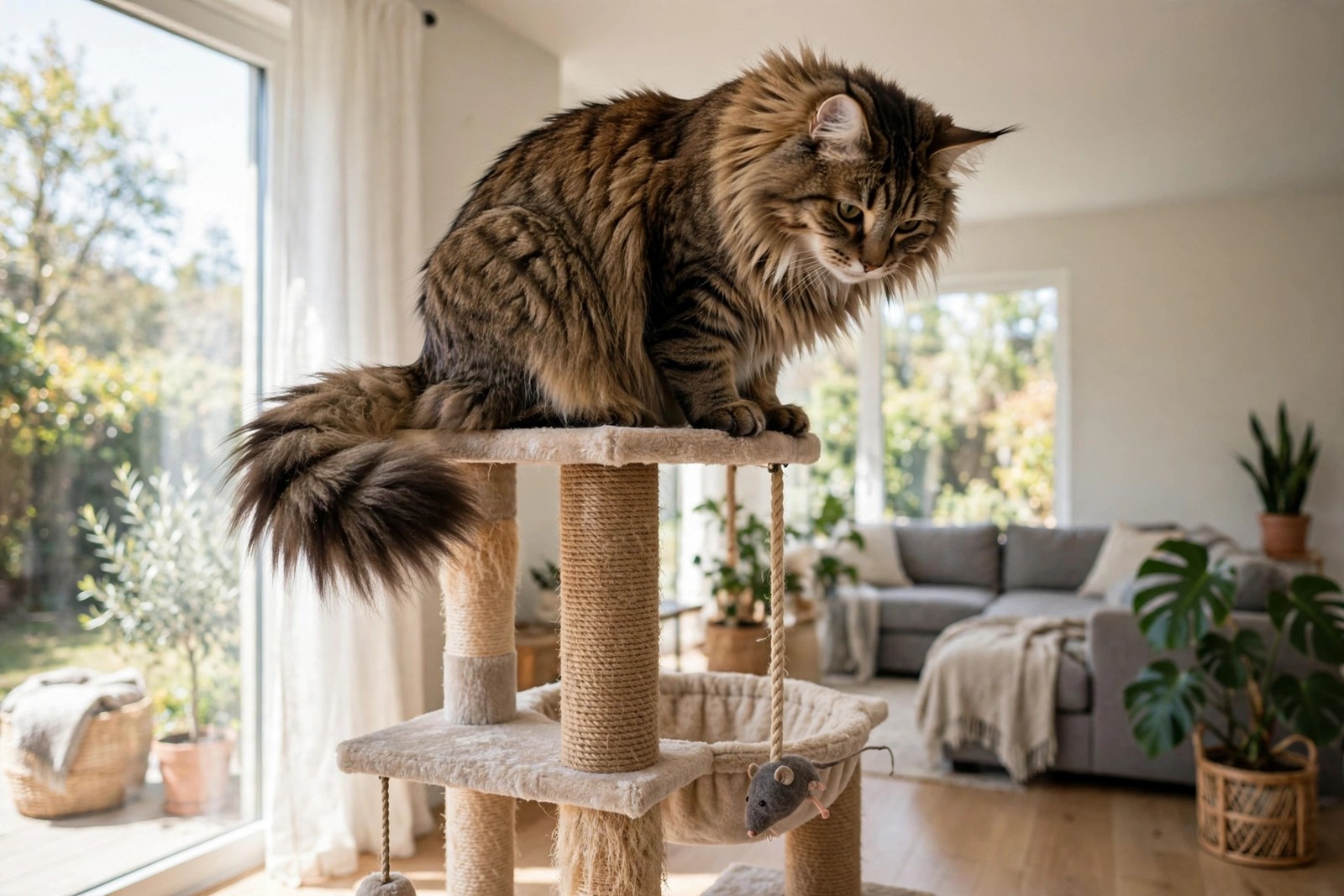
Norwegian Forest Cat males typically weigh 13 to 22 pounds, putting the breed firmly in the large category alongside the Maine Coon. Females weigh substantially less — often roughly two-thirds of a male's weight — yet still outsize most domestic cats. The body underneath is long and muscular, carried on strong legs with a distinctive stance: the hind legs are a little longer than the front legs, an adaptation in a breed developed for climbing, which gives the cat a subtly downhill line from hips to shoulders.
Built for a Northern Winter
Size in this breed cannot be separated from insulation. The coat is a true double: a dense, woolly undercoat under a long, water-shedding outer layer, with a full ruff around the neck, breeches on the hind legs, and a tail so heavily furred it can look like a separate animal. In winter coat, a Norwegian Forest Cat appears enormous; after the spring shed of undercoat, the same cat looks merely large. None of that seasonal difference is weight. This is why hands-on checks matter more than photos — feel for ribs under the fur and use the scale, especially in the months when the coat is at its thickest and most flattering.
Slow to Finish, Like the Other Giants
Expect growth to continue for years. The frame develops first, and the breed commonly takes until around age four or five to reach full adult weight and breadth. During that long adolescence the cat may look leggy and unfinished despite eating like a much larger animal. Steady, measured growth is the goal; your veterinarian can confirm at routine visits that your cat is tracking normally for the breed rather than for an average cat, whose growth chart would call a healthy young Wegie underweight at one stage and oversized at another.
Climbing Strength Changes the Shopping List
This is an athletic large cat, and it will test your furniture accordingly:
- Cat trees need serious anchoring — a 20-pound cat landing from a leap delivers far more force than its static weight suggests
- Scratching posts should be tall enough for a full vertical stretch, which for this breed can exceed three feet including reach
- Window perches and shelves must be fixed into studs or rated well beyond the cat's weight
- Carriers should be the large, hard-sided kind; a straining soft carrier and a strong, motivated cat are a poor combination
High resting spots are not optional enrichment for this breed — they are where a Norwegian Forest Cat most wants to be, ideally somewhere it can survey the room from above.
Big, But Not Automatically Heavy
The breed's frame carries its top weights well, but the long coat and slow maturity make it easy to miss gradual fat gain, particularly after neutering when growth slows and appetite often does not. Monthly weigh-ins through the growing years, then a check every few months in adulthood, keep the picture honest.
Those years of slow growth produce a lot of numbers worth keeping straight. Recording each weight and checkup in KinsLe's Pet Passport gives your Norwegian Forest Cat one continuous size record, from gangly adolescent to full-coated adult.