
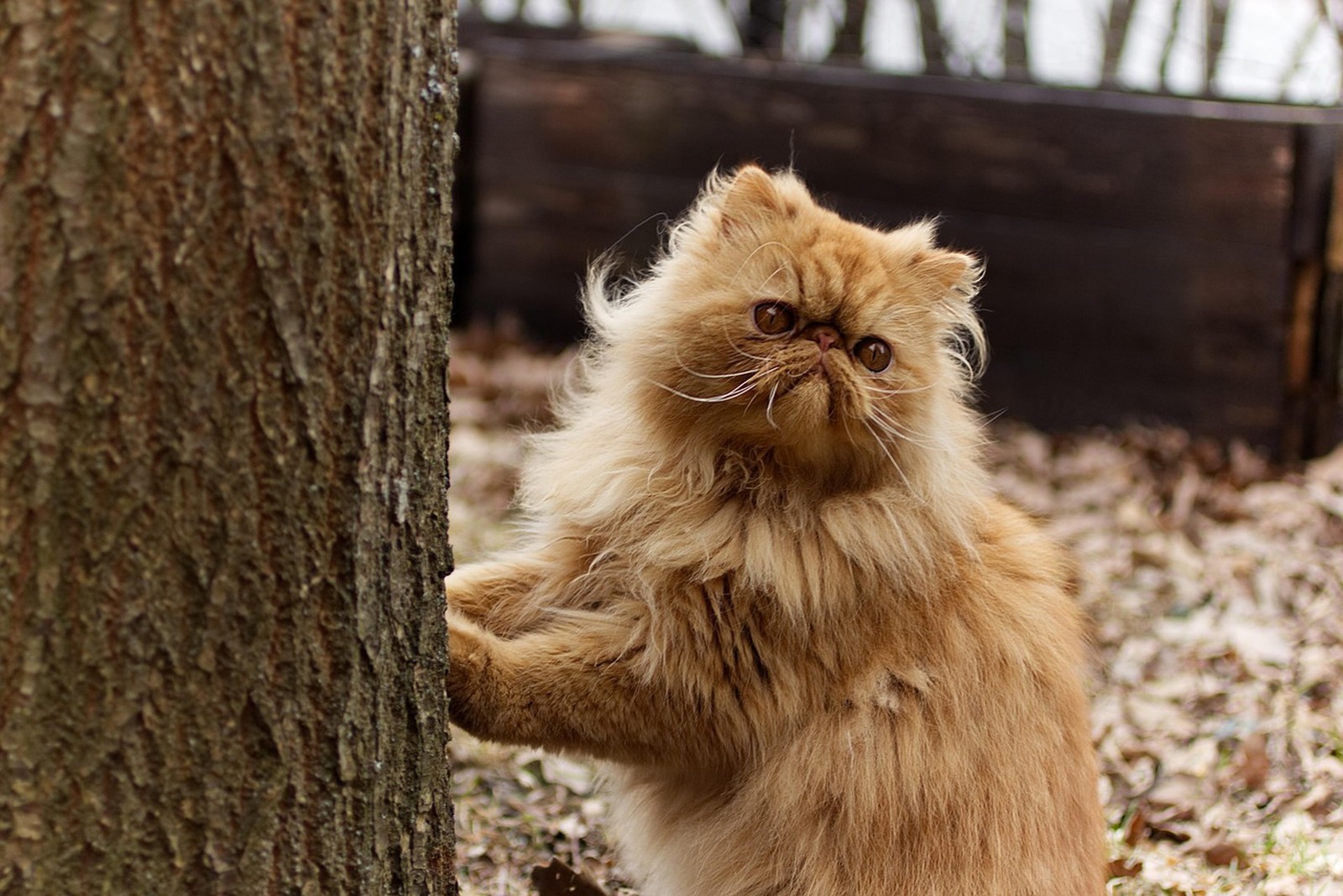
Most Persians weigh between 7 and 12 pounds as adults, which places the breed squarely in the medium category — a fact that surprises people meeting one for the first time. Males are usually a few pounds heavier than females. The body plan is described as cobby: short and compact, deep through the chest, broad across the shoulders and rump, and set low on short, thick legs. Almost everything that reads as size in a Persian is, in truth, coat.
The Coat Is an Optical Illusion
A Persian in full coat carries hair several inches long over the entire body, including a dramatic ruff around the neck and a heavily furred tail. The silhouette can look half again as large as the cat inside it. This has two practical consequences. First, visitors and even owners routinely overestimate what a Persian weighs. Second — and more important — the same coat that inflates a healthy cat's outline can conceal a thinning one. A Persian losing weight may look unchanged for weeks because the fur holds its shape. Monthly weigh-ins and a hands-on feel along the ribs and spine are the only reliable checks, and any unexplained drop deserves a prompt veterinary visit.
Growth and Maturity
Persians reach close to their adult frame by about a year, then continue to broaden and develop coat through their second year. Kittens look like small powder puffs and give little hint of adult proportions, but the adult they become is a cat of moderate, manageable size — no special furniture reinforcements required, unlike the giant breeds. What does scale with this breed is not the cat but the grooming: that coat needs combing to the skin most days to prevent mats, whatever the cat weighs.
Judging Condition on a Cobby Frame
A healthy Persian should feel solid and muscular when handled, with ribs detectable under a light fat covering when you press gently through the coat. Watch for these signs that compact has tipped into overweight:
- Ribs and spine difficult to locate even with deliberate pressure
- A rounded belly profile visible when the coat is wet at bath time
- Reduced interest in play and jumping onto low furniture
- Steady weight gain on the scale across consecutive months
Because the legs are short, extra pounds load the joints of a Persian sooner than they would on a taller cat, which is one more reason to hold the middle of the 7-to-12-pound range unless your vet advises otherwise for your cat's frame.
Everyday Fit
Standard-sized carriers, beds, and litter boxes suit most Persians, though a roomy litter box helps a broad cat with a long coat stay clean and comfortable. Choose a low-entry box if your cat is older or less agile, since the breed's short legs make high sides a genuine obstacle. Scratching posts should be stable rather than tall — this is a cat who prefers the low ground.
The scale, not the mirror, is the honest reporter of a Persian's size. Logging each weighing in KinsLe's Pet Passport builds the record that lets you spot a slow drift — up or down — hiding underneath that magnificent coat.