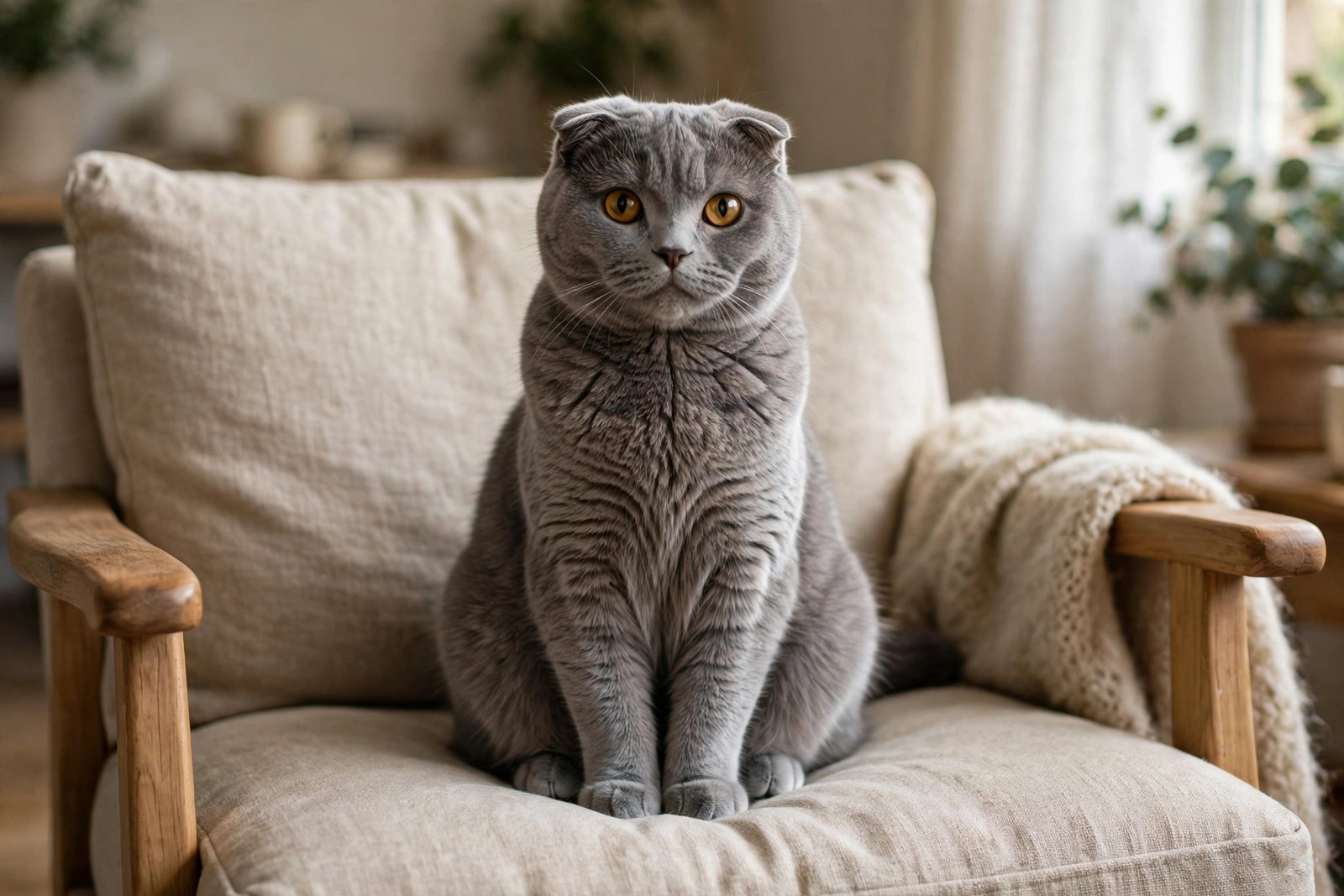
A Scottish Fold typically weighs 6 to 13 pounds as an adult. Females usually occupy the lower half of that span, around 6 to 9 pounds, and males the upper half, around 9 to 13 pounds. Nothing about the breed is extreme: the legs are medium length, the body is medium and well-rounded, and the overall impression is of a compact cat drawn in circles — round head, round cheeks, large round eyes, and ears folded forward and down against the head.
Reading a Round Cat's Condition
Roundness is this breed's silhouette, which makes visual weight checks unreliable in both directions. A Fold in ideal condition is padded but not soft: you should feel ribs under a moderate covering when you run your hands along the sides, and the cat should move, stretch, and groom comfortably. A Fold who resists jumping, sits in unusual positions to stay comfortable, or shows stiffness getting up and down should be seen by a veterinarian — in this breed, changes in movement deserve attention rather than a wait-and-see approach, because the same cartilage trait that folds the ears affects cartilage elsewhere in the body. Your vet may recommend periodic checks focused on joints and mobility as part of routine care.
Growth Timeline
Folds grow at a fairly ordinary pace. The folded ears themselves do not appear at birth — kittens are born with straight ears, and folding, if it happens, begins at roughly three to four weeks. Body size is mostly established by about ten to twelve months, with some continued filling out into the second year. A young Fold's weight should climb smoothly on kitten weigh-ins at vet visits; a plateau or drop in a kitten is worth raising at the next appointment rather than watching at home.
Living Space and Equipment
A medium cat needs no oversized gear, but a few choices suit the breed particularly well:
- Low-entry litter boxes and modest-height perches, kinder to joints than tall towers throughout the cat's life
- A carrier with room to turn around, sized for the top of the breed's weight range if you have a large male
- Soft, supportive bedding in warm spots — Folds are devoted nappers and often favor chairs and sofas at human height
- Play in short, gentle sessions that keep the cat active without demanding repeated high jumps
Stairs and higher furniture are fine for a comfortable, mobile cat; simply arrange the home so the essentials — food, water, litter, and resting spots — exist on one level if mobility ever declines with age.
The Honest Summary
Plan for a cat in the middle of everything: medium weight, medium frame, an undemanding footprint in the home, and an above-average need for attentive, regular veterinary partnership across its life. Size is the simplest part of owning this breed; staying observant is the real commitment.
That observant habit is easier when the record is in one place. With KinsLe's Pet Passport keeping your Scottish Fold's weights, checkups, and mobility notes together, you and your vet can spot a change in how your cat moves or grows long before it becomes a bigger problem.