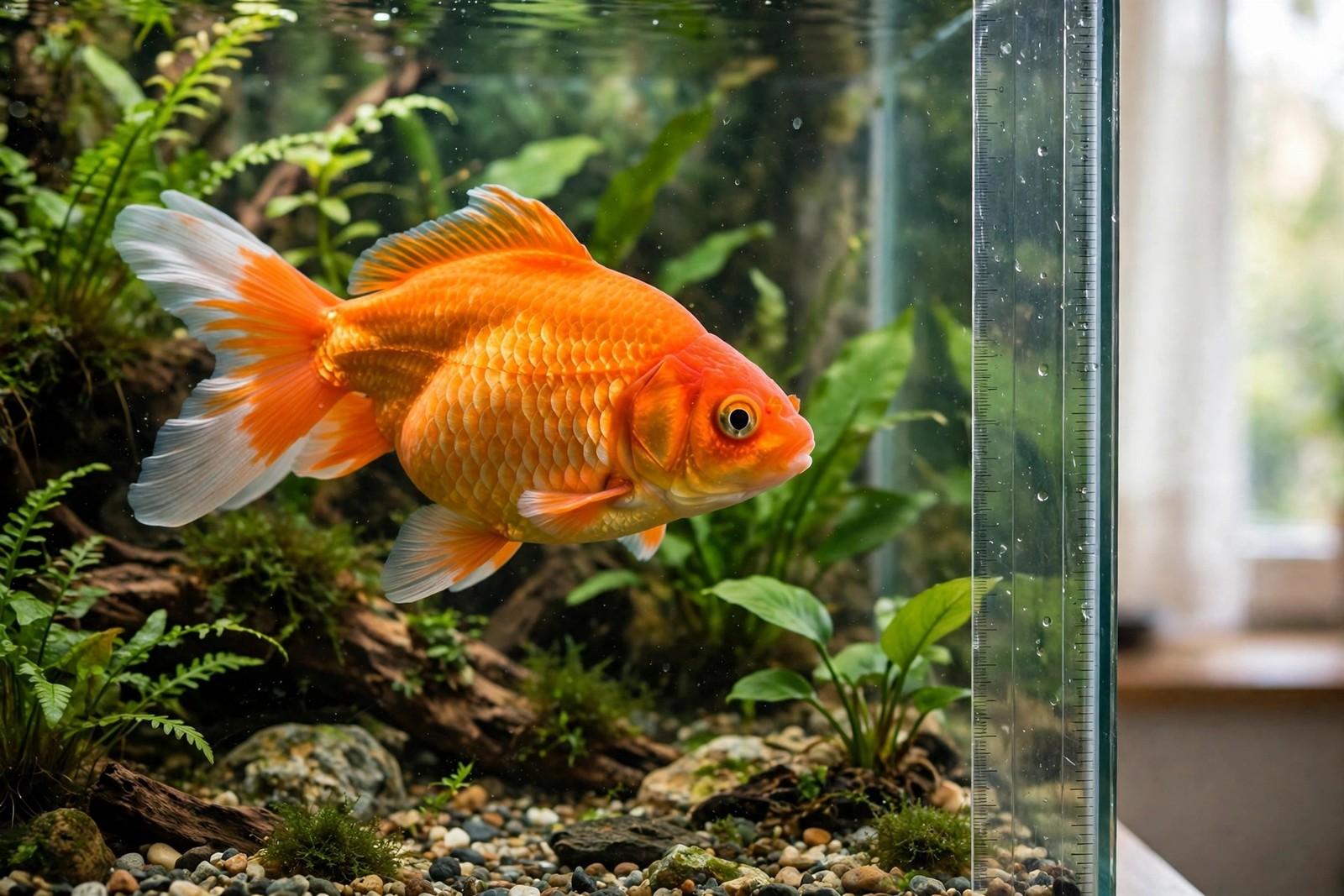
A goldfish kept well does not stay goldfish-bowl small. Fancy goldfish — fantails, orandas, ranchu, and ryukins, with their doubled tails and rounder bodies — typically grow to about 6 to 8 inches of body length, not counting the tail. Single-tailed types — commons, comets, and shubunkins — are stronger swimmers built for ponds and commonly reach 10 to 12 inches, sometimes more. That difference should decide your tank before you buy the fish, not after it outgrows one.
The 'Grows to the Tank' Myth
The old claim that a goldfish grows to the size of its tank confuses stunting with a natural limit. In a small, under-filtered volume, waste builds up between water changes, oxygen and water quality swing, and growth slows or stops early. The fish has not reached a healthy adult size; its development has been suppressed, often alongside a bent spine, faded colour, and a much shorter life than the 10 to 20 years a well-kept goldfish can live. Given clean water and space, the same fish resumes a size set by its variety and genetics.
How Fast They Grow
Most growth happens in the first two to three years. A young comet bought at an inch or two can add several inches in its first year in a large tank, then grow more slowly as it approaches adult size. Fancies grow more compactly but fill out noticeably in depth and, in orandas, in the fleshy head growth called a wen. Room temperature, feeding quality, and how consistently waste is removed all affect pace — warm, heavily fed, poorly filtered water produces fast, unhealthy bulk rather than strong growth.
Tank Size That Matches Adult Size
Plan for the adult, not the juvenile in the shop tank. As a widely used guide, a fancy goldfish needs roughly 20 gallons for the first fish with additional room for each extra fish, because fancies are heavy waste producers for their length. Single-tails need far more swimming length — a long tank of 75 gallons or more for a small group, or a pond, suits their speed and eventual foot-long size. Filtration should be generous, and weekly partial water changes keep nitrate from creeping up between cleans.
Signs Your Fish Is Outgrowing Its Setup
Watch for a fish that can no longer turn or cruise comfortably, fins held clamped, constant surface gulping, or water tests showing ammonia or nitrite returning after you thought the tank was settled. Rapidly rising nitrate between your usual changes is another early warning. Any of these means the fish, the filter load, or both have outgrown the current system — upgrading the tank is kinder and cheaper in the long run than ever-larger emergency water changes.
Feeding for Steady, Healthy Growth
Feed a quality goldfish food once or twice daily, only what is eaten in about two minutes, and add variety such as peas with the skin removed or other suitable greens in small amounts. Overfeeding is the fastest way to foul the water that growth depends on, and uneaten food should be removed rather than left to rot. A consistent routine matters more than chasing rapid growth.
A fish heading for 8 or 12 inches needs its care shared reliably for years, and that is where KinsLe Care Teams helps in a different way: feeding, filter checks, and weekly water changes can be assigned to specific family members, each marked complete with a timestamp, so a growing goldfish never depends on one person remembering everything.