
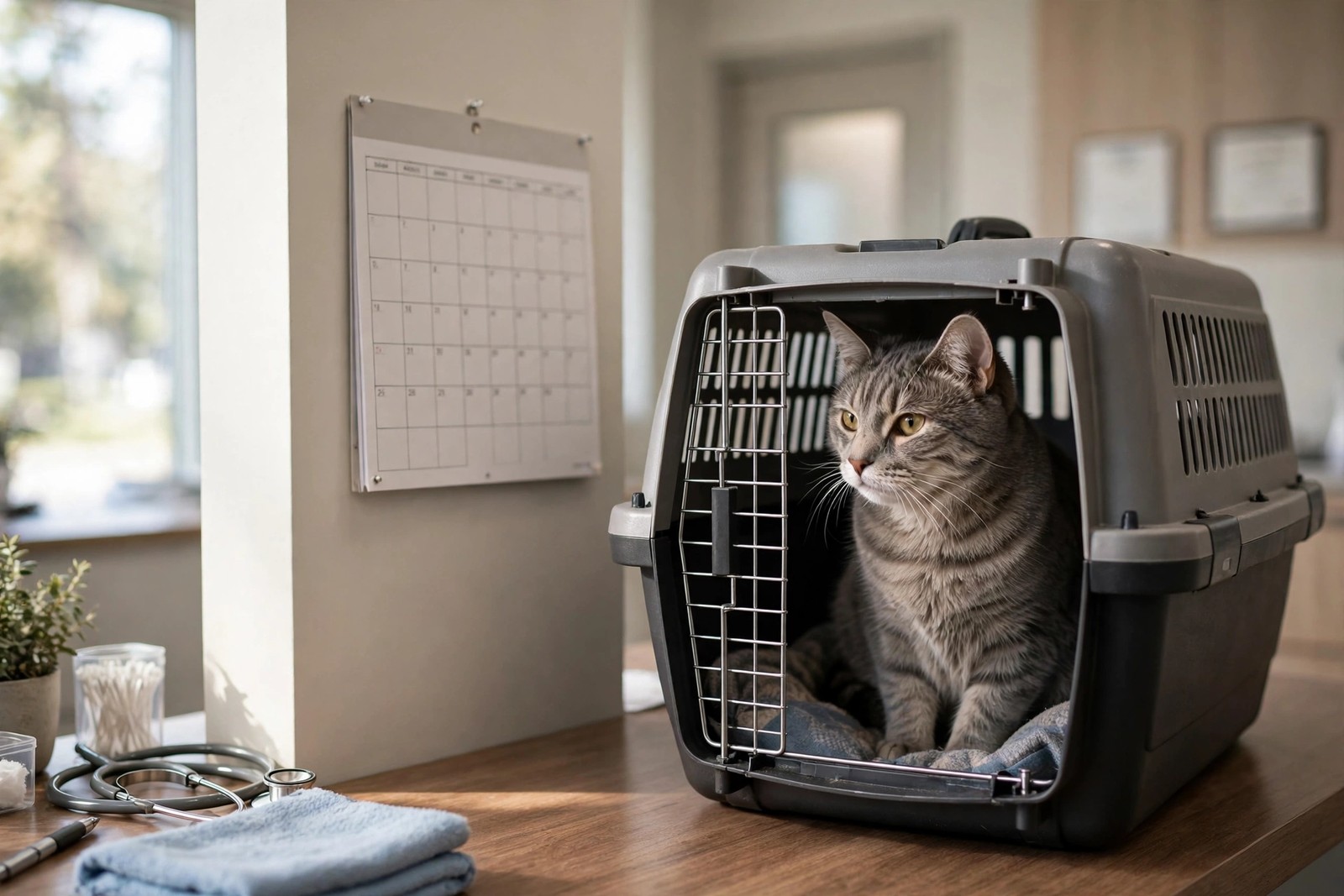
Put every due date on your calendar the moment each appointment ends, and keep your cat's vaccine certificates somewhere you will see the dates again. Your clinic's reminder cards and emails help, but they go to old addresses, land in spam, and assume you never change vets — a backup system of your own is what actually closes the gaps.
What You Are Tracking
Most cats have a handful of recurring dates worth capturing: rabies vaccination, the core distemper combination vaccine, any lifestyle-based vaccines your vet recommends for outdoor or boarding cats, and the wellness exam itself — often yearly, and more frequent for seniors or cats with ongoing conditions. Kittens run on a tighter series schedule in their first months, while adult boosters may be spaced further apart depending on the vaccine and your vet's guidance. Because schedules vary by cat, the due date your own clinic gives you at checkout is the one to record — not a generic chart from the internet. Also note supporting dates: when flea prevention runs out and when a senior blood panel was last done.
Build the Reminder at the Appointment
The best moment to set a reminder is standing at the reception desk. Before you leave, ask two questions: "What is due next, and when?" Then, in the car or the waiting room, do the unglamorous work:
- Add the due date to your calendar with the cat's name and what is due. - Set the alert early — two to four weeks ahead — so you have time to book, not just to panic. - Photograph the vaccine certificate and file it with the date visible. - Add a second, later alert a few days before the due date as a safety net in case the first one got swiped away.
Why Reminders Fail (and How to Outsmart Them)
Reminders fail in predictable ways: the postcard goes to a previous apartment, the email address on file is one you abandoned, life gets loud in the exact month the booster is due. Indoor cats are especially easy to let slide — no boarding facility or groomer is checking their paperwork, so nothing forces the issue. But wellness exams catch quiet problems cats hide well: early dental disease, subtle weight loss, a heart murmur — which is why "she seems fine" is a risky reason to drift a year past due.
If You Are Already Behind
Do not feel guilty and do not guess — just call your clinic, tell them the last dates you have, and let them rebuild the schedule. Vets do this constantly. Bring whatever certificates you can find; even a partial record helps them determine what to repeat and what simply needs a booster. One catch-up visit usually restores order completely.
Asking What Comes Next
A reminder system you control handles the dates themselves; the questions that surface between visits are a different matter. You might wonder how booster spacing usually works, what a wellness exam normally covers, or why a senior cat is seen more often than a young adult. For those, put a follow-up question to KinsLe's Kimmy; she answers using the KinsLe Answers library.