
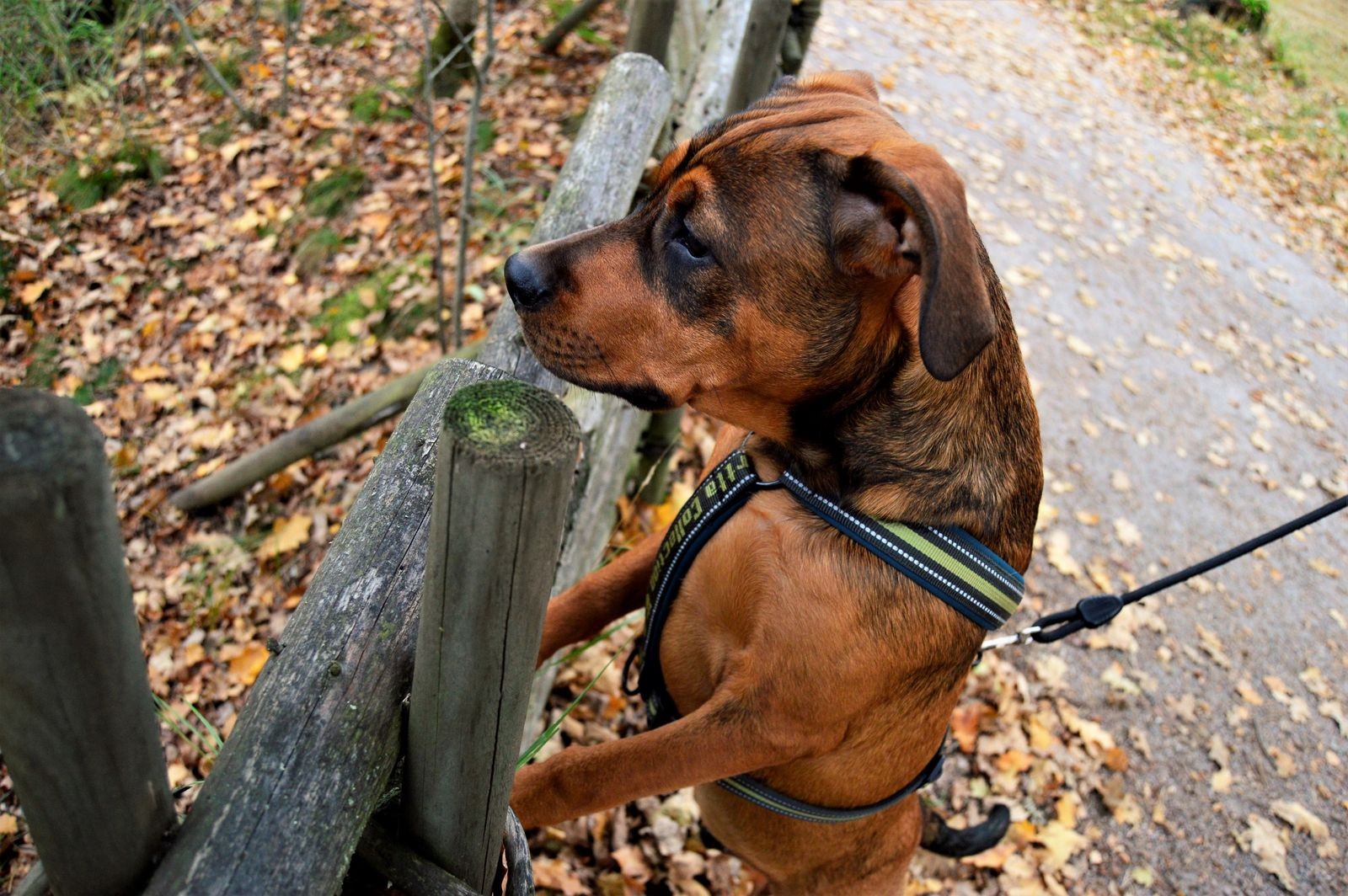
When a dog tunnels at the fence line, he is usually trying to get somewhere, not just making a mess — so the fix has to work on three fronts at once: supervision while habits change, a physical barrier at the fence base, and a yard that beats whatever is calling from the other side. Keep that supervision up throughout — a determined escape artist left outside alone will treat every breakout as rehearsal, and each success puts him near traffic.
Figure out what is on the other side
Dogs rarely dig toward nothing. Common magnets include a neighbor's dog, cats or wildlife, children playing, a walking route they can see through the slats, or simply the freedom of the street. Intact male dogs may dig persistently toward a female in season nearby. Some dogs dig out because the yard itself is the problem — they are left there for hours, under-exercised and alone, and the outside world is where life happens. Watch from a window: does he dig at one specific spot facing something, or work the whole perimeter? A focused digger has a target; a perimeter digger has a lifestyle complaint.
Addressing root causes such as exercise, companionship, and neutering decisions discussed with your veterinarian matters alongside hardware, because no barrier fully solves an unmet need.
Block the dig, practically
Several proven barriers work, chosen by budget and digging intensity:
- Bury the bottom of the fence several inches underground, or bend the lower edge outward in an L-shape along the ground so it blocks the tunnel's start.
- Lay welded wire mesh or concrete pavers along the fence base where digging concentrates.
- For determined diggers, a buried barrier of mesh extending down and outward is the heavy-duty option.
- Fill existing holes promptly and check the full line weekly — dogs return to previously successful spots.
Avoid anything that could injure a digging dog, such as sharp rubble in holes. The goal is a barrier he cannot pass, not a punishment he cannot understand.
Make home the better offer
A yard dogs love is a yard they stay in. Rotate toys, scatter a portion of meals in the grass for sniffing games, add a digging pit where digging is legal, and — most importantly — do not use the yard as storage for the dog. Time spent playing and training with you out there builds the association that good things happen inside the fence. If escapes happen when you leave for work, a midday visit, a longer morning walk, or a food puzzle at departure can lower the motivation considerably.
Safety while you fix it
Until the fence is proven, treat your dog as a flight risk: harness and leash for yard time if needed, and check that collar and identification are secure. Make sure contact details linked to any identification are current — a dog who does get out is most likely to come home quickly if the person who finds him can reach you immediately and easily.
The backup plan if he ever gets out
If your dog ever does slip away, speed in the first hours matters more than posters or posts. Set his profile up now, while things are calm, so the safety net exists before the day you might need it — digging barriers and a fast alert are two halves of the same plan. The Lost Pet Alert System on KinsLe covers that alert half at no charge in any profile: a missing-dog alert stays visible to anyone viewing the map; whoever finds him can reach you with a direct message through his profile.