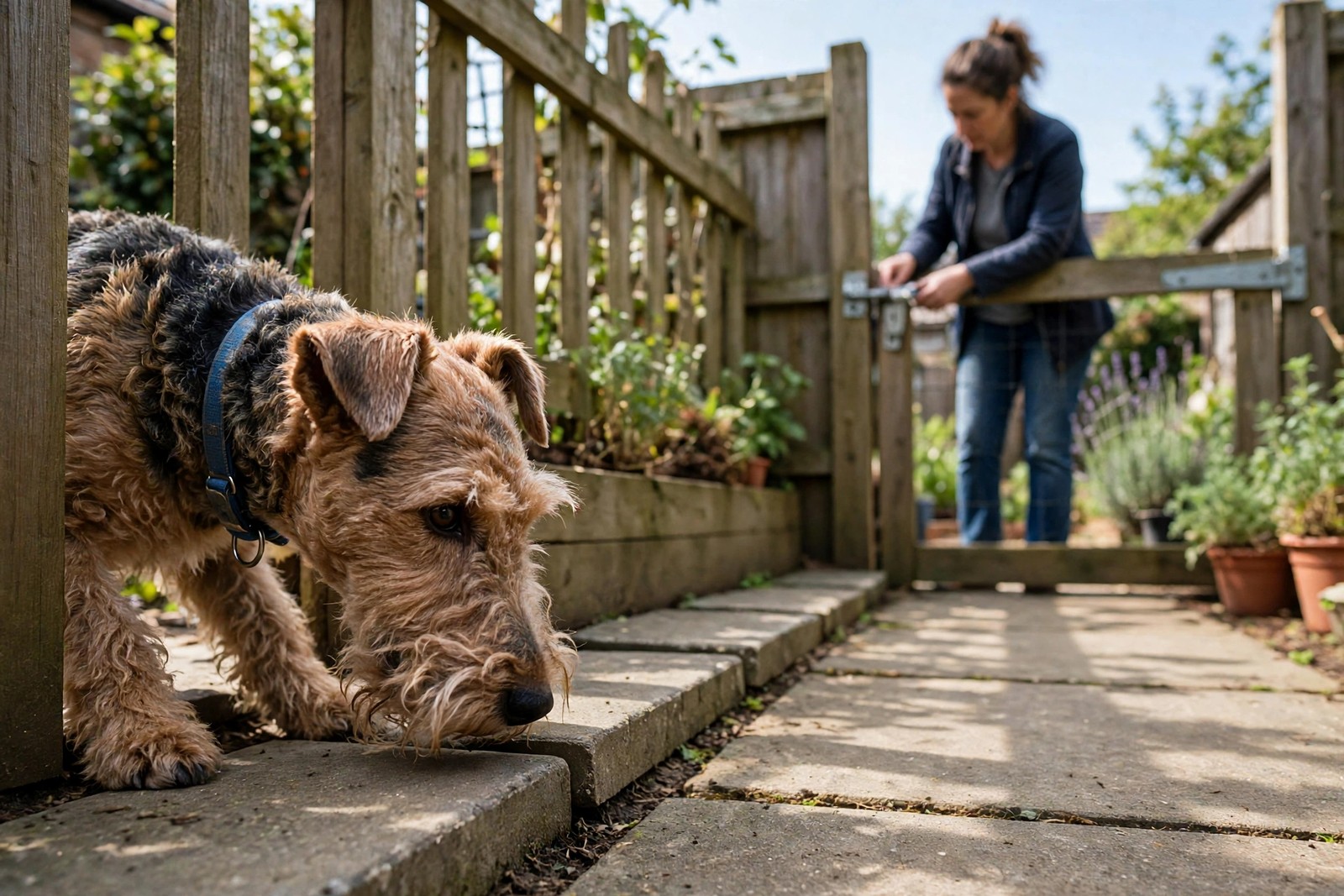
Dogs escape gardens in specific ways, and each way has a specific fix. Start by identifying your dog's method — fresh soil at the fence line, scuffed panels, a gate found swinging, or a neighbour's report of where he appeared — because a barrier aimed at digging does nothing for a climber, and a taller fence does nothing for a dog slipping a loose gate.
Blocking Diggers, Jumpers, and Squeezers
For diggers, extend the barrier below ground: bury sturdy mesh or a solid edging strip along the fence base, angled outward underground, or lay paving slabs tight against the fence line so paws meet stone, not soil. Give keen diggers a legal outlet, such as a sand or soil pit where buried toys reward digging in the right place. For jumpers and climbers, raise the fence to a height he genuinely cannot clear, angle the top inward where local rules allow, and move bins, benches, log piles, and children's play equipment away from the fence — most garden climbers launch from furniture. Check for squeezers too: gaps under gates, loose panels, and corners where a determined dog can widen a small hole day by day.
Gates, Latches, and Human Error
Many escapes are really gate failures. Fit a self-closing mechanism and a latch positioned high or shielded so paws and noses cannot work it, and consider a simple padlock or clip for a dog who has learned the latch. Agree a household rule that the gate is never propped open during deliveries or gardening, and add a second barrier — a porch, a fenced inner run, or a gate at the back door — if people come and go all day. Walk the whole boundary weekly and after storms, pushing panels, checking for new digging, and looking at the fence from your dog's height, not yours.
Fix the Reason He Wants Out
A well-exercised, occupied dog tests a fence far less than a bored one. Make sure he gets proper walks and play before long garden time, not instead of it, and leave him things to do outside: scattered treats to sniff out, a safe chew, or frozen food toys. Unneutered males are more inclined to roam when a nearby female is in season, which is worth a conversation with your vet. Watch him from a window rather than leaving him out unsupervised until the escapes have stopped for several weeks; a dog rehearsing escapes alone is practising, and practise makes the habit stronger.
Recall, ID, and the Backup Plan
Teach a reliable recall and reward it richly, and keep early garden sessions on a long line if he is likely to test the fence while you retrain. Keep his collar tag legible and microchip details current. If, despite all of it, he gets out, act immediately: search the routes he knows, alert neighbours the same hour, and do not chase a panicked dog — crouch, turn sideways, and let him come to you. KinsLe's Lost Pet Alert System lets you send a free alert to nearby Circle of Love members the moment you discover the escape, and a finder who spots him can message you directly, closing the gap between gone and home.