
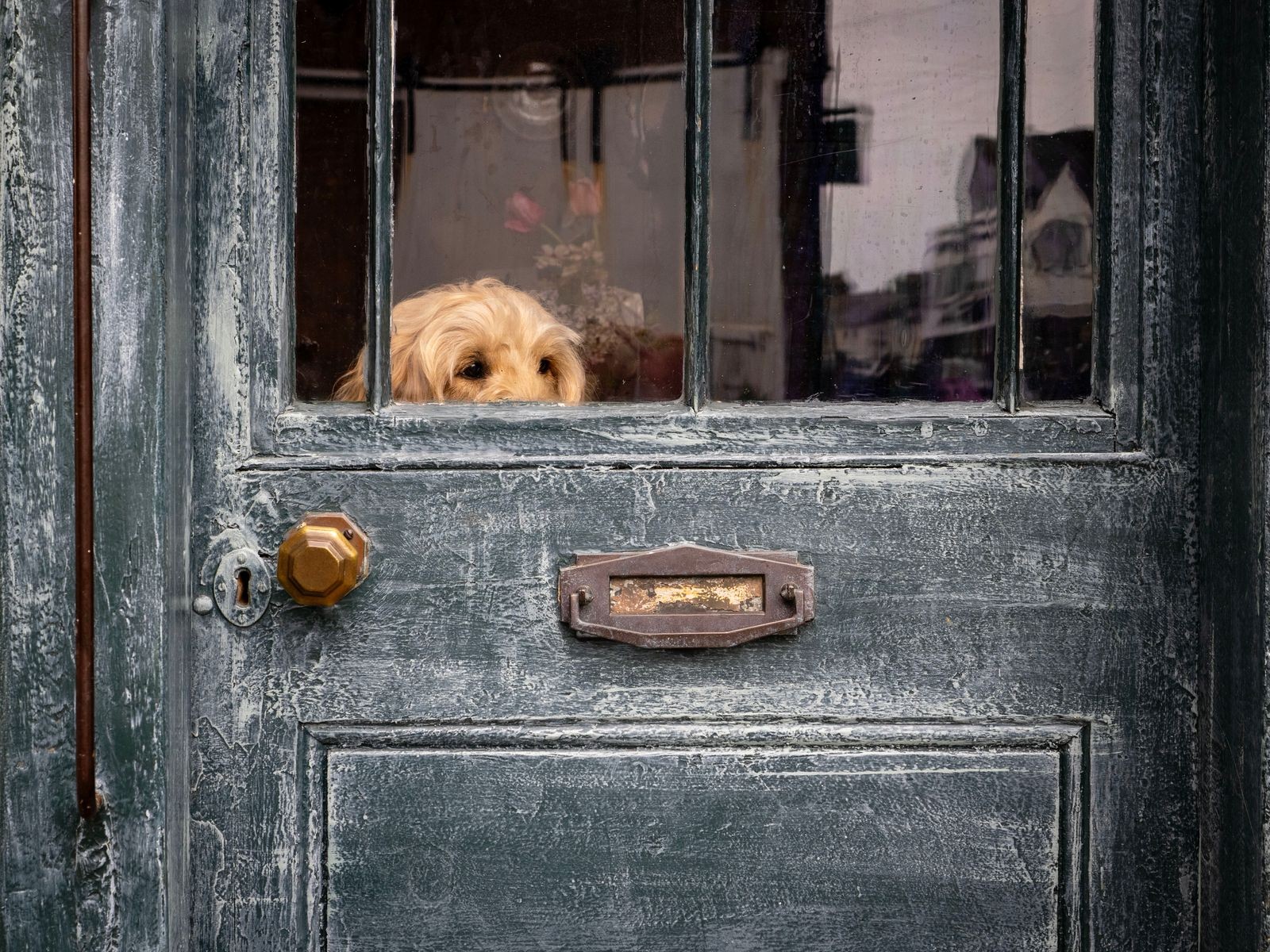
A polite door greeting is a taught routine, not a personality trait: set up a greeting station by the door — a leash, a mat a few steps back, and treats ready — have your dog settle on the mat as visitors arrive, and let the guest close the distance once your dog is calm. Rehearsed in stages, this turns the chaos at the door into a predictable little ceremony your dog actually enjoys.
Why the Door Is the Hardest Test
The front door concentrates everything exciting: a knock or bell, your own sudden movement, a stranger's voice and smell, and a narrow space where everyone crowds together. Even a dog who sits beautifully in the kitchen may lose the plot in the entryway. So train the greeting where it will happen, in that exact spot, rather than expecting kitchen skills to transfer automatically.
Set Up the Greeting Station
Choose a mat or bed far enough from the door that your dog is not underfoot when it opens — a meter or two back works for most homes. Keep a leash hanging by the door, a sealed pot of good treats within reach, and, if your dog is strong or excitable, a baby gate or exercise pen as backup. Before guests are due, burn off a little energy with a walk or game, and give your dog a toilet break; a dog who needs the yard cannot concentrate on manners.
Rehearse the Routine in Stages
- With no visitors, practice going to the mat on cue and settling with treats, until it is a favorite place.
- Add the knock or doorbell at low intensity, rewarding your dog for staying on the mat.
- Have a family member play the visitor: door opens, they step in, your dog stays put, then gets released to say hello calmly.
- Let the guest be the one to approach and close the distance, petting briefly while your dog keeps four paws down.
- If your dog breaks, the guest simply steps back and the fun pauses — no scolding, just a reset.
Only when this works with calm helpers should you try it with genuinely exciting guests: children, groups, or the friend your dog adores most.
Managing the Real Thing
For big occasions, management is not cheating. Settle your dog behind the gate with a long-lasting chew, let guests get coats off and sit down, then bring your dog in on leash for a controlled introduction once the arrival excitement has faded. Some dogs greet far better after five minutes, when the visitor smells familiar and the room has settled. If your dog is fearful of strangers — hiding, growling, or snapping — do not rehearse greetings at all; give him a safe room away from the door and talk to your veterinarian or a qualified trainer about a proper plan.
Keep the Steps in Your Pet's Hub
A greeting routine only survives visitors, teenagers, and house-sitters if the steps are written down where people will actually see them. KinsLe Messenger is the per-pet communications hub, so the greeting steps — mat, leash by the door, guest approaches, treats low — live alongside the rest of your dog's care conversation, ready for anyone house-sitting to follow exactly.
KinsLe Messenger holds that mat-and-leash greeting sequence inside your dog's own hub on KinsLe, so a house-sitter greeting him at the door follows the identical steps you rehearsed.