
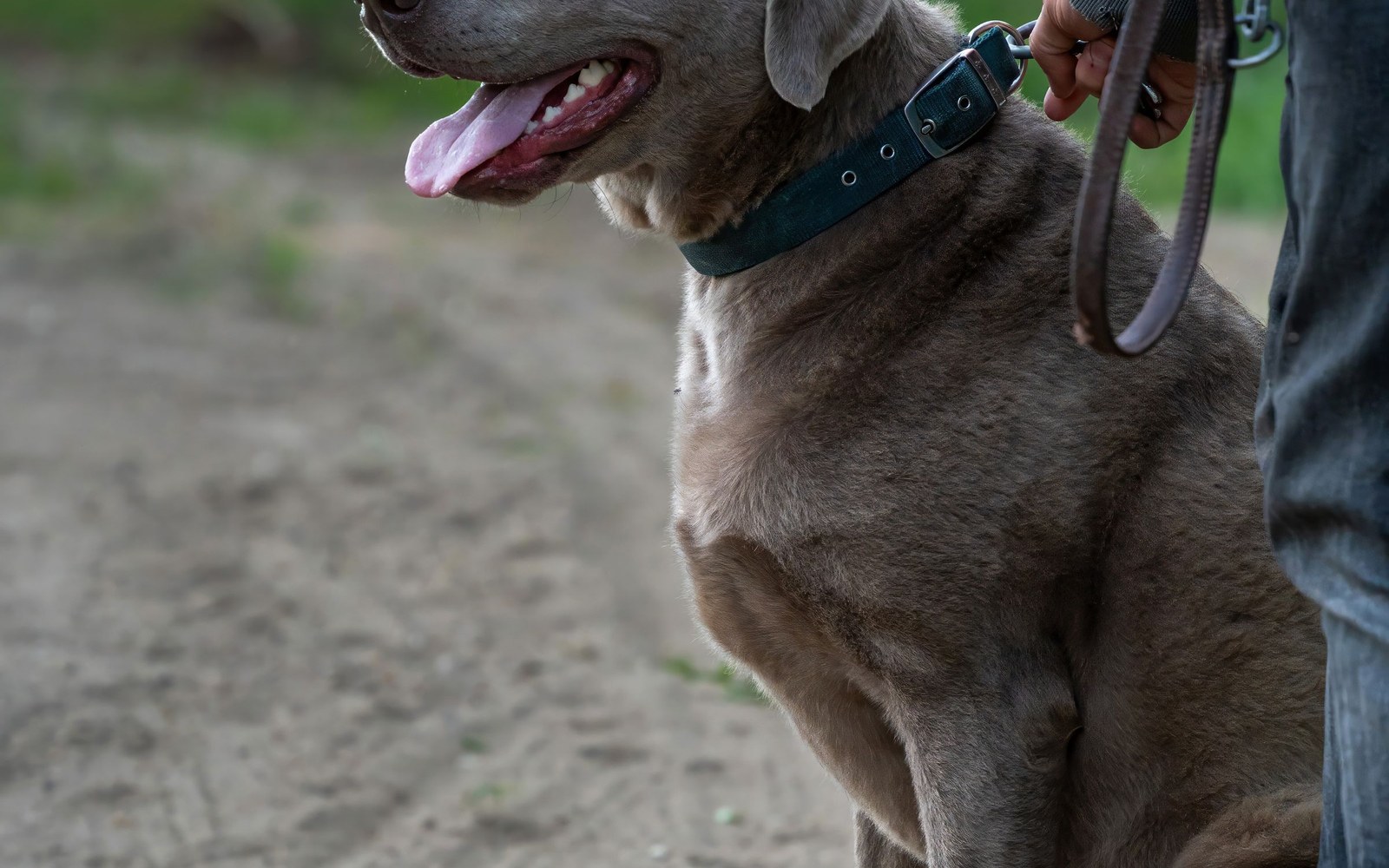
You teach a dog to walk nicely by making the spot beside you the best place on the walk — rewarding him often for staying there — and by making sure a tight leash never gets him where he wants to go. Stop or change direction the moment the leash goes tight, restart when there is slack, and repeat calmly. It feels slow at first, but this simple cause-and-effect is what dogs actually learn from.
Start Where Your Dog Can Succeed
Begin indoors or in your yard, where there is almost nothing competing for attention. Take a few steps, reward beside your leg, and stop before your dog gets bored or frustrated. Five good minutes beat thirty messy ones. Then move to a quiet street at an off-peak time, and only later try the route past the school, the café, or the dog park fence.
High-energy dogs — a young vizsla, Australian shepherd, or boxer, for example — often learn faster after a game of fetch or tug first. You are not trying to exhaust your dog, just take the edge off so he can think.
The Core Routine
- Start walking with treats ready in the hand on your dog's side.
- Reward every few steps at first, delivered low and beside your leg.
- The second the leash tightens, stop or turn and walk the other way — no yanking, no scolding.
- When your dog catches up and the leash loosens, praise and continue.
- Gradually stretch the distance between rewards as the loose leash lasts longer.
Let your dog sniff, too. Build in free-sniff breaks at curbs or trees, then use a cue like “let's go” to resume walking. A walk that is all rules is no fun for either of you, and dogs who get regular sniff time usually pull less between breaks.
Common Mistakes That Slow Progress
The biggest one is inconsistency: sometimes pulling reaches the interesting thing, sometimes it does not. Intermittent success makes a habit harder to break, like a slot machine. Retractable leashes can also teach constant light pressure, because the line is always slightly taut. Jerking the leash or shouting tends to raise excitement or anxiety, and an anxious dog pulls more, not less. If your dog reacts to other dogs with barking and lunging as well as pulling, or if you feel unsafe holding him, a qualified local trainer can help in person.
Safety on Every Practice Walk
Check your collar or harness fit regularly — you should fit two fingers underneath — and inspect the leash clasp and stitching, especially with a strong dog. Practice away from traffic until your turns are reliable, keep treats small and soft so frequent rewards do not upset your dog's stomach, and shorten sessions in hot weather, watching for heavy panting or lagging behind.
Keep the Habit Going Between Walks
Five-minute sessions only count if they actually happen, so anchor practice to something that already happens every day — the morning feed, the evening walk, the last trip outside before bed. Hitched to an existing routine, a short session stops being a good intention and starts being something your dog expects. Keep treats and the training leash by the door so starting takes seconds, and note which distraction level your dog handled so the next session starts one step harder, not three.
When a loose-leash question comes up mid-week — whether to stop or to turn — put a follow-up question to KinsLe's Kinny; he answers using the KinsLe Answers library.