
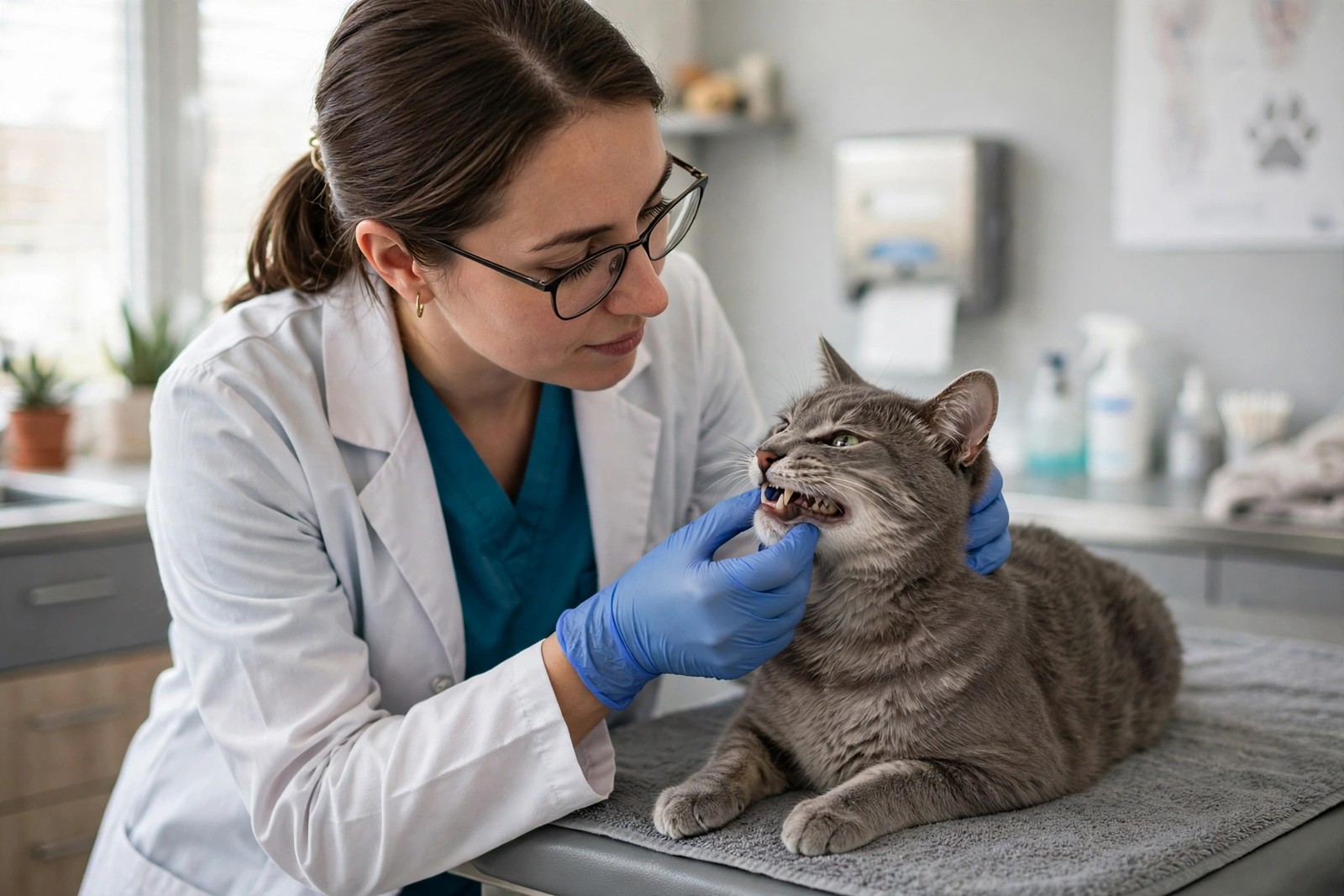
You can often spot feline dental trouble if you know what to look for: bad breath, drooling, pawing at the mouth, dropping food, chewing on one side, or gums that look red, swollen, or bleed easily. Because cats hide dental pain remarkably well, subtle changes in eating are frequently the first clue an owner gets.
The signs, from obvious to easy-to-miss
Some signs are hard to ignore — a cat who suddenly dribbles saliva, leaves wet patches where they've slept, or flinches when their face is stroked. Others creep in quietly. Watch for:
- Kibble dropped beside the bowl, or food pushed around rather than eaten
- A new preference for wet food, or eating eagerly then backing away
- Head tilted while chewing, or chewing only on one side
- Weight loss, a scruffier coat from reduced grooming, or new grumpiness when handled
- Visible tartar — yellow-brown buildup along the gumline, especially on the back teeth
- Pawing at the mouth or rubbing the face along furniture
Any one of these deserves attention; several together make a dental check a priority rather than a "mention it someday."
Why dental disease is so common in cats
Plaque forms on teeth every day, and when it isn't removed it hardens into tartar that works its way under the gumline, driving inflammation and pain. Cats are also prone to specific problems owners can't diagnose at home, including painful tooth resorption — where a tooth gradually breaks down — which often hides below the gumline where only an X-ray under anesthesia reveals the full picture. Small breeds and flatter-faced cats may crowd teeth in ways that trap plaque, and older cats accumulate risk simply through years of wear. This is precisely why "his teeth look fine to me" isn't a reliable all-clear: a cat can have a clean-looking front tooth and a very sore molar.
What to do when you spot something
Book a vet dental check rather than waiting for the annual visit, especially if eating has changed. At the appointment, describe what you've seen and when it started — "she's dropping kibble and chewing left-side only since last month" is far more useful than "something's off with her mouth." Your vet will examine the teeth and gums, and may recommend a professional clean and closer look under anesthesia if they find tartar, inflammation, or a suspect tooth. Don't attempt to scrape tartar at home: you can damage enamel and gums, and it does nothing for disease below the gumline where the real trouble lives.
Gentle checks you can do at home
If your cat tolerates it, lift the lip briefly during a calm moment — many cats accept this better after a meal or during a sleepy cuddle — and glance at the gumline for redness and at the molars for buildup. Pair the peek with a treat so it stays a neutral experience. Never force a reluctant cat's mouth open; a stressed cat teaches you nothing and may bite. If home checks aren't possible, that's fine — note eating behavior instead, and let your vet do the looking at regular visits. Even an annual professional look catches far more than most owners ever could at home.
Finding dental care nearby with the Pet Services Directory
When the signs point to sore teeth, the next hurdle is simply finding the right help quickly. KinsLe's Pet Services Directory helps you find local vets — along with groomers, sitters, and trainers — so you can locate a practice that offers dental care near you instead of starting from a blank search. Pair that with a clear note of the symptoms you've spotted, and you'll walk into the appointment ready. With your symptom notes ready, narrow the local practices offering dental examinations for cats through the Pet Services Directory on KinsLe.