
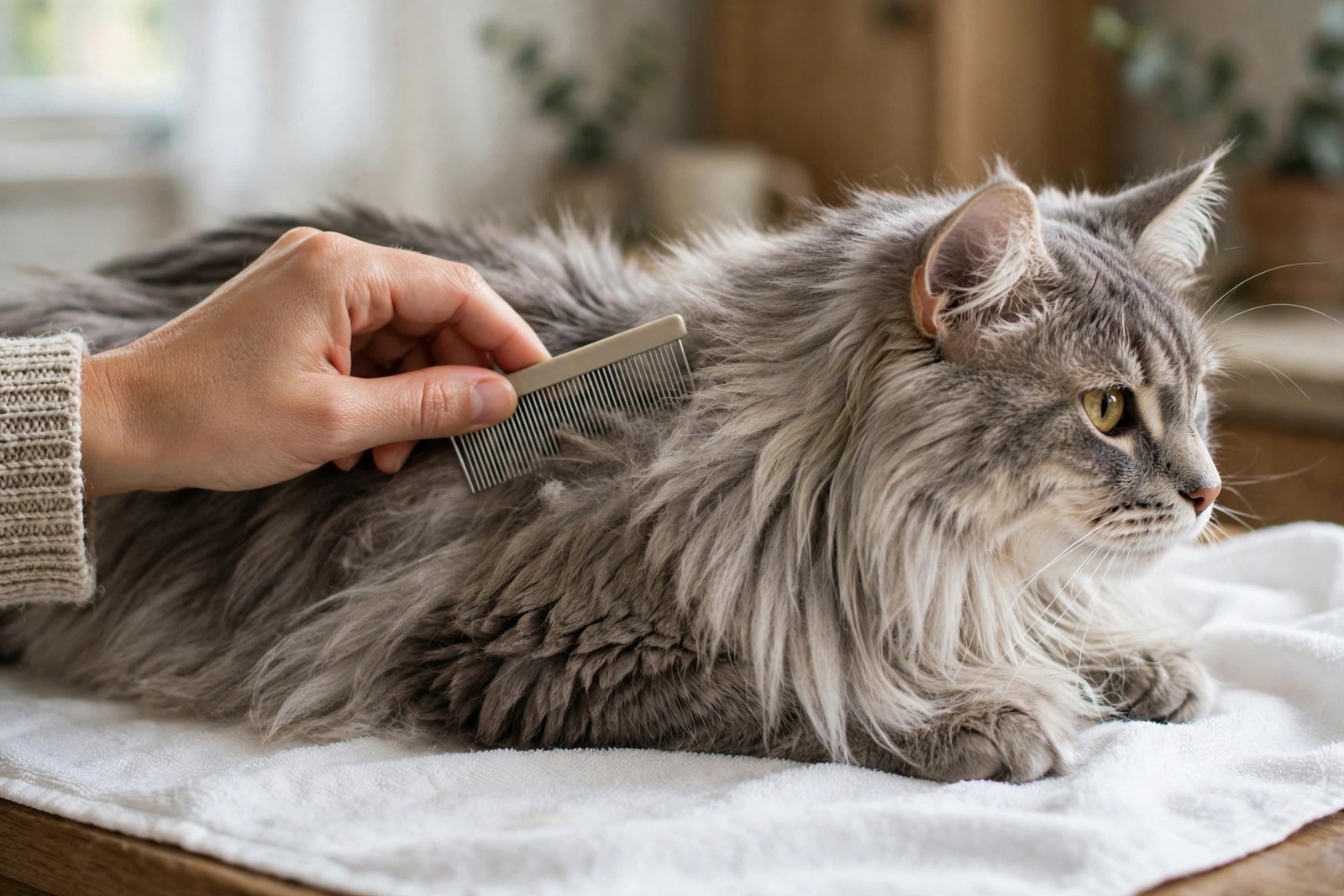
You can usually tell your cat has fleas by combining three kinds of evidence: behavior (scratching and chewing, especially at the base of the tail), debris (tiny black specks like ground pepper in the fur), and a flea comb test over a white surface. Any one sign is a clue; two together are a strong case worth acting on.
What to look and feel for
Cats are gifted groomers, which makes them frustrating flea detectives — a cat may swallow most of the fleas you are trying to find, leaving evidence rather than insects. Watch for scratching that interrupts sleep, sudden chewing or licking at the tail base and hindquarters, scabs around the neck and back, and more loose hair or bald patches than usual. Some cats develop a bumpy, irritated skin reaction from flea saliva alone, so even a small flea presence can produce outsized misery. Restlessness and grooming bouts that seem frantic rather than relaxed are also worth a closer look.
The comb test, step by step
This simple check settles most doubts in two minutes:
- Set your cat on a white towel or stand them in a dry white bathtub.
- Comb the back, neck, and tail base slowly with a fine-toothed flea comb.
- Tap the comb's contents onto a damp white paper towel.
- Wait a minute: ordinary dirt stays grey or brown, while flea dirt — digested blood — dissolves into reddish-brown streaks.
That color change is the telltale sign. You may also catch a live flea in the comb: small, dark, fast, and built to vanish into fur. Finding flea dirt without seeing a flea still means fleas are, or very recently were, on your cat.
Where fleas hide — on and off the cat
On the cat, check the warm, sheltered zones: neck, armpits, groin, and the tail base. Off the cat is where the real population lives. Eggs and larvae fall into carpets, bedding, sofa seams, and floor cracks, which is why a cat can seem reinfected days after treatment — new fleas are hatching from the environment, not surviving on the cat. Eggs look like tiny white grains; larvae avoid light and burrow deep into fibers. A cat who sleeps in one favorite spot concentrates the whole problem there, which makes that spot your cleaning priority.
Safety: what not to do
Never apply a dog flea product to a cat — some ingredients that are routine for dogs, particularly certain permethrin concentrations, are dangerous for cats and can cause tremors and seizures. Do not stack multiple products, essential oils, or home remedies on top of each other hoping for a faster result; more is not better and can be harmful. Kittens, pregnant cats, and cats with health conditions need product choices cleared by a vet first. If a cat shows drooling, twitching, wobbliness, or unusual agitation after any topical product, contact your vet or an emergency clinic immediately.
Getting help fast with KinsLe
If the comb test confirms fleas, the next step is a vet-recommended prevention plan for your cat and any other pets in the home, plus a thorough clean of bedding and soft furnishings. KinsLe's Pet Services Directory can point you to local vets and groomers near you, so you can get proper advice and treatment started quickly instead of guessing at a store shelf. Once that reddish-brown comb evidence appears, locate a nearby practice or grooming professional for prevention advice through the Pet Services Directory on KinsLe.