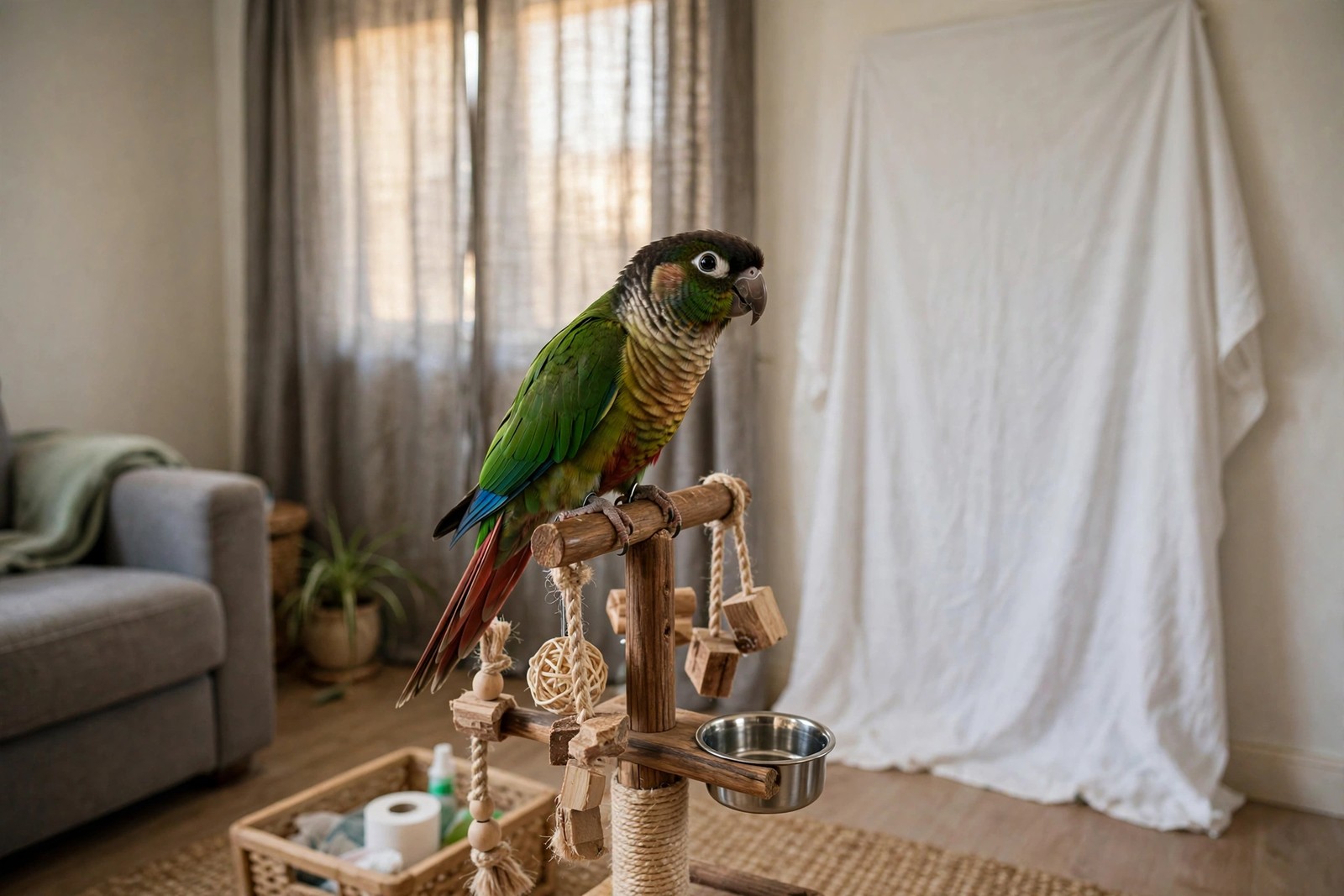
Out-of-cage time is essential for a pet bird's exercise and mental health, but a normal living room is full of hazards a flying bird finds in seconds. The routine that works is a complete sweep of one room before the cage door opens — the same checks, in the same order, every session — rather than a quick glance as you lift your bird out.
Flight Hazards First
Close and latch every window and outside door in the room, and tell everyone in the house that the bird is out, ideally with a note on the door, so nobody walks in and releases her by accident. Switch ceiling fans off and wait until the blades have fully stopped; a coasting fan still injures. Cover the two invisible walls birds crash into: draw curtains or blinds across windows and drape a sheet over large mirrors, at least until your bird has learned the room with the glass marked. Keep the room's internal doors closed too, so her world for the session is one known, checked space.
Remove the Room's Other Dangers
Shut cats, dogs, and other pets out of the room entirely, however gentle they seem — a playful pounce or a startled snap is faster than any owner. Work through the surfaces at bird height and at landing height: put toilet lids down and cover aquariums, vases, drinks, and any open water deep enough to trap a small bird; blow out candles; move houseplants that are toxic to birds out of the room rather than trusting her not to chew them, and ask your avian vet for a safe-plants list if you are unsure about one. Tuck electrical cords behind furniture or cover them, clear small swallowable objects such as buttons, coins, and jewellery, and never spray air fresheners, polish, or aerosols in or near the room while she is out — a bird's breathing system is far more sensitive than ours.
Set the Room Up for a Good Session
Safety done, make the room worth flying in. Place a play stand or a familiar perch as her home base, with a favourite treat and a shredding toy on it, so she has somewhere rewarding to return to between flights. Keep sessions supervised from start to finish; if you must leave the room, she goes back to the cage first. Keep a small towel within reach in case you ever need to gently contain an injured or panicked bird, and practise step-up recalls to the stand during calm sessions so returning is a habit, not a chase.
The First Flights in a New Room
Young or newly adopted birds should explore at their own pace: open the cage, let her come out when ready, and keep the first sessions short. A bird who crashes repeatedly, pants with an open beak, or hides and refuses to move is telling you the room, the timing, or her health needs rethinking — persistent clumsiness or weakness is an avian vet conversation. KinsLe's Family Sharing lets you share your bird's profile and the room sweep — fans off, glass covered, pets out, doors latched — with everyone in the household, so the safety routine holds even when someone else lets her out for her afternoon flight.