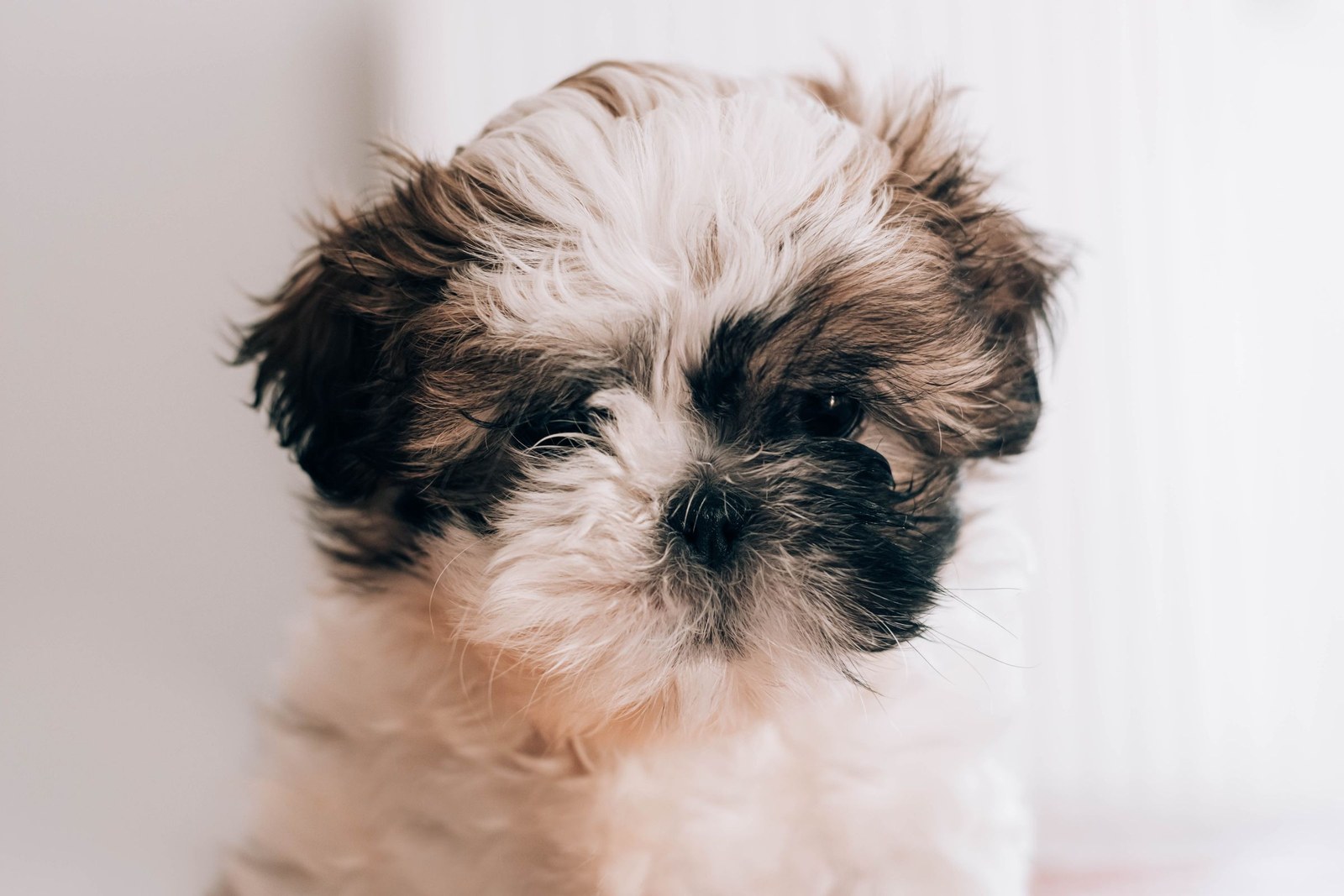
You brush a long-haired dog without pulling by working upward from the very tips in small sections, holding the base of any tangle so your brush never tugs directly on the skin. Technique, not force, is what separates a calm grooming session from a dog who hides when the brush appears. Done right, even a flowing Yorkshire Terrier, Shih Tzu, Afghan Hound, or long-coated Collie coat can be brushed out comfortably.
Set Up Before the First Stroke
Choose a pin brush for long coats — its rounded pins glide through hair without scratching skin — and keep a metal comb beside it for checking your work. A light detangling or conditioning spray misted onto dry coat reduces static and friction; brushing bone-dry, dirty hair invites breakage, while brushing soaking-wet hair stretches and snaps it. The sweet spot is clean, dry, and lightly misted.
Position matters. Small dogs often do best on a table or your lap with a towel underneath, large dogs on the floor beside you. Brush when your dog is relaxed, not right after exciting play, and keep early sessions short. Long coats reward rhythm: same order, same sections, every time, so your dog can predict what comes next.
The Ends-Up Method, Section by Section
Divide the coat mentally into zones: one side, then the other, chest, legs, tail, and furnishings. Within each zone, take a small section, hold it gently near the base between your fingers, and brush only the last inch or two first. Once the ends are free, move your grip up and brush the next portion, gradually working toward the skin — this is line brushing adapted for long hair, and it prevents you from dragging a knot the full length of the strand and tightening it.
When you meet a tangle, stop brushing through it. Hold its base firmly so the skin feels nothing, tease it apart with fingers first, then pick at the edges with the comb or the corner of the brush, working inward. For a stubborn mat, work a little cornstarch-free detangler in, wait a minute, and try again. Mats tight against the skin, or anywhere on a thin-skinned area like ears, are safer in a professional groomer's hands.
Finish With the Comb — and Honesty
When a section feels smooth, pass the metal comb from skin to tip. It should glide. If it catches, that section is not done, no matter how pretty the surface looks. Feathered legs, ear fringe, and tail plumes hide tangles best, so comb those twice. Reward throughout, and end on a success even if the full coat takes two shorter sessions across a day.
How often depends on length and lifestyle: many long coats need attention every day or two in the high-tangle zones and a full brush-out several times a week. Consistency shrinks each session; skipping a week multiplies it.
One Routine, Done the Same Gentle Way
Long-coat success collapses when every person in the house brushes differently — one patient, one in a hurry with a heavy hand. Write down the order, the tools, and your dog's sensitive spots once, and share it. KinsLe Family Sharing gives relatives you select access to that profile, for a relative who also brushes this long coat.