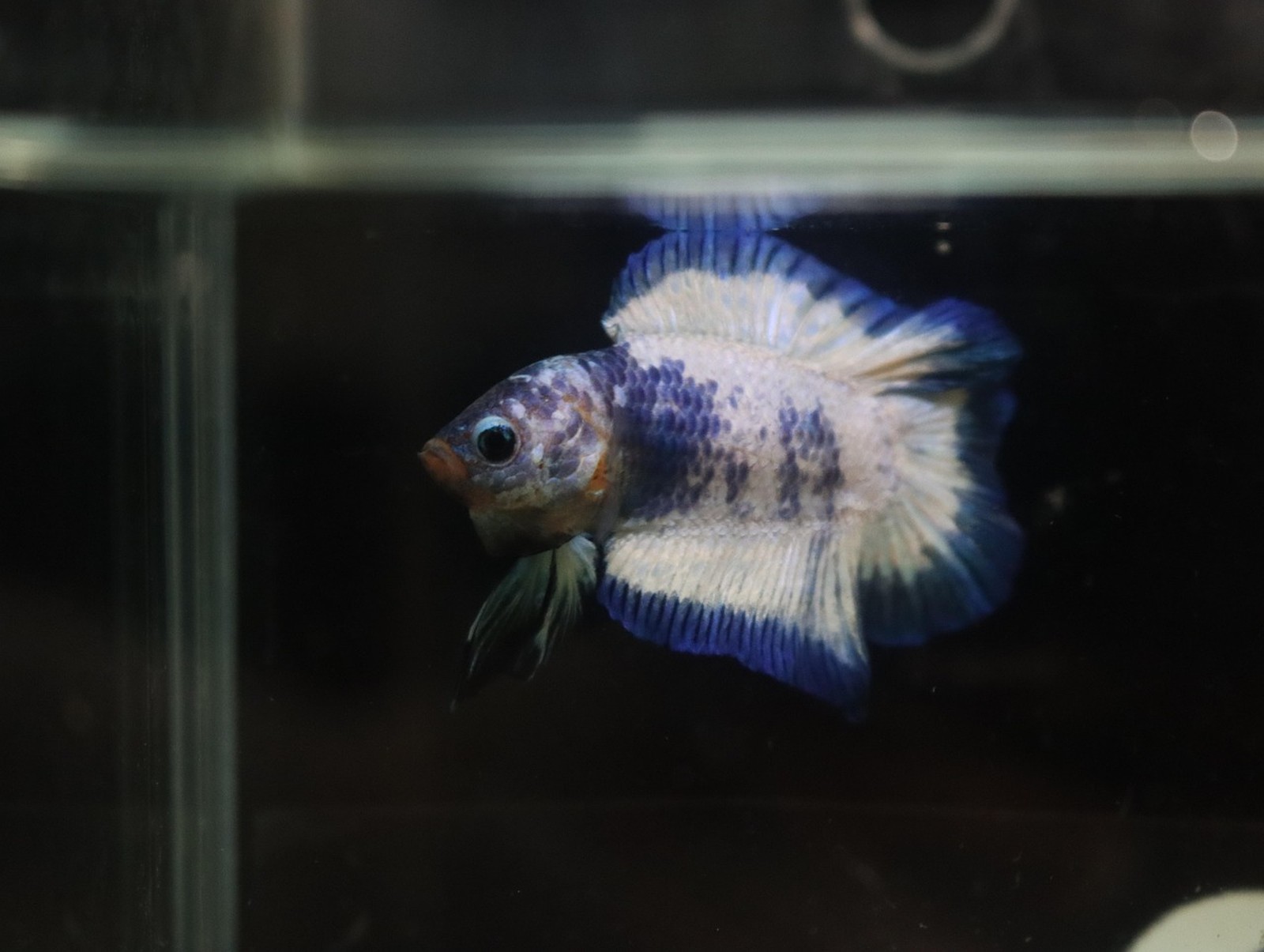
A betta is an insect-eating fish built for small, protein-rich meals, and a single pellet offered every day covers that diet only narrowly. A weekly rotation fixes the narrowness without turning feeding into guesswork: keep a quality betta pellet as the staple, add frozen protein foods on set days, and hold one day each week with no food at all. The pattern below gives six feeding days and one fasting day, and you can repeat it unchanged week after week.
The Weekly Pattern
- Monday: betta pellets
- Tuesday: frozen bloodworms, thawed before feeding
- Wednesday: betta pellets
- Thursday: daphnia, frozen or live
- Friday: betta pellets
- Saturday: brine shrimp, frozen or live
- Sunday: no food
Pellets anchor the week on Monday, Wednesday, and Friday because a betta-specific pellet is formulated as a complete staple, with the protein, fats, and micronutrients the fish needs daily. The Tuesday, Thursday, and Saturday foods then widen the diet in different directions. Bloodworms are rich and eagerly eaten, which is why they appear once rather than daily. Daphnia have a mildly laxative effect that helps keep the gut moving, a useful quality in a species prone to constipation. Brine shrimp add variety and trigger natural hunting behaviour as the fish chases each piece. Sunday's fast rests the digestive system and helps prevent the bloated belly that overfed bettas develop.
Portions Matter More Than Variety
Offer one small meal on each feeding day, sized to what your betta finishes within two minutes, and remove anything left after that. A betta's stomach is small, and uneaten frozen food sinks, rots, and fouls the water of a small tank quickly. Feed at roughly the same time on each feeding day, watch the fish eat rather than scattering food and leaving, and adjust the amount slowly if the belly looks pinched or, at the other extreme, rounded and sluggish after meals. Soak dry pellets briefly in tank water before feeding so they soften and do not swell inside the fish. Thaw frozen foods in a small cup of tank water, never under a hot tap, and feed only the portion for that meal.
Freeze-dried versions of these foods can stand in occasionally, soaked well first, yet frozen foods keep moisture and texture closer to the living foods a betta evolved to hunt. Live daphnia and brine shrimp are excellent where a trusted source supplies them cleanly; avoid collecting wild live food from ponds, which can carry parasites into a home tank.
Reading Your Betta's Response
A rotation is working when the fish greets feeding time actively, holds a smooth body outline without a swollen belly, produces regular waste, and keeps its fins open and unclamped. Reduce portion size before you cut variety if the belly grows round, because overfeeding, not variety, is the usual culprit. If your betta refuses one food repeatedly, swap that slot to another protein rather than repeating a rejected meal, and note the refusal; a fish that suddenly refuses every food, hides, or stops responding at the surface needs its water tested first and veterinary advice if the change persists.
Keep the tank warm and stable, the water tested on a regular rhythm, and the rotation written down where everyone who feeds the fish can see it, because a shared tank quickly becomes an overfed tank when two people each assume the other has not fed yet.
A written rotation only works when the betta is actually fed just once on each feeding day, and KinsLe Care Teams lets you assign each day's betta food to a named person and see it marked complete with a timestamp, so Tuesday's bloodworms never arrive twice.