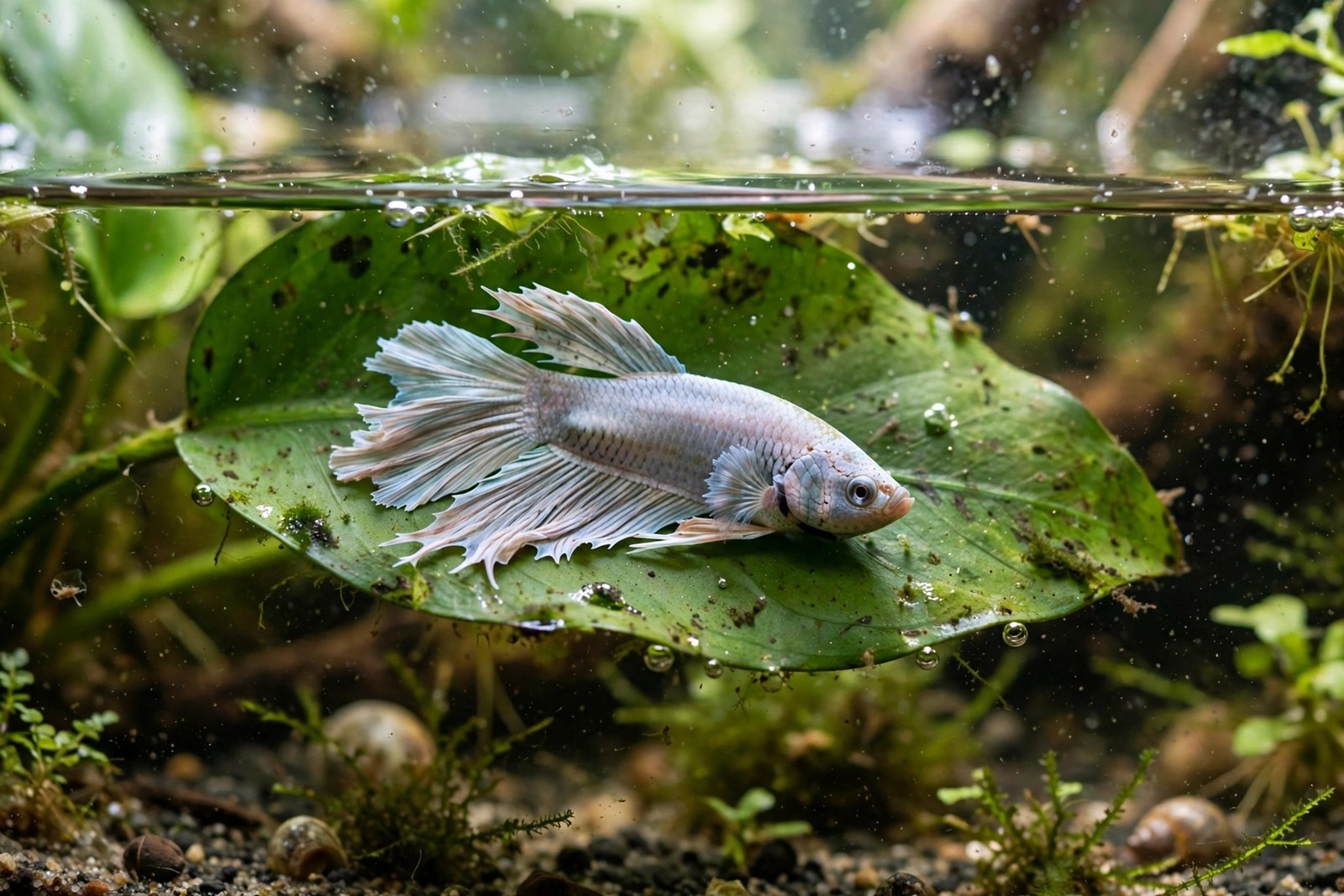
An elderly betta shows his age quietly: colours a little faded, fins less flared, longer rests between swims, and a slower trip to the surface. None of that needs fixing — it needs accommodating. Senior betta care is about shortening distances, softening currents, and keeping his water so stable that an old fish never has to spend energy coping with change.
Shorten the Trip to the Surface
Bettas breathe air at the surface and eat there too, so make that journey short and restful. Lowering the water level slightly in his tank reduces the swim, and resting spots just beneath the surface let him pause where the air is: a broad live or silk plant leaf, or a smooth resting perch fixed near the top. Avoid sharp plastic plants that tear ageing, delicate fins. Observe how he uses the space — a senior who props himself on a leaf for long naps is using the tank exactly as you hoped — and rearrange gently, one item at a time, rather than redecorating his whole world at once.
Soften the Current and Keep the Warmth Steady
A filter flow a young betta shrugged off can exhaust an old one, pushing him around the tank and making every rest a fight. Baffle the outflow with a sponge or a deflector, or switch to a gentler filter, keeping filtration running — clean water matters more, not less, for an elderly fish. Keep his water consistently within the warm range bettas need and check the heater is holding steady, since seniors tolerate temperature swings poorly. Test the water regularly; stable, clean parameters are the single biggest kindness for an ageing betta, far ahead of any tonic or additive.
Feed Smaller, Softer, and at the Surface
Offer smaller meals, a little at a time, directly where he is resting, and give him unhurried minutes to find and take each piece — eyesight and aim often fade with age. Pellets softened briefly in a drop of tank water, or smaller soft foods, are easier for an old mouth than large dry pieces. Remove uneaten food promptly so it does not foul the water. For maintenance, do smaller, more frequent partial water changes with temperature-matched, conditioned water instead of occasional large ones, and keep his lighting gentle and his surroundings calm, with no new tankmates to compete or nip.
Normal Ageing Versus a Problem
Faded colour, a slightly curved spine, thinner fins, cloudy-looking eyes, and much longer rests can all be old age. The changes that deserve advice from an aquatic vet or an experienced fish specialist are a swollen belly, raised scales, white patches or spots, gasping at the surface in clean water, or a fish who stops eating entirely. Keep changes gentle and note what you see week to week, because in a quiet old fish the trend matters more than any single day. KinsLe's Pet Passport keeps that trend written down — water-change dates, test results, feeding notes, and observations — in one packet, so his care stays consistent even when a friend covers a weekend.