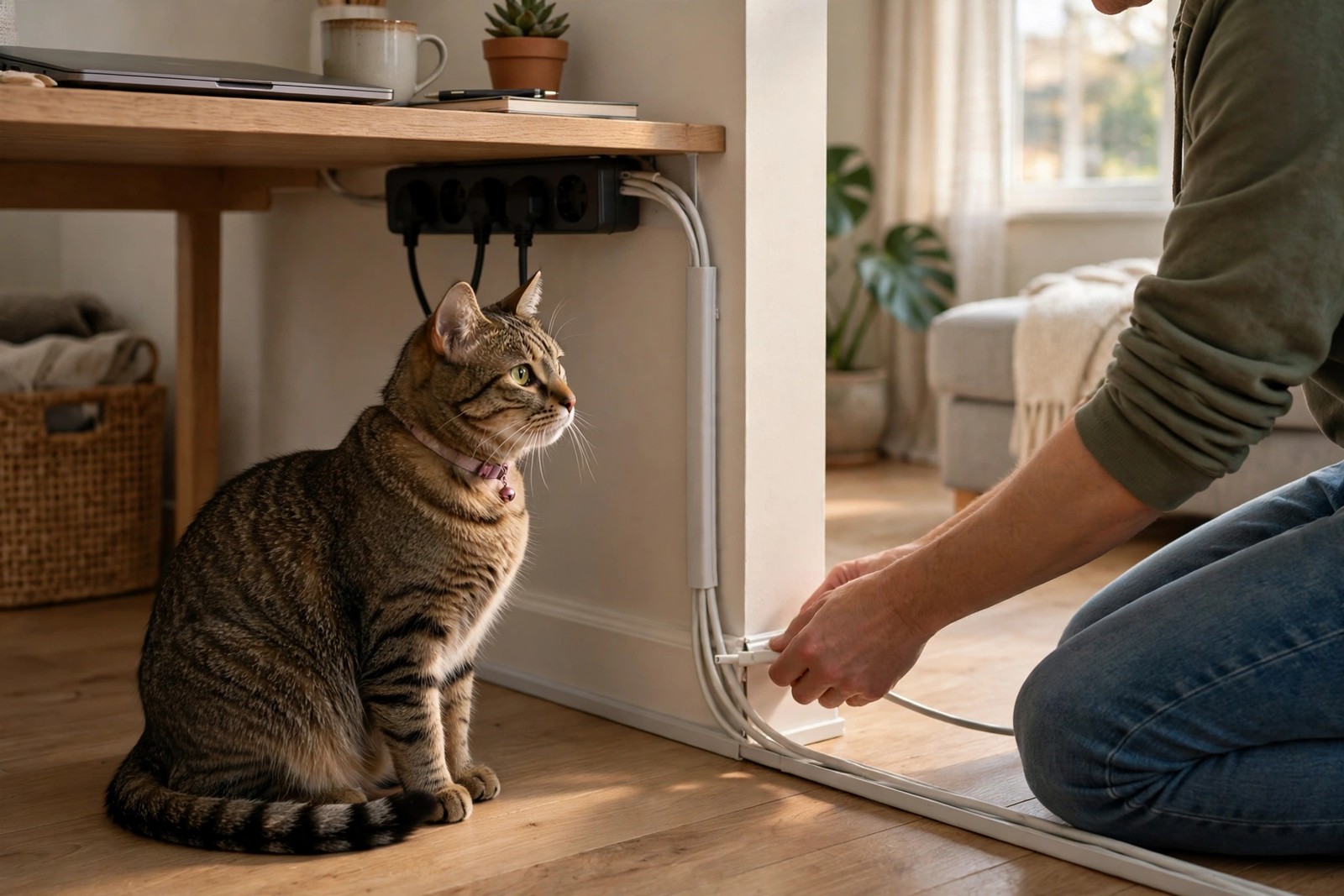
Cats chew cords for ordinary reasons — teething, curiosity, boredom, and the appealing springy feel of a cable that moves like prey — but a live cord can burn a cat's mouth, damage teeth, or deliver a serious shock. Cat-proofing is therefore physical first: remove, lift, and cover cords so teeth never reach wire, and only then think about deterrents.
Start With a Room-by-Room Cord Audit
Get down to cat height and look at every room the way your cat travels it. List every cord: chargers draped off desks, lamp leads crossing open floor, the power strip behind the television, appliance cables in the kitchen, and the forgotten lead behind the sofa. Then apply the first and cheapest fix — subtraction. Unplug and put away anything used only occasionally, such as guest chargers, seasonal lights, and spare device leads. Coil the cords you must keep to their shortest useful length, because a hanging loop or a long slack run across the floor is the part a cat bats, chases, and finally bites. Route working cords tight against walls and behind heavy furniture your cat cannot move, leaving no dangling sections at head height for a cat walking behind the television or under a desk.
Cover What Cannot Be Hidden
Some cords have to cross open space. For those, a hard barrier beats a warning: split-loom tubing, spiral cable wrap, or a rigid cord cover or raceway fixed along the skirting board puts plastic or a channel between teeth and wire, and a cat that bites the cover meets something unrewarding that does not flex like a cord. Enclose power strips in a covered box or mount them on the wall or the underside of a desk, off the floor entirely, so the strip and its cluster of leads stop being a floor toy. Wash reusable covers when they get dusty or chewed-looking and inspect them monthly; replace any cover, and any cord, that shows tooth punctures or exposed wire — switch the power off at the outlet first, then unplug and discard the damaged cord rather than taping over the damage and plugging it back in.
Make Chewing Less Appealing, and Give an Alternative
A bitter-tasting pet deterrent spray, used exactly as its label directs and reapplied as the label requires, can tip the balance for a cat that mouths one particular cord despite the covers, but treat it as the last layer, never the only one. The longer-term answer is substitution: kittens need legal chewing outlets while they teethe, and adult cord-chewers are often under-played hunters, so offer chew toys and run a proper interactive play session that ends near the rooms where cords used to be the entertainment. Boredom chewing tends to fade when the cat has something better to do.
If a Cord Has Already Been Chewed
If you find your cat chewing a live cord, switch the power off before touching the cat or the cable. Burns inside the mouth, drooling, pawing at the face, loss of appetite, coughing, or laboured breathing after a chewing incident all warrant an urgent call to your vet, because electrical injuries can affect a cat beyond the visible burn. Mention the incident even if your cat seems fine.
Once your audit is done, KinsLe's Family Sharing lets you share the room-by-room cord notes with the rest of the household, so nobody reintroduces a dangling charger into a room you have already cleared.