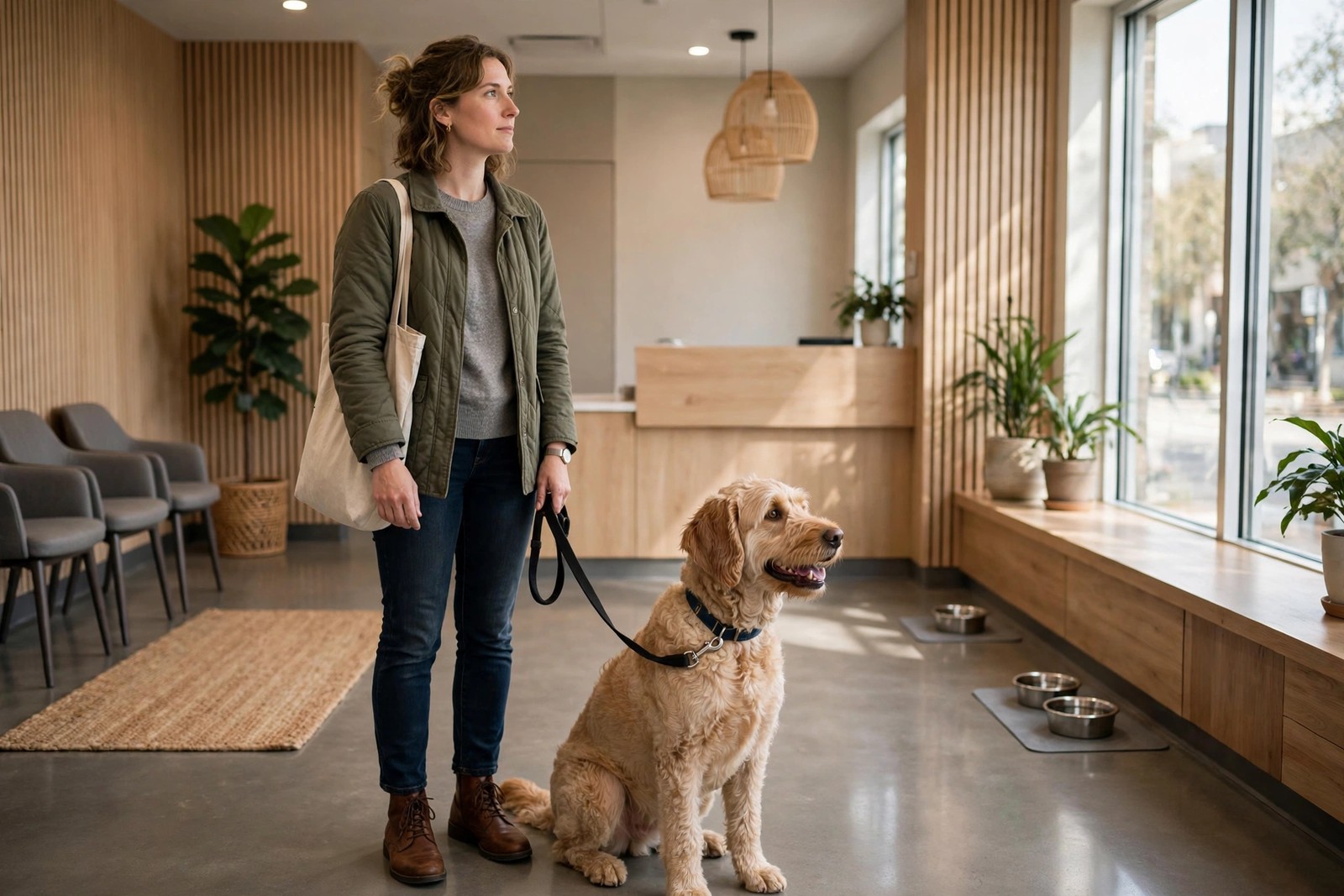
Moving house forces a change of vet at exactly the moment life is least organised. Distance and price are easy to compare from a screen, yet the qualities that decide whether a practice serves your dog well for years show up in how the team communicates, how emergencies are covered, and how carefully records and handling are managed. Judging those qualities takes one visit and a handful of deliberate questions.
Communication You Can Test Early
Phone the practice with a genuine question before registering, and judge the response. Staff who listen fully, explain options in plain language, and state costs clearly before treatment are showing you their everyday standard. Ask how test results are shared, whether estimates are written, and how the practice handles a decision when you need time to think. At a first appointment, notice whether the vet narrates what they are doing, invites your knowledge of your dog, and writes a plan you can follow at home. A practice that communicates well during a routine visit will communicate clearly during a crisis, while a practice that rushes a healthy dog through the door will rush you through a hard decision later.
Emergency Cover and Out-of-Hours Arrangements
Ask directly what happens when your dog is ill at night or on a weekend. Some practices run their own rota, and others share cover with a dedicated emergency service elsewhere in the area. Neither model is automatically better, yet you need to know which applies, where you would travel, and whether your dog's records follow him to that service. Save the emergency number in your phone during the first visit rather than during the first emergency. Ask also how the practice handles referrals to specialists, since a team that refers willingly when a case exceeds its scope is protecting your dog rather than admitting defeat.
Records and Continuity
A good new practice asks for history rather than starting from zero. Confirm that the team will request records from your previous vet, covering vaccination dates, past illnesses, surgeries, and any ongoing monitoring. Bring a summary of your own to the first visit: current food, known sensitivities, temperament notes for handling, and the dates of recent preventive care. Practices differ in how they schedule routine reviews and reminders, so ask what their recall system covers. Continuity also means seeing a small team who get to know your dog across visits, so ask whether you can request a particular vet for ongoing issues.
Handling and the Dog's Experience
Watch how the team handles dogs in the waiting room and during your first visit. Calm, unhurried handling, treats offered with permission, and willingness to pause when a dog becomes stressed all signal a practice that reads animals well. A short, low-stakes first visit for a health check lets your dog form a neutral or positive impression before any illness visit. Ask whether the practice offers nurse appointments for nail clips or weight checks, since those brief, pleasant visits build familiarity that pays off when real treatment is needed. If your dog has known fears or handling sensitivities, raise them at registration and see whether the notes are recorded visibly for the whole team.
Making the Decision
Shortlist two or three practices, visit each briefly if you can, and weigh the whole picture: communication, emergency cover, record handling, and how your dog was treated. Register before you need an appointment, because a practice that knows your dog in health responds faster in sickness. Transfer records promptly while the move is fresh in everyone's mind.
Starting that shortlist in KinsLe's Pet Services Directory, with notes on each practice's emergency arrangements and handling style, keeps the comparison organised from the first phone call to the final choice.