
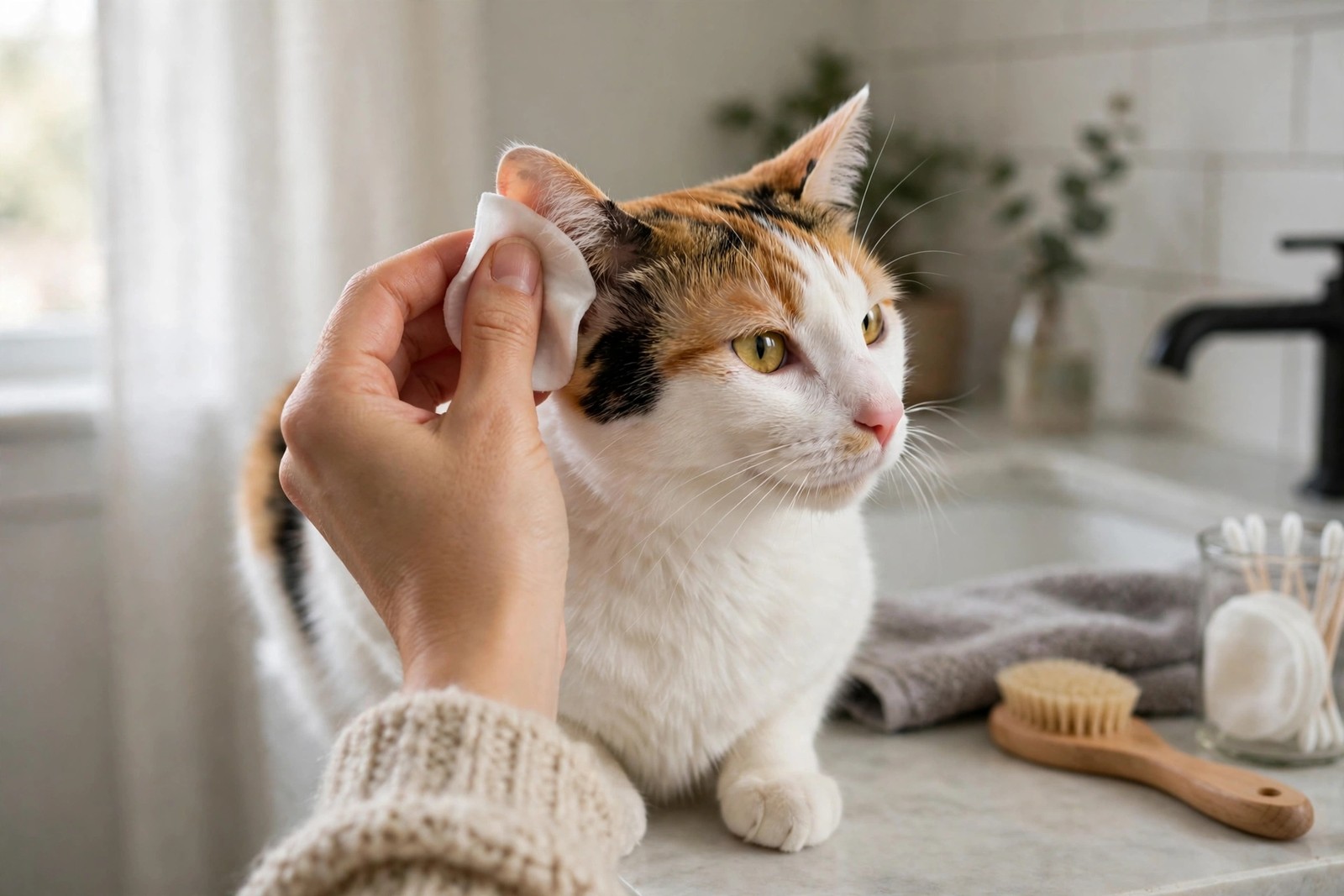
The safe way to clean a cat's ears is to wipe only the outer ear you can easily see, using a soft cotton pad lightly dampened with a vet-approved ear cleaner — never inserting anything into the ear canal. And here is the part many owners miss: most healthy cats rarely need ear cleaning at all, so a gentle look is usually all that is required.
What a healthy cat ear looks like
A normal ear is pale pink inside, mostly clean, and free of strong odor. A small amount of light wax is fine — wax is protective, not dirt to be scrubbed away. Ears that are constantly cleaned when they do not need it can end up irritated, which creates the very redness owners then worry about. Your job is mostly monitoring: know your cat's normal so you can spot a change.
British Shorthairs, Persians, and other cats you groom regularly give you natural check-in moments. Folded-ear breeds and cats with allergies may need closer watching, but watching is still different from scrubbing.
The safe cleaning method, step by step
If your vet has advised cleaning, or there is visible surface wax to remove:
- Set up first. Gather the cleaner, cotton pads or gauze, and treats. Choose a calm moment, not right after play.
- Let her smell the bottle. A cat who investigates first is a cat who panics less.
- Dampen, don't soak. Put cleaner on the cotton pad — the pad should be moist, not dripping.
- Wipe what you can see. Gently wipe the inner flap and the visible folds of the outer ear, using a fresh section of pad as it picks up wax.
- Stop at resistance. If she shakes free or struggles hard, end the session kindly and try another day. Forcing it teaches her to dread grooming.
- Reward. A treat and a minute of calm petting close the loop.
If your veterinarian has prescribed a specific cleaner or shown you a fill-and-massage technique for a diagnosed condition, follow their instructions — that guidance overrides general advice like this.
What never to use
- Cotton swabs in the canal. They push debris deeper and can injure the delicate canal or eardrum.
- Alcohol, hydrogen peroxide, or vinegar mixes. These sting, dry the tissue, and inflame already-sensitive ears.
- Oils and internet remedies. They coat debris, complicate a vet's exam, and do nothing for mites or infection.
- Anything, if the ear is painful. A cat who cries, tilts her head, or has discharge needs a vet, not a cleaning.
Making ear checks a habit, not a project
Because healthy ears need so little, the winning move is a standing weekly look folded into grooming you already do — a glance while brushing, a sniff while she is on your lap. The risk is not technique; it is forgetting for two months and missing a slow change.
That is exactly the kind of small, recurring task KinsLe's Care Teams are built for. Care Teams let you assign care duties — feeding, walks, medications, and grooming tasks like a weekly ear check — to the people who share your cat's care, and each completion is marked with a timestamp. So the ear check lives on the routine, someone owns it each week, and you can see it was actually done rather than assuming it. Care Teams on KinsLe turns that weekly ear look into an assigned grooming duty for one household member, with a timestamped completion everyone sharing her care can check.