
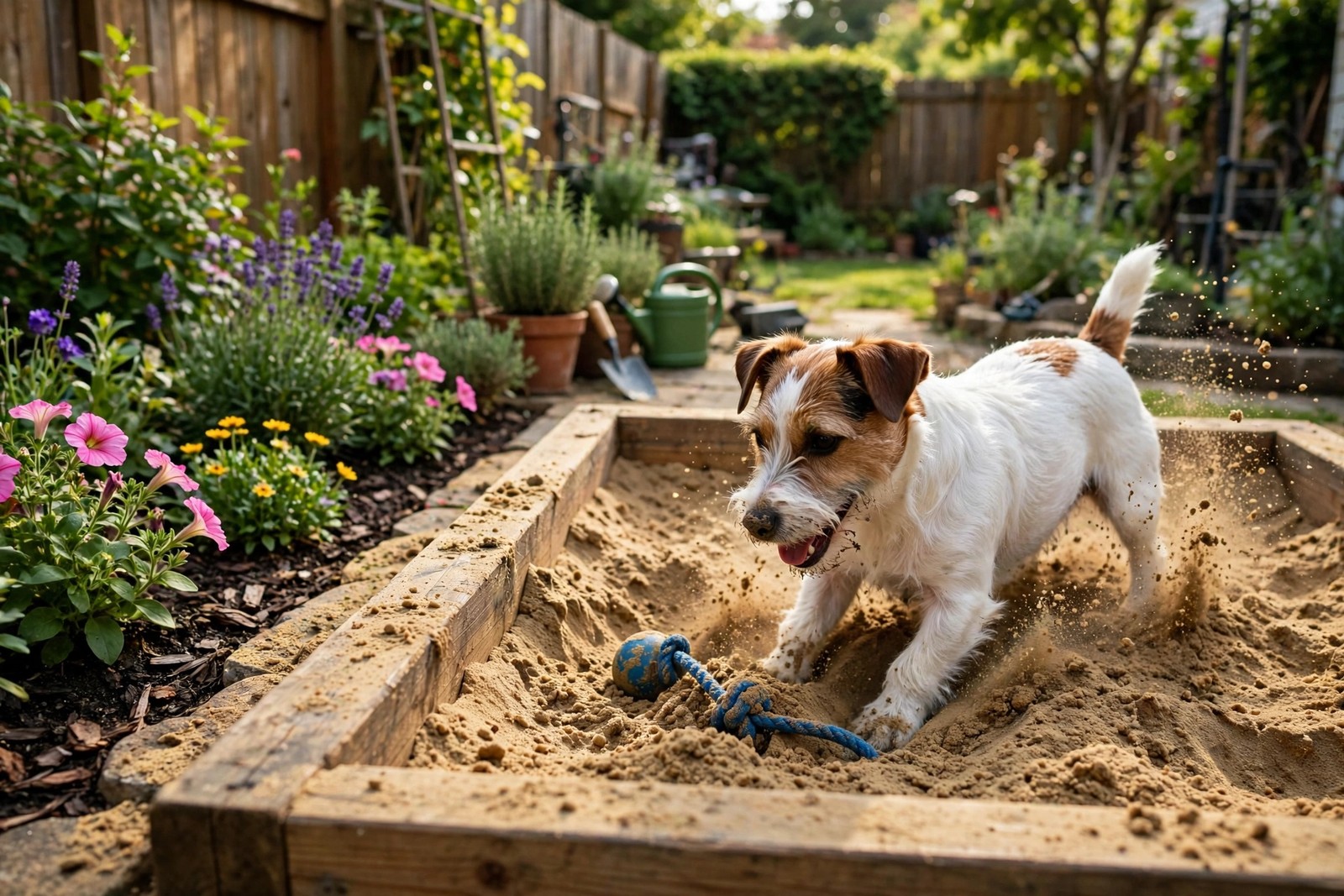
The fastest way to save your flower beds is not to stop your dog digging — it is to give him a better place to do it. Choose a sandbox or a marked corner of the yard, fill it with loose soil or sand, bury toys and treats in it while he watches, and praise him wildly when he digs there. Redirect every attempt in the beds back to that pit, calmly and consistently, and most dogs choose the pit because that is where the treasure and the praise live.
Why dogs dig in the first place
Digging is normal dog behavior, not defiance. Terriers were bred to go to ground after vermin, huskies and malamutes dig cooling pits in hot weather, beagles and dachshunds follow scent underground, and plenty of ordinary mixed breeds dig simply because it is fun, smells interesting, and burns energy. Some dogs dig along fence lines when they are bored or anxious about being left alone, and some dig to bury a bone for later.
Watch when your dog digs: shady spots on hot afternoons suggest cooling, gate digging suggests frustration, and random craters after you leave suggest under-stimulation — which also needs more exercise and food puzzles.
Building a pit your dog actually chooses
Pick a spot you can see from the house, partly shaded and away from your best planting. A frame of landscape timbers, a child's sandbox, or a 4-by-4-foot area edged with stones all work. Fill it with washed play sand or loose topsoil.
Make the pit pay from day one:
- Bury a favorite ball, a rubber chew, and a few smelly treats just under the surface while your dog watches, then let him find them.
- In the first week, re-bury surprises daily so every visit produces a win.
- Praise and toss an extra treat the moment paws hit the pit, even if you led him there.
- Cover the pit at night if neighborhood cats might use it as a litter box.
Keep the soil slightly damp — hard, baked earth is no fun, and your soft beds will win by comparison.
Protecting the beds while he learns
Lay chicken wire or plastic garden mesh just under the mulch in prized beds for a few weeks; most dogs dislike the feel and move on. Plant densely so less bare earth shows, and never leave your dog unsupervised in the garden while he learns.
If he starts a hole in the wrong place, interrupt cheerfully — "this way!" — walk him to the pit, bury a treat on the spot, and celebrate his digging there. Avoid scolding after you find a finished crater. He cannot connect the hole from an hour ago with your frustration now, and punishment around the garden often just teaches sneaky digging when you are indoors.
Safety and upkeep checks
Check the pit weekly for sharp sticks, stones, and moldy buried items. Keep fertilizer and pesticides out of any area he digs in, and see your vet if he suddenly eats a lot of dirt or digs frantically at night. For fence-line digging — a safety issue — bury pavers along the fence and never leave an escape artist alone outside until it is secure.
Getting local help through KinsLe
Some yards need a plan that fits the dog and layout — especially with a determined terrier. KinsLe's Pet Services Directory helps you find local groomers, vets, sitters, and trainers who can visit and help you place the pit. Your first pet profile is free. For a terrier who keeps outsmarting fences and flower beds, search the Pet Services Directory on KinsLe for a nearby trainer willing to visit, inspect your layout, and place that pit where he will actually use it.