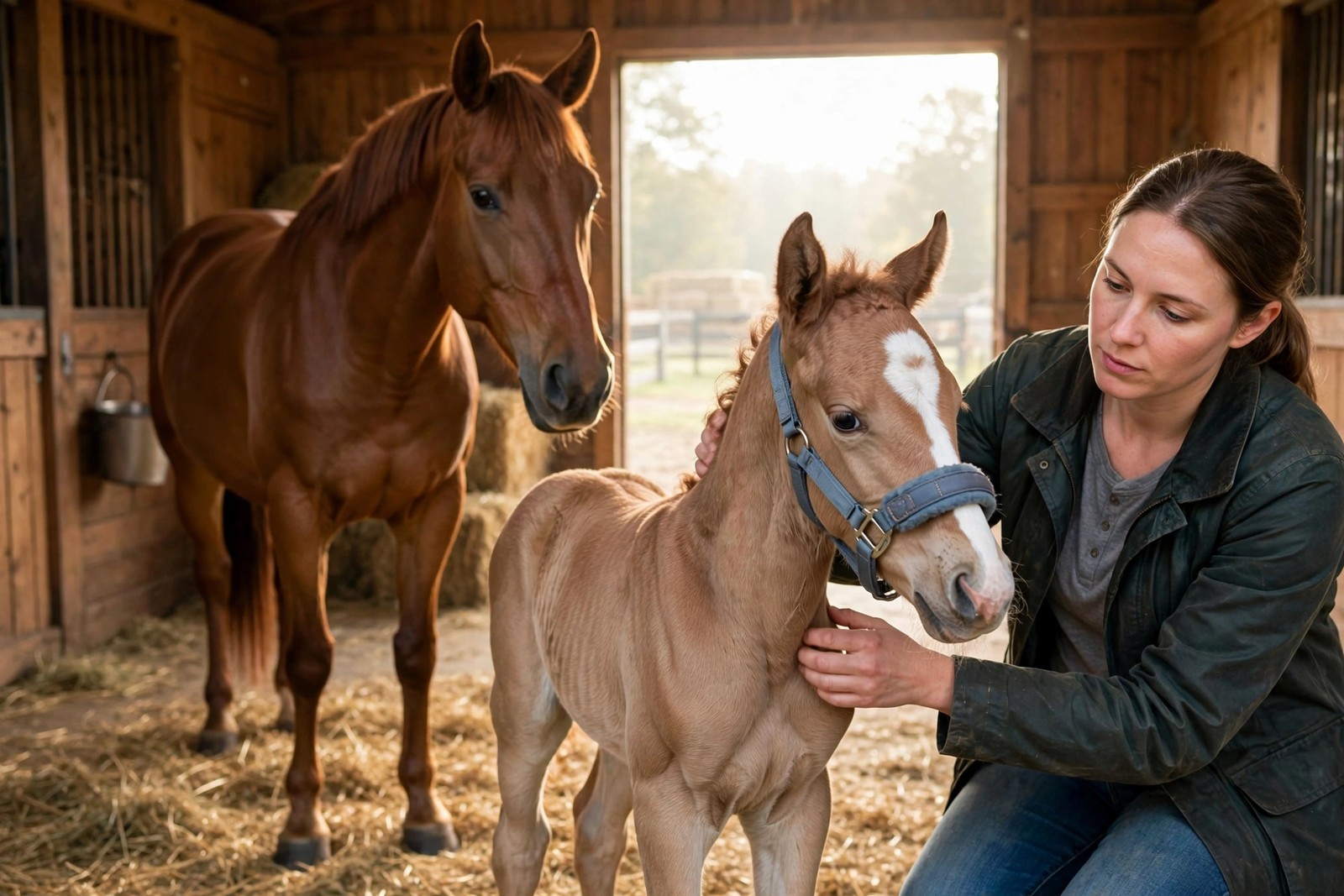
A foal's first months set up how easy that horse will be to catch, lead, and treat for life, but the early work is quieter than most owners expect. The mare does the feeding and most of the teaching; your job is health checks, safety, and short lessons that end before the foal gets tired or worried.
The First Hours Matter Most
Watch for the classic milestones: a healthy foal typically stands within about an hour, nurses within about two hours, and the mare passes the placenta within about three hours. Nursing early matters because the first milk, colostrum, carries the antibodies the foal is born without, and the foal's gut absorbs them best in the first hours of life. If the foal has not nursed, seems weak or disoriented, or the mare retains the placenta, call your vet promptly rather than waiting until morning. Many vets also check the foal's antibody levels in the first day or so, especially if nursing was delayed.
Handle gently from day one, but keep early sessions to stroking, steadying, and getting the foal used to hands on its body while it stays close to the mare. Restraint that turns into a wrestling match teaches the wrong lesson at exactly the wrong age.
Short Handling Sessions, Mare Nearby
Work in sessions of a few minutes, several times a day, always where the foal can see and reach the mare. Start with stroking the neck, shoulder, back, and legs, then progress to running a hand down each leg and lifting each foot for a second or two, building to holding it up and tapping the hoof as a farrier later will. Scratch the withers and chest rather than patting, and stop while the foal is still relaxed so calm behaviour is what gets repeated.
Introduce a soft, well-fitting foal halter once the foal accepts handling around the head. Put it on, reward with a scratch, and take it off again; never leave a halter on an unsupervised foal, and never drag a foal by it. Leading begins as following the mare: walk the mare and let the foal follow with gentle guidance from a lead rope and a hand or rope behind the hindquarters, then progress to short walks away and back. A few good steps beat a long battle.
Daily Checks and Routine Care
Fold handling into the twice-daily checks you should be doing anyway. Look at the navel for swelling or discharge, watch droppings change from the first dark pellets to softer milk dung, check that the foal is nursing often and gaining condition, and watch for drooping ears, a dull eye, coughing, or diarrhoea, all of which warrant a vet call in a young foal. Keep the stable clean and dry, give the pair daily turnout on safe ground once your vet is happy, and keep handling consistent between everyone on the yard.
Social learning matters too. The foal learns manners from the mare and, in time, from other steady horses, so avoid isolating the pair. At the same time, do not let the foal treat people as playmates: nudging, nipping, and rearing in play must be calmly redirected from the start, because behaviour that is cute at forty kilograms is dangerous at four hundred.
Keeping Everyone on the Same Page
Several people often share foal care, and mixed handling quickly confuses a youngster. Agree the same cues, the same session length, and the same daily checklist, then record who did what. That is the habit KinsLe's Care Teams supports for foal care: you can assign nursing checks, handling sessions, and foot practice to named helpers, and each completed task is marked with a timestamp, so the foal gets one consistent education instead of three different ones.