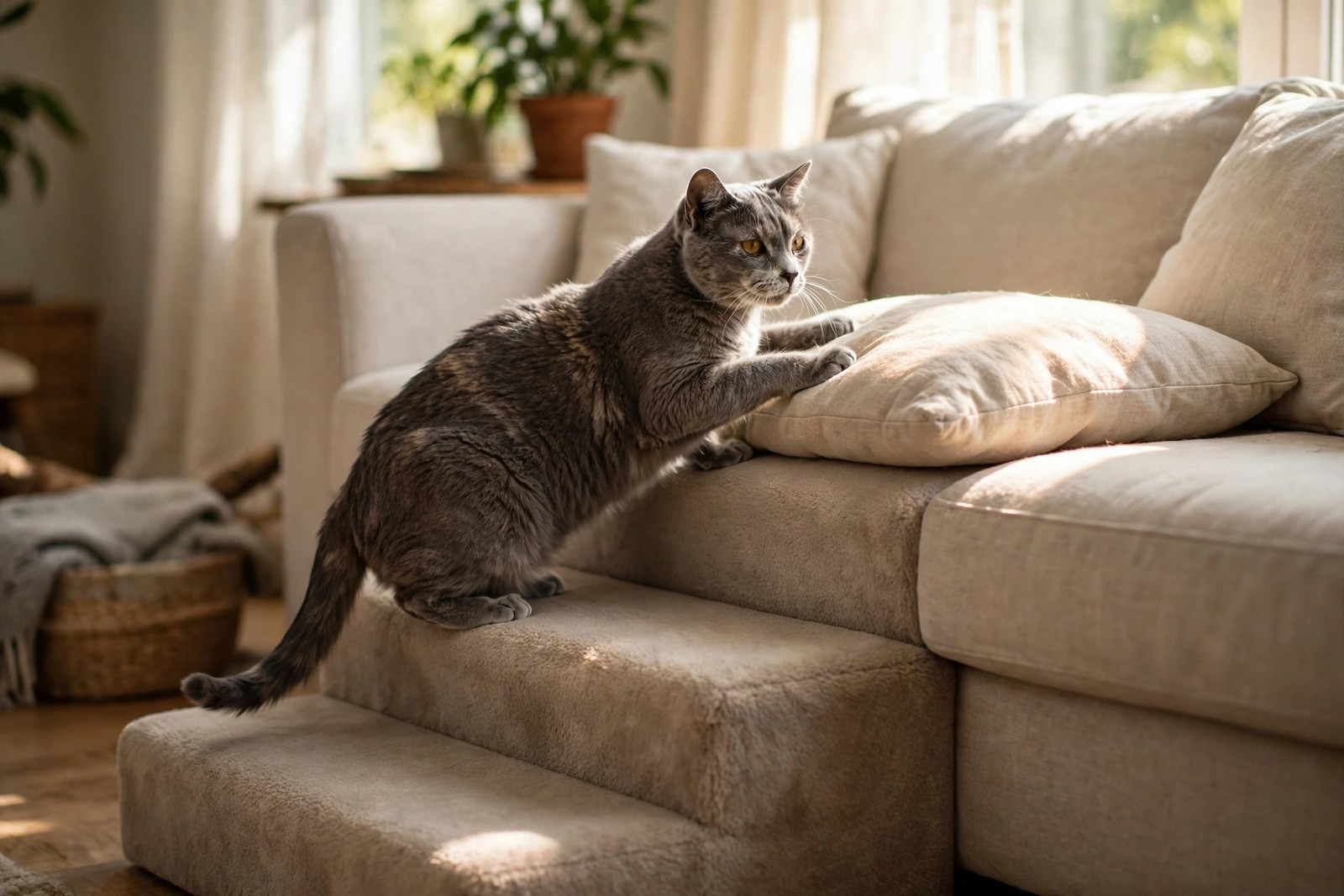
A stiff older cat rarely complains out loud. She simply stops appearing on the windowsill, sleeps on the floor instead of your bed, or hesitates at the top of the stairs, and it is easy to miss that her world has quietly shrunk. Your job is to widen it again with routes she can use confidently, and to check whether pain, not just age, is part of the picture.
Map the Spots She Has Lost
Spend a few days noticing rather than guessing. Which favourite places has she stopped using: the bed, the back of the sofa, a sunny windowsill, a perch in another room? Where does she pause, crouch, or bunny-hop with both back legs together, and where does she now choose to sleep instead? That map tells you exactly where help is needed, and it is often only two or three spots.
Note, too, whether she still reaches her essentials without effort. Food, water, a litter tray, and a warm sleeping place should all be available on the floor she spends most time on, so an upstairs tray or a bowl she must jump for never becomes the reason she eats less or toilets in the wrong place.
Add Steps She Can Trust
Pet steps work better than a single jump for most stiff cats. Choose wide, deep treads with a carpeted or otherwise grippy surface, stable enough not to rock when she commits her weight, and place them flush against the sofa, bed, or sill so there is no gap to leap. A sturdy step stool or a low ottoman can serve the same purpose for lower furniture. For a sofa she uses all day, a ramp with a gentle slope and a grippy surface suits some cats better than steps; let her choose which she uses, and remove the one she ignores.
Lure her up the new route with a treat or a favourite blanket already in place, and let her explore it at her own pace over a day or two. Never lift her onto the spot repeatedly instead: a cat who is placed somewhere she cannot get down from learns to avoid it, and being picked up can hurt stiff joints. Move one beloved resting place lower as well, because a cushion at floor level in the same sunny patch often becomes the new favourite without any climbing at all.
Make the Everyday Essentials Effortless
Fit a low-entry litter tray, or one with a cut-down side she can step through, and keep at least one tray on her main floor. Raise food and water bowls slightly if she stiffens through the neck, keep them away from competition if you have younger cats, and add a second water station near her main sleeping spot. Warm, supportive bedding out of draughts, on the floor or one step up, protects sore joints far better than a thin blanket on a hard surface.
Gentle daily play in short bursts, a minute or two of chasing a wand toy along the floor rather than in the air, keeps muscles working without demanding jumps. Keep her weight steady, because every extra pound loads joints that are already struggling, and mention weight at each vet visit.
When Stiffness Needs a Vet, Not Just Furniture
New or worsening stiffness, reluctance to be stroked along the back, sleeping more, grooming less, or missing the litter tray all deserve a vet assessment. Cats hide pain well, and there are safe options a vet can discuss with you once they have examined her; never give her human painkillers, which can be dangerous for cats. Plan on senior checks at least twice a year, and bring your notes on which spots she regained or lost, because that history tells the vet more than a single examination can.
Keeping those notes is easier when they live with her records: KinsLe's Pet Passport holds her vet findings, vaccinations, and your mobility observations together in one portable packet, ready for appointments, boarding, or a sitter handover.