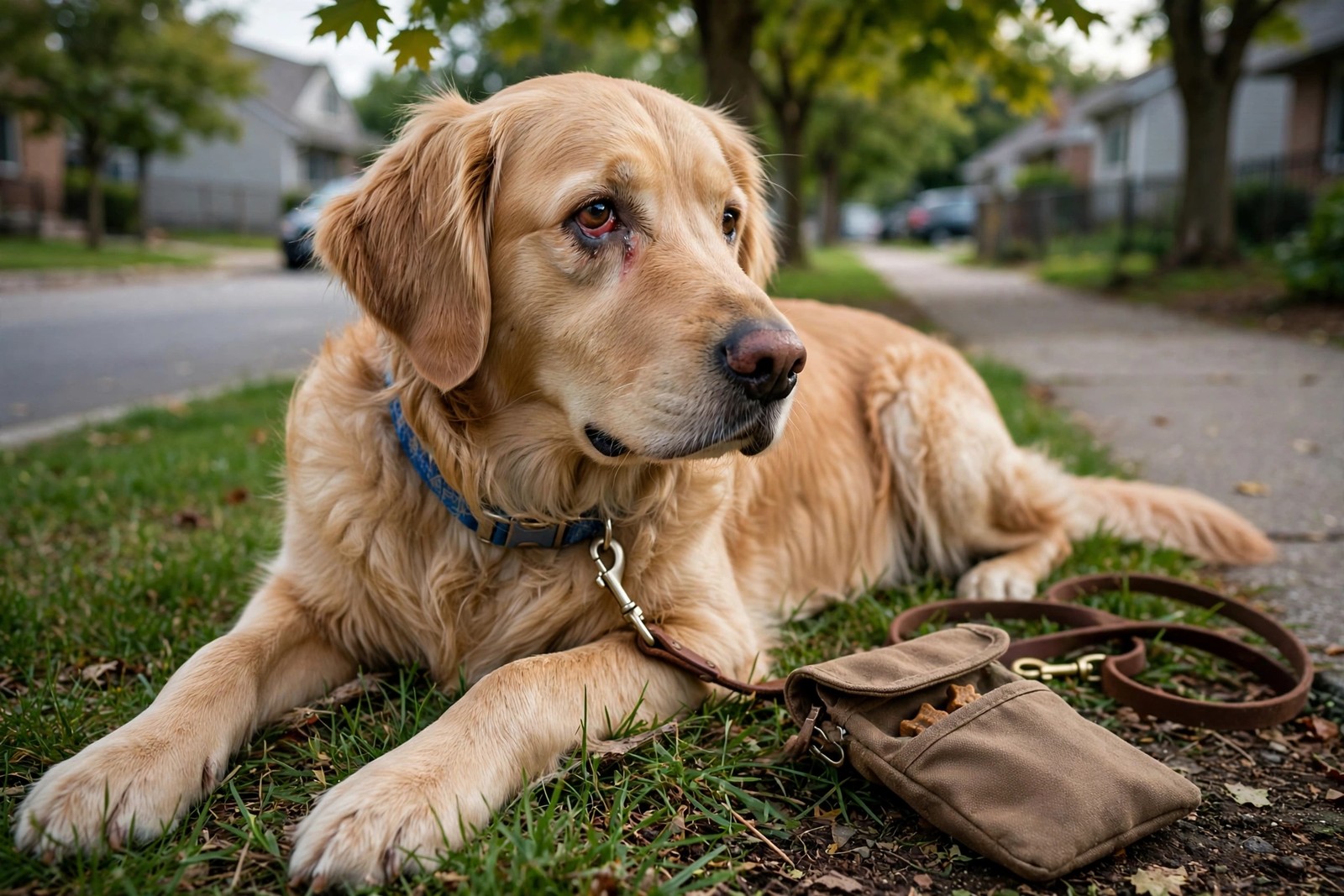
Comfort care sits underneath the vet's plan, never in place of it. A sore, discharging eye makes a dog rub, paw and bury his face in carpets, and each of those habits can damage the eye surface further. Your role is protection, cleanliness and accurate reporting while the vet's prescribed plan does the medical work. Eyes deteriorate quickly, so comfort care includes a low threshold for phoning the clinic again.
Protecting the Eye From Rubbing
Fit the protective collar the clinic advises whenever he is unsupervised, and check that he can eat, drink and sleep in it comfortably. Watch for face rubbing on furniture or grass during walks, and redirect him gently rather than scolding, because rubbing is a response to discomfort. Keep walks short, calm and on a lead, away from dust, long grass seed heads and rough play with other dogs. At home, give him a clean, firm bed where he can rest his head without pressing the sore side into deep soft bedding. If both eyes become affected or the good eye starts to bother him, tell the clinic rather than assuming the same plan covers it.
Keep his collar clean and dry, washing it as the clinic advises if discharge soils it, because a dirty collar rubs a sore face and reintroduces contamination each time he shakes his head. Check the skin under the collar daily for rubbing, and pad or adjust the fit with the clinic's guidance if redness appears.
Cleaning Around the Eye Safely
Wipe discharge away with a clean cloth dampened with plain water, moving gently from the inner corner outward and using a fresh cloth, or a fresh part of the cloth, for each pass. Never share cloths between eyes or between dogs, and wash your hands before and after handling the area, because some causes of eye inflammation pass between animals. Soften dried discharge with the damp cloth held against it briefly rather than picking at it. Keep the fur around the eye clean and dry between wipes. Put nothing in the eye itself unless the vet has prescribed it for this episode: not leftover drops, not another dog's medicine, and not human eye products.
Following the Vet's Plan Exactly
Give any prescribed care at the times and in the order the clinic described, and ask the practice to demonstrate the technique if you are struggling to administer it. Note each administration and how the eye looks afterwards, including the colour and amount of discharge, how open the eye is and whether he is squinting or pawing less. Do not extend, shorten or substitute the plan because the eye looks better or worse on a given day, because the clinic set its length for reasons the appearance alone does not reveal. If an application is missed or some of it runs out of the eye, ask the practice what to do rather than doubling up on your own judgement.
Changes That Mean a Faster Call
Phone the same day if the eye becomes more painful, turns cloudy or blue-looking, swells shut, or produces rapidly increasing discharge. Call sooner about any injury to the eye, a sudden change in the pupil, or a dog who becomes dull and off his food alongside the eye signs. Describe the change with times attached, because the clinic triages eye cases on exactly those details. Keep his discharge notes and treatment record in his KinsLe Pet Passport, so any clinician who sees him next starts with the full picture of this episode.