
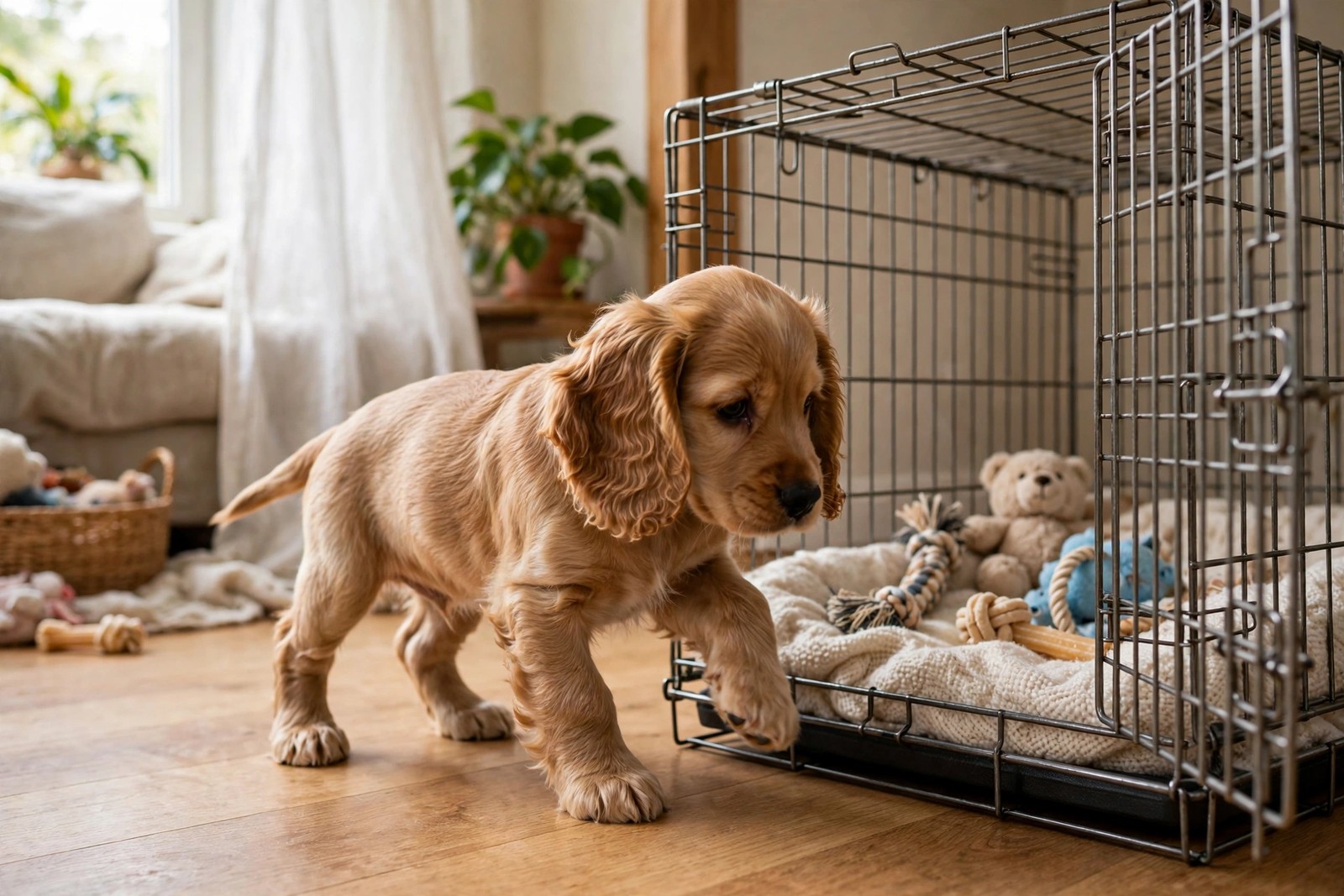
Introduce the crate by making it cozy and rewarding from the very start: feed meals near or inside it, toss treats and favorite toys in, and let your puppy wander in and out freely with the door open and latched. Only when your puppy is choosing to go in happily do you begin short, positive closed-door sessions, building up slowly — and the crate is never, ever used as punishment.
Setting the crate up for success
Pick a crate large enough for your puppy to stand, turn, and lie stretched out, using a divider if needed so the sleeping area stays snug rather than roomy enough to toilet in one corner. Add comfortable bedding you can wash easily, and place the crate where family life happens during the day and near you at night at first. A crate that lives in a lonely utility room teaches isolation; a crate near the sofa teaches that it is simply a bedroom within the home.
Leave the door open all day. Every time your puppy glances at or steps toward the crate, reward it at first. Scatter a few treats inside when they are not looking so the crate magically produces good things, and feed regular meals just inside the entrance, moving the bowl gradually deeper over several days.
A gentle practice sequence
Build the habit in small, successful steps:
- Door open: treats, chews, and meals happen in the crate for a few days
- Brief closes: while your puppy is busy with a chew, swing the door shut for a few seconds, then open it before they finish and get concerned
- Short sessions: close the door for a minute or two while you stay in sight, then release calmly — not in the middle of excited barking if you can avoid it
- Add distance and time: step out of sight briefly, return without fuss, and lengthen sessions only as fast as your puppy stays relaxed
If your puppy panics, whines persistently, or soils the crate in distress, you have moved too fast. Go back to the last easy step and build more slowly. Some puppies take to a crate in days; others need weeks, and both are normal.
Nights and alone time
For nights, a final toilet trip, a calm settle with a chew, and the crate near your bed usually reduce crying. Take a young puppy out overnight when they stir rather than expecting them to last until morning. During the day, never leave a puppy crated longer than they can reasonably hold their bladder, and arrange a toilet and play break if you are out — puppies left too long learn to toilet in the crate and lose the clean-den instinct you are trying to build.
Keep crate time balanced with plenty of time out for play, training, socializing, and cuddling. The crate is a resting tool, not storage for a puppy.
One gentle method, used by everyone
Consistency is what makes this kind rather than confusing. KinsLe's Care Teams can assign the daily crate-practice steps — feeding, walks, meds, and grooming duties are assigned in the same system, with timestamped completions — so everyone in the home builds the habit the same gentle way and can see which steps are already done. No one accidentally skips ahead or repeats a stage your puppy is not ready for.
Keep a written note of tonight's stage and who handled it in the Care Teams schedule on KinsLe, so nobody rushes a door-close your puppy has not accepted happily yet.