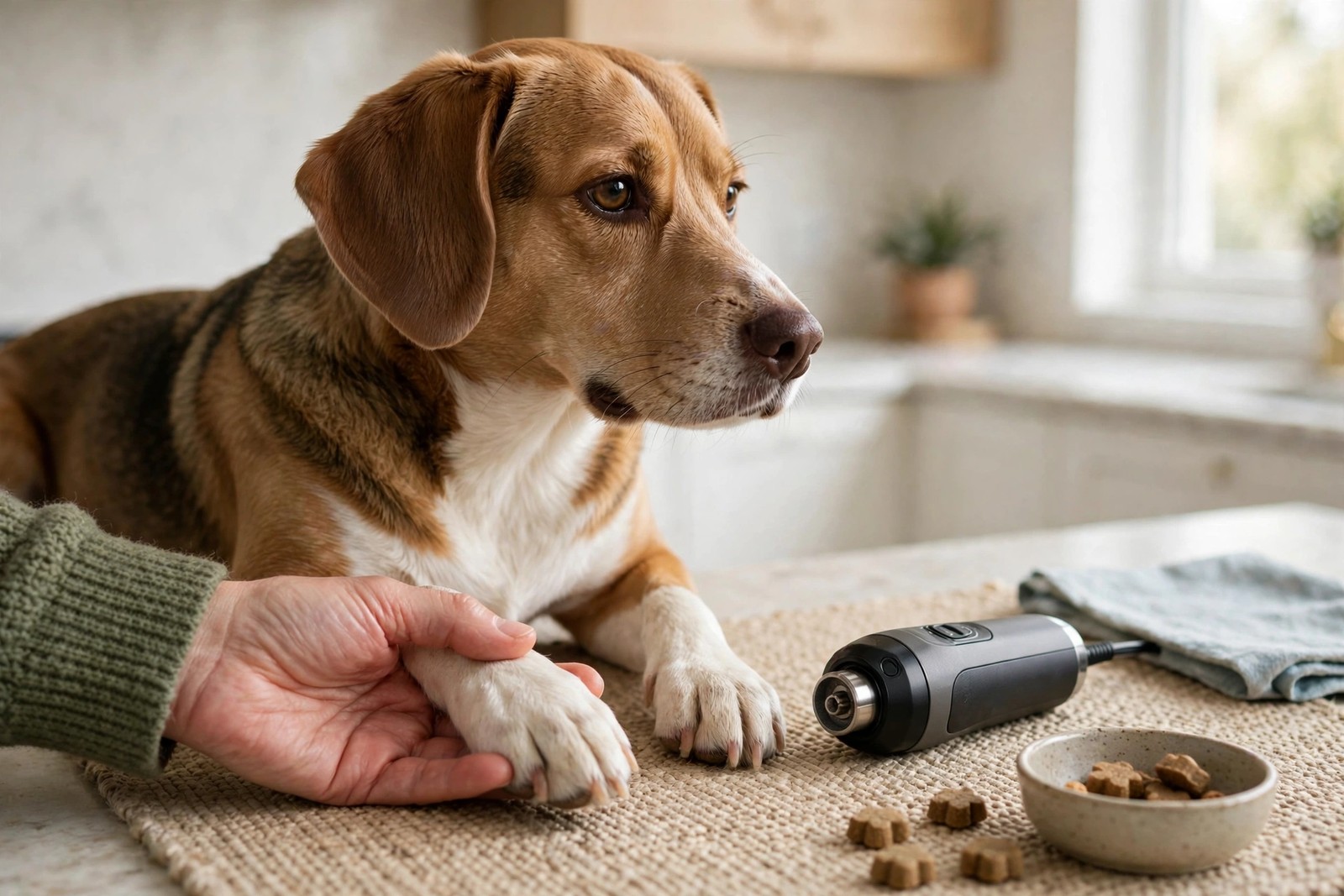
A nail grinder frightens dogs in layers: it is an unfamiliar object, it buzzes loudly when it runs, it vibrates against the nail, and it asks the dog to hold a paw still while all of that happens. Peeling those layers apart over several weeks is what makes the tool acceptable. Each stage below gets its own stretch of days, and you move on only when the current stage looks genuinely boring to her.
Settle into the same quiet corner for practice, with the grinder, treats, and good light ready before she joins you. Sessions stay short, often just a minute or two, and they happen when she is rested rather than wound up after play or anxious after a walk in bad weather.
Stage One and Two: The Quiet Tool, Then Distant Sound
Start by letting her sniff the switched-off tool where it rests on the floor, feeding a treat each time she investigates it. Leave the grinder out between sessions so it becomes furniture rather than an event. Some dogs take to this in a day; a wary dog may need most of the first week, and that is fine.
Next, switch the grinder on across the room while she does something pleasant, such as licking food from a mat. Let her hear it in brief bursts at a distance where she notices the sound but keeps eating. Bring it a little closer across the following days, watching for the moment her ears fix on it and her eating slows, because that distance is your current working edge.
Stage Three and Four: Touch, Then One Nail for a Second
With the tool off, touch its handle lightly against a paw and feed, repeating until paw contact with the object itself feels unremarkable. Then hold the running tool near the paw without touching a nail, so she connects the vibration in the air with rewards before it ever reaches her foot.
When she stays relaxed through that, touch one nail for a second with the tool running, then stop, feed generously, and finish the session there. A single second sounds trivial, yet it contains the whole experience in miniature: sound, vibration, and paw held gently, all ending well. Repeat that tiny dose across several sessions before grinding a second nail, and shorten each touch rather than pressing a nail hard against the head.
The Final Stage: A Full Paw, Safely
Building to a full paw usually takes the last part of the several weeks, and some dogs need longer on one front paw before the others feel routine. Work nail by nail with pauses and food between them, and let a finished paw end the session on many days rather than pressing on to complete all four feet.
Safety runs through every stage: keep her coat and any long fur held well clear of the spinning head, since rotating tools can catch hair in an instant. Gather feathery leg hair back with your holding hand, keep your own loose sleeves and hair away too, and switch the tool fully off before setting it down or changing position. Work on the lowest effective setting, keep each contact brief so the nail does not heat up, and stop at once if she jerks, because a moving paw near a spinning head is how nicks happen.
If weeks of patient stages still leave her panicking at the sound alone, let a groomer or veterinary team handle trims while you keep the early stages ticking over at home without pressure. Noting her current stage, and which paw was finished last, inside KinsLe gives Care Teams helpers a shared picture, so nobody restarts her at stage one or leaps ahead to a full trim.